Tag: Horror

  • Horror Game Awards 2026: Tito’s Picks & Predictions

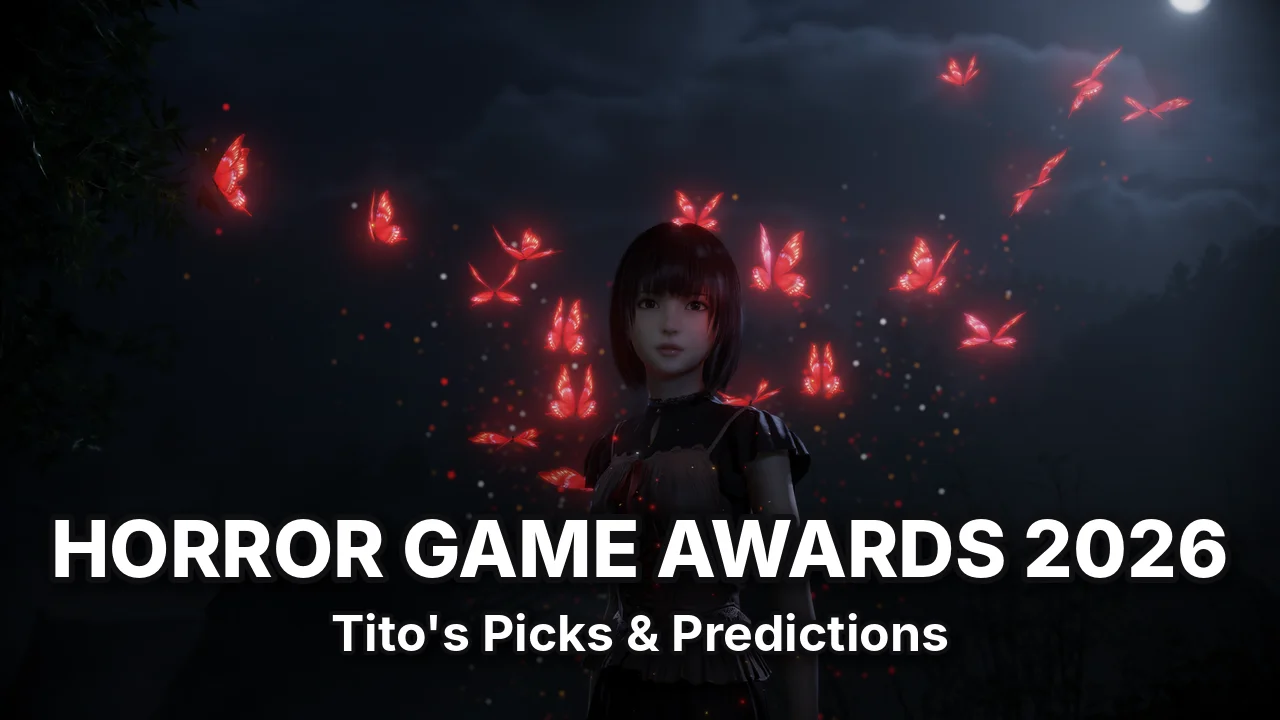
    Horror Game Awards 2026: Tito’s Picks & Predictions

    Some people get the Christmas lights up in September. Me? A horror awards show in November is enough to make me happy.

    The Horror Game Awards 2026 happens on Friday, November 20, which is the wee hours of Saturday here in the Philippines. That’s exactly the right time to watch horror. Other sites have already posted the nominee list, so I won’t just copy it. This post is all about the big one, Horror Game of the Year: who I think will win, who I want to win, the snub, the dark horse, and how we can play the nominees here at home.

    Quick honesty check: I haven’t played most of this year’s nominees. My predictions come from the nominations, sales, and player reviews. My picks come from the gut of a guy who has been getting scared by games since the PS1 rental-shop days. Some of those scares are still with me, as you can see in my list of jump scares that traumatized me.

    Credit: Nomination counts come from Horror Obsessive’s breakdown. Official details are at The Horror Game Awards.


    Quick Facts

    Date Friday, Nov 20, 2026, 7:00 PM GMT
    Philippine time Saturday, Nov 21, 3:00 AM PHT
    Venue 26 Leake Street, Waterloo, London
    Categories 21 (5 new)
    Most nominations REANIMAL 10 · Resident Evil Requiem 9 · Silent Hill: Townfall, Hellraiser: Revival, Silver Pines 8 each

    The 5 nominations for Fatal Frame II: Crimson Butterfly Remake are unconfirmed.


    Horror Game of the Year

    There are 16 nominees: REANIMAL, Resident Evil Requiem, Silent Hill: Townfall, Hellraiser: Revival, Silver Pines, Fatal Frame II: Crimson Butterfly Remake, The Blood of Dawnwalker, Directive 8020, Endacopia, Heaven Does Not Respond, No Means Nothing, Offering App, Project Songbird, ROUTINE, The Skin Stapler, and Tenebris Somnia.

    🎯 Tito’s Prediction: REANIMAL

    Here’s why I think the HGA Claw goes to Tarsier:

    • It leads the whole field. Ten nominations, including Best Art Direction and Best Soundtrack. When a jury loves a game in that many categories, it loves the whole package.
    • Other juries already agree. REANIMAL won a horror narrative and direction award at Japan’s Horror Game Awards 2026, on top of a design award back home in Sweden.
    • It’s a brand-new IP. Most of its competition is sequels, remakes and licensed games. REANIMAL is the big original horror game of the year, from the team that made Little Nightmares.
    • It sold. Over 1 million copies in three months is huge for a new game that isn’t attached to a famous franchise.

    The catch is that Steam players are cooler on it, at around 74% “Mostly Positive.” Juries reward craft more than popularity, though. Also remember that last year Silent Hill f won after tying for the most nominations, so the number alone doesn’t guarantee anything.

    ❤️ Tito’s Pick: Silent Hill: Townfall
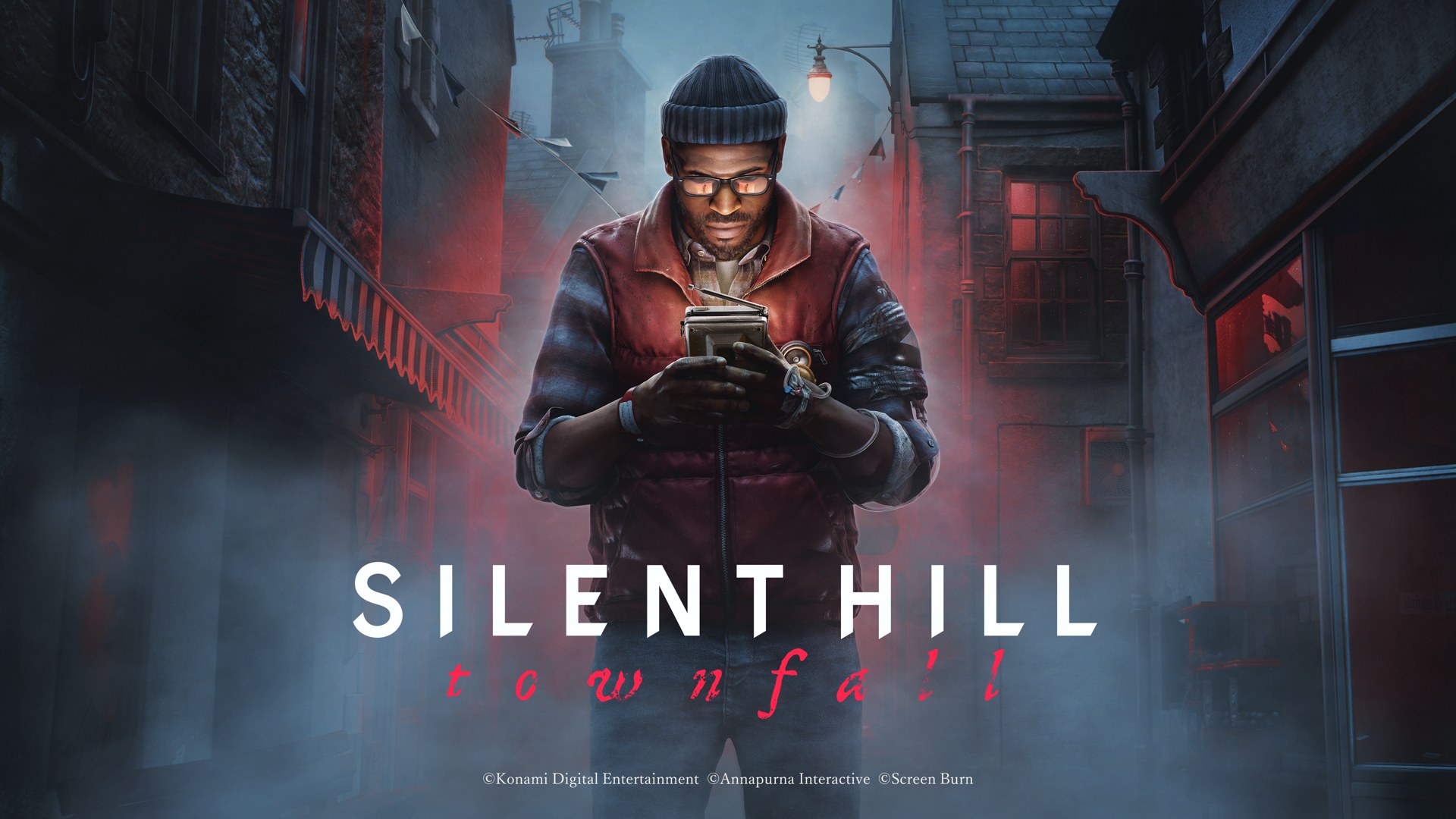
    Silent Hill: Townfall key visual of Simon looking down at the CRTV device in a foggy, red-lit street
    Image: SILENT HILL: Townfall ©Konami Digital Entertainment ©Annapurna Interactive ©Screen Burn. Official press asset.

    Full disclosure: I’m biased, because I’m in love with this series. But I love that the team tried to innovate instead of just repeating the past. There’s the CRTV, a TV/phone/radio device that puts a fresh spin on that classic static dread. And the game is set in a town outside Silent Hill itself, but it still keeps the atmosphere that makes it feel like Silent Hill. That’s a hard balance to pull off.

    My history with this series goes back to 1999. I was browsing for a game to buy when the vendor handed me Silent Hill and told me it was a different kind of horror from Resident Evil. I bought his sales pitch, and the intro movie alone blew away my idea that it was just another Resident Evil clone. Silent Hill 3 made me so paranoid that I almost never finished it once I reached the Haunted House Tour. And yes, I’ll always stand by Silent Hill 4: The Room as the scariest in the franchise. I go deeper into all of this in Silent Hill: Why Players Still Love It.

    Can it actually win? Honestly, probably not. Critics like it (81 on Metacritic), but it’s “Mixed” on Steam because of PC performance problems. Konami has confirmed a patch is coming.

    🥈 Runner-up Pick: Fatal Frame II: Crimson Butterfly Remake
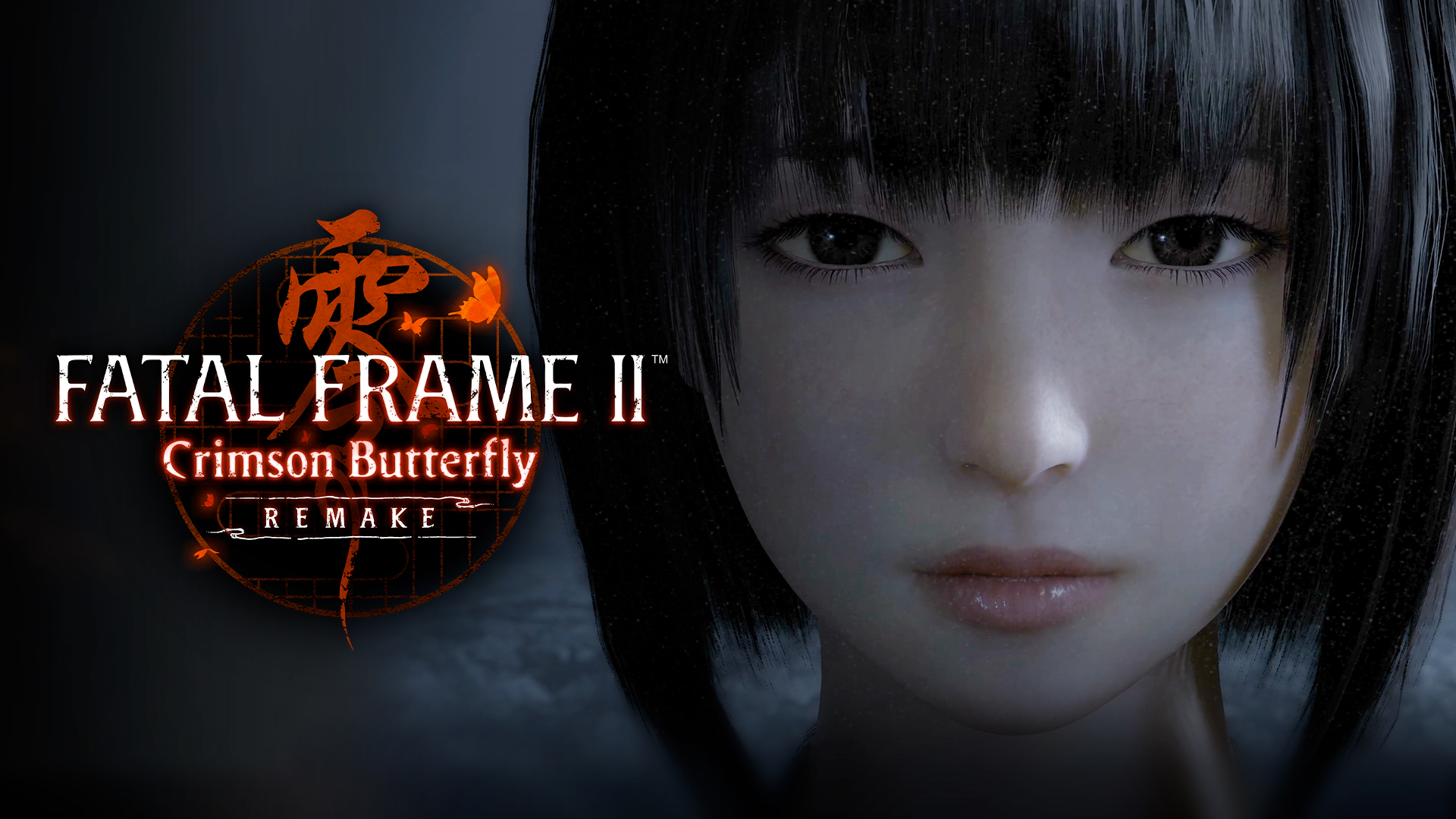
    Fatal Frame II: Crimson Butterfly Remake key visual with the game logo beside a close-up of Mayu's face
    Image: FATAL FRAME II: Crimson Butterfly REMAKE © KOEI TECMO GAMES. Official press asset.

    I played the original on the PS2, and here’s a confession: for me, it was the least scary game in the series. What won me over was the story. It’s more coherent and better told than the first game’s. I haven’t played the remake yet, but seeing Fatal Frame up for Game of the Year next to Resident Evil and Silent Hill already feels like a win. My full Fatal Frame obsession is in my Fatal Frame III review.


    The Snub and the Dark Horse

    The snub: Fatal Frame II Remake’s total. If it really only has five nominations, that’s low for a remake of one of Japan’s most important horror games. (The five-nomination count is unconfirmed.)

    The dark horse: Silver Pines. A five-person team at Wych Elm made a game that sold 100,000+ copies in its first week, sits at “Overwhelmingly Positive” on Steam, and earned 8 nominations, the same as Silent Hill and Hellraiser. It’s in the Game of the Year lineup next to Capcom and Konami. If the jury wants an underdog story, this is it.


    Where to Play in the Philippines

    Game Platforms PH price (approx.)
    REANIMAL PS5, Xbox Series, Switch 2, PC ~₱1,895 (PS5, DataBlitz / Game One)
    Resident Evil Requiem PS5, Xbox Series, PC, Switch 2 ~₱3,295 (PS5, Game One / iTech / Gamextreme)
    Fatal Frame II Remake PS5, Xbox Series, Switch 2, PC ~₱2,250 (PS5 Asian, DataBlitz)
    Silent Hill: Townfall PS5, PC (Steam, Epic) ~₱2,795 (PS5 Asian, DataBlitz / Gamextreme)
    Hellraiser: Revival PS5, Xbox Series, PC ~₱2,395 (PS5 Day One Edition, DataBlitz)

    Physical retail prices as of Nov 16, 2026. Check before you buy.

    • Digital: The PS Store, eShop and Steam all have peso pricing. Steam regional pricing is usually the cheapest way to get the indie nominees.
    • Physical: Look for Asian (R3) versions at DataBlitz, Game One, iTech and Gamextreme.
    • PC players: Steam reviews mention stutter in Fatal Frame II Remake and performance problems in Townfall, so check for patches first.
    • Used: Carousell is the modern rental shop.
    • Watching the show: Set your alarm for 3:00 AM, Saturday, Nov 21.

    Your Turn

    That’s my ballot. My head says REANIMAL, and my heart, as always, says Silent Hill. What’s your Horror Game of the Year pick, and is Silver Pines your dark horse too? Drop it in the comments, and let’s see who called it after November 20.

    — Tito Gamer


    Sources: Horror Obsessive · The Horror Game Awards · Bloody Disgusting · Dread Central · GameBusiness.jp · Twisted Voxel
  • Fatal Frame III Review | When Ghosts Enters the Real World

    Fatal Frame III Review | When Ghosts Enters the Real World

    Fatal Frame III is the scariest Fatal Frame for me. What drives up my anxiety is Rei Kurosawa’s home. The ghosts do not stay in the dream world. They begin to invade the place where Rei sleeps, making the nightmare feel like it is spreading into reality. Her home stops feeling safe, and that is what makes the game so frightening.

    The Story of the Tattooed Curse

    Rei’s dreams lead her to the Manor of Sleep, where the ghost of the Tattooed Priestess chases her. The priestess is Reika, the last woman chosen by Kuze Shrine to keep the Rift from spreading. The Rift is the divide between the land of the living and the land of the dead.

    At the shrine, the priestess undergoes the Piercing of the Soul. A sacred tattoo shaped like a snake and holly takes in the pain and sorrow of people who come to the shrine. The tattoo is made with Ink of the Soul, a mixture of blood from the living and the dead. The burden is so painful that, after the ritual, the priestess is impaled inside the Chamber of Thorns. The handmaidens sing a lullaby to send her into a deep sleep, keeping her from wandering and spreading that pain to others.

    Reika agreed to become the priestess after a disaster killed her family. She hoped to ease the sorrow of others because she knew what it meant to lose someone. But she had also fallen in love with a man named Kaname. When he came to the shrine to see her, the head of the Kuze family killed him in front of her. Reika’s grief overwhelmed the tattoo, and the Rift broke open. The shrine’s carpenters and handmaidens were sacrificed to seal the shrine inside a dream, but the curse continued to draw in people mourning the dead.

    Rei is pulled into the Manor because she cannot stop thinking about Yuu. Miku follows her brother Mafuyu deeper into the dream and becomes unable to wake. Kei comes to Rei hoping to save his niece Mio, who has also been touched by the curse. He believes the handmaidens’ stakes can subdue Reika, but when he reaches the Chamber of Thorns, he finds her already pinned. Reika begins to break free, and Kei is trapped inside.

    Rei enters the Chamber herself. With the Camera Obscura, she defeats Reika, who asks to be allowed to sleep. What makes the story so unsettling is that the Manor draws in people who cannot let go of someone they lost. Rei’s home is part of that haunting too, as the dream’s ghosts begin to invade the place where she sleeps.

    Three Characters, Three Ways to Bust Ghosts

    Fatal Frame III keeps the familiar controls. The filament tells you when a ghost is nearby, and raising the Camera Obscura switches to Viewfinder Mode for battles and investigation. It also shows whether a ghost has noticed you. A blue filament means it has not spotted you. Red means it knows where you are, adding stealth to the exploration.

    Rei and Miku’s Abilities

    Rei can use a camera flash to scare off certain spirits, though she has only a few uses. Miku can slow ghosts with her Sacred Stone and use her Double ability to charge a stronger shot. Her smaller frame also lets her crawl through narrow openings.

    Kei’s Exploration Gameplay

    Kei has the physical strength to move heavy objects and reach places the others cannot. His spiritual power is weaker, so his Camera Obscura does less damage. When playing as Kei, you need to watch the filament and hide before a ghost finds you. His chapters make you consider escape routes as you explore the Manor.

    Camera Obscura Gameplay

    Each photo costs you a shot, so film stays on your mind when a ghost appears. You can save it for a fight, though wandering spirits are worth photographing too. Those pictures earn points, just like defeating hostile ghosts, and you can spend the points on camera upgrades or post-game unlockables.

    The puzzles give you another reason to check the Manor closely. Solving one can open a new area, so a clue you found earlier may lead you deeper into the house later.

    Rei’s Home Is No Longer Safe

    One of the earliest ghost encounters at Rei’s home begins with a noise from the attic. Kei goes to investigate, and a ghost suddenly wraps its arms around him. That moment caught me off guard. The haunting had already made the Manor of Sleep feel dangerous, and now it had reached the place where Rei was supposed to rest.

    As the curse worsens and the characters venture deeper into the Manor, ghosts begin appearing during ordinary gameplay. You can be exploring the house when an apparition suddenly shows up. Makoto Shibata described the game’s theme as “fear lurking within the everyday”. The attic scene introduces that idea early, then the random encounters make Rei’s home feel like the dream has followed her back into the real world.

    Looking Forward to a Fatal Frame 3 Remake

    With the Fatal Frame II remake now released, I’m optimistic Fatal Frame III could be next. I want to see the Manor of Sleep and Rei’s home rebuilt with modern visuals and sound, especially as the ghosts begin crossing from one world into the other. That invasion is what makes The Tormented the scariest Fatal Frame for me. I hope Koei Tecmo gives this classic a remake of its own. 

  • Horror Jump Scares That Traumatized Me

    Horror Jump Scares That Traumatized Me

    Halloween is a staple at our households where my friends bring in horror movies to enjoy for one night. A good number of them had rattled our younger self and even left us sleepless across several nights. However, there have been many horror jump scares that truly gutted away at my bravery and left me avoiding any form of scary media for months. Its like eating incredibly spicy food that broke my tolerance level. 

    Below are the scenes that traumatized me. While I love horror movies, these scares made me swear off them. 

    Comic Book: Tales from the Crypt: Demon Knight

    Drifter Frank Brayker flees a demon in human form called the Collector and hides in a decommissioned church turned boarding house, where a botched arrest ends with the sheriff dead and siege demons rising. Brayker seals the building with an ancient key filled with sacred blood and explains that it’s the last of seven cosmic keys once sought by demons, guarded for centuries by immortals who refill it with their own blood. 

    The real enemy of this movie is not the demons at the gate or the lovable Billy Zane. It is the survivors themselves who can be corrupted by the Collector. One of the instances of those corruptions has always stayed with me throughout my childhood. 

    While that horror jump scare has been telegraphed and many would have seen it coming, kids are likely affected by this. However, adults are also like horrified by this scene because they are shocked by the kid about to be corrupted. That intense chord and glowing green eyes tells you that kid is not going to make it through the night. 

    Laptop: Sinister

    True-crime author Ellison Oswalt moves his family into a house where a massacre occurred, hoping to revive his career. He discovers Super 8 reels in the attic that show families being murdered, each marked by a demonic figure called Bughuul, “Mr. Boogie.”

    What we know about Mr. Boogie is still vague during the early part of the movie. There is even a red herring scare when Ellison’s son popped out of a box weirdly. For all I know, this could just be a non-supernatural murder mystery until we reach the Laptop scene. 

    The tone of the movie became much darker as we discover who “Mr. Boogie” is. Right after that scene, a video of ghost children opened on Ellison’s laptop. You can already tell this is an “Oh shit” moment of the movie as we are bombarded by more horror jump scares. 

    Readers might be noting why I did not pick the “Lawnmower scene.” While that did make me and most of my viewing companions jump, it was not as scary when you remove the screaming sound. The Laptop is truly terrifying, even without the music, and all the guy did was turn his head. 

    Horse: The Ring

    Investigative reporter Rachel Keller probes a teen’s death tied to a cursed videotape that kills its viewers exactly seven days after they watch it. She views the tape and unravels the story of Samara Morgan, a tormented child whose psychic images imprint onto film.

    As she travels via a ferry to the place where the lighthouse appeared in the videotape, she approached a horse to pet it. The horse became agitated and broke free from its enclosure. In its attempt to escape Rachel, it jumped out of the boat and was struck by the propeller.

    While you may think there is no horror jump scare here, despite the music build up and the girl’s scream, it is that scene transition to Rachel’s ex-partner that got me. That was the “Ring” appearing in just a few frames. It was the last thing people saw before they died. It was a subtle jump scare that still made a terrifying impact on me after watching it. 

    There are also other notable jump scares. All of it involves a jump cut to Samara’s victim. They are all incredibly done since they get you in moments when you are not expecting any kind of horror appearing on screen. 

    Nurse Station: Exorcist III

    Detective Lt. William Kinderman probes a wave of ritual murders in Georgetown that mimic the long-dead Gemini Killer. Clues point to a locked psych ward, where “Patient X” appears as Father Karras yet speaks as the Gemini, implying a demonic transfer of the killer’s spirit into Karras’s revived body. 

    The nurse station scene is always a stellar example of a horror jump scare: 

    It is a masterful scene of disarming the viewers’ expectations by presenting a false scare at the start and the safety of other people present throughout the scene. A few moments before the apparition appeared, she was checking the room while a guard was present in the hall. Seconds before the scare, she was locking the room behind her. No one expected that thing to come out of the room after everything we have seen. 

    The Clown: Hell House LLC

    Hell House LLC uses a faux-documentary to investigate the 2009 opening-night disaster at the Abaddon Hotel haunted attraction. Recovered tapes reveal the Hell House crew preparing for the haunt as strange incidents escalate. Opening night devolves into chaos when something manifests below, triggering a deadly stampede. As the opening shows, people died due to supernatural reasons during that night. 

    A good number of horror jump scares occurred here that involved The Clown Mannequin. My favorite of which is the earliest part, where the Clown was at the top of the basement stairs. After the cameraman looked down past the mannequin, the Clown moved its head to face the man without making any sound. 

    That was just one of many memorable jump scares with the Clown. Even when it is just standing in the hallway, you always expect that thing to move on camera. 

    The Bed: Ju-On The Grudge

    “Ju-On: The Grudge” centers on a lethal curse born in a Tokyo home where Kayako Saeki and her family were murdered in rage. A social worker, Rika, checks on an elderly resident and encounters the ghostly Toshio, awakening the curse. Nonlinear vignettes follow as anyone who enters the house, or even contacts those already marked, falls to Kayako’s relentless haunting. Efforts to escape or destroy the influence fail, and Rika’s final encounter underscores that the grudge keeps spreading to claim new victims.

    One of those victims was a woman going to her apartment. From the elevator to inside her home, there were plenty of scares to make the audience grip their chair with anxiety. The build up keeps going as the woman gets to bed and watches TV. The TV distorts the reporter’s face to the point that she is making a scary gurgle sound. We later get that iconic horror jump scare of Kayako appearing inside the cover. 

    Ju-On is full of horror jump scares, but the bed scene still stays with me. The monster came out of the least suspected places. Under the covers is also the place kids feel secure and safe. Seeing the movie, I guarantee you that I felt unsafe under my blanket for months. 

    Final Word: Traumatizing Horror Jump Scares

    I know I am missing other great horror jump scares, especially the one in Insidious. However, it barely got to me like the Laptop scare in Sinister or other moments I mentioned above. 

    Do you have a favorite horror jump scare I missed? Talk about it in the comments below. You can also find more horror media for Halloween in my site like my discussion on Silent Hill!

  • Silent Hill: Why Players Love It

    Silent Hill: Why Players Love It

    Silent Hill is one of the iconic horror game franchise that is still relevant in modern gaming. With Silent Hill F about to launch, it is a good time to look back at the older titles. I will go through why the first four games made an impact to so many gamers.

    A screen shot of Silent Hill 2.

    The First Silent Hill

    The PlayStation 1 had an incredible number of horror games, even during its earlier years. Its hardware allowed for the port of popular titles from other systems, like the 1995 adventure: D and Alone in the Dark 2. When Resident Evil 1 launched, it changed everyone’s perception to what a fun and scary horror game should be. 

    Resident Evil 1

    Launched in 1996 for Japan, Biohazard, or Resident Evil, captured Playstation owner’s attention. Resident Evil hit at the perfect moment. PlayStation was exploding, and gamers wanted something more modern than ports of older titles. CD-ROMs enabled moody FMVs, especially ones directed by the legendary George A. Romero. Fixed camera angles and tank controls amplified dread rather than hurting it.

    It also incorporates a good amount of puzzles inspired by adventure titles like Myst. This aspect is seen in the Piano puzzle in the first part of the Mansion. Combat is the best part of Resident Evil. While it uses tank controls, readying and firing your weapon is much smoother than that of Alone in the Dark. 

    The popularity of Resident Evil led to many titles inspired by the action-oriented horror title, like Galerians, a newer Alone in the Dark, and Fatal Frame. Konami will also dive into the fray with their own title called Silent Hill. 

    A screen shot of Silent Hill 1.

    Silent Hill 1

    With the popularity of Resident Evil, other horror games that mixes combat, puzzles, and tank controls are seen as clones of the popular franchise. At least, this was my experience in 1999. When I was browsing for a game to buy, the vendor showed me Silent Hill 1. He tells me it was a different kind of horror than Resident Evil. Thankfully, I bought his sales pitch and bought a copy. 

    The intro movie blew away my notion that this was a Resident Evil clone. 

    It solidified that psychological horror atmosphere with the facial expressions, the dimly lit rooms, and the fog-filled streets. There was also a build-up of fear during the end of the intro where Dahlia was running away from something and had a horrified look on her face when she turned to face it. We also get a short, but terrifying, clip of Cherryl writhing in pain and agony afterwards. 

    Psychological horror was the main selling point of the Silent Hill franchise. The first game redefined psychological horror by limiting your sight while pairing them with Akira Yamaoka’s score and terrifying visual graphics. Fog and darkness compress your field of view, so danger lives just beyond what you can see while the music alerts you of dangers just ready to jump at you. 

    A screen shot of Silent Hill 3.

    A good example is during the first part where Henry was following her daughter down an alley. When you go through a door, you are alerted by an unexplained splatter of blood at the entrance. As you make your way down the alley, sirens can be heard from the distance while the area grows darker. Your world transforms as buildings are replaced with rusted steel fences and blood splatters lie on the ground. At the end, you come across a corpse hanging like a religious figure and are attacked by small creatures. 

    What you experienced is the main feature of all Silent Hill games. An industrial alien world intruding our reality with unknown beasts lurking around its corners. Yamaoka’s industrial palette then gets under your skin. Metallic clanks, low rumbles, and distorted guitar build rhythms that resemble machinery and a heartbeat. This makes normal and safe places with peaceful instrumentals have a strong impact, as if you had just snapped awake from a nightmare.

    Improvement of Silent Hill

    Critics praised Silent Hill for its take on the horror game genre, but were also critical of the graphical limitations. This is why fans of the first game were excited for the upcoming Silent Hill 2 for the PlayStation 2. It was during this era that the franchise truly strived and created the definitive Silent Hill experience. 

    Silent Hill 2

    The psychological horror aspect of Silent Hill was explored in the second game with James Sunderland looking for his “late” wife. Her wife had sent a letter after she was presumed dead. 

    All the elements of the first game are present. Fog-ffilled streets with unknown beasts lurking around, and the industrial nightmare world intruding on reality. Because this is the next generation of gaming, monsters have more details, and the nightmarish visuals are more pronounced. 

    What sets Silent Hill 2 apart is its story. It delves into the lore of Silent Hill as to how it treats people like James, Angela, and Eddie. They are those who are in conflict with their past and are forced to face it in town. The psychological horror story here has likely been inspired by the likes of Jacob’s Ladder, a movie that shared the same industrial horror visuals. Akira Yamaoka’s score blends well with the story with music like “Theme of Laura” giving off a tragic vibe. 

    Silent Hill 3

    While using nearly the same game engine and features as its predecessor, Silent Hill 3 was still a defining installment of the franchise. It further introduced more lore to the town by being a sequel to the first game. Heather Mason is the daughter of the first game’s protagonist and is in pursuit of a killer in town. 

    Konami turned up the horror factor in Silent Hill 3, making it a much scarier game than the second one. This was more about the team being more clever with the stage design. One example is the dreaded Mirror Room.   

    There are no items to obtain or puzzles to solve. The room is there to kill Heather as a warning to players “Silent Hill is a dangerous place.” 

    You can also find many memorable scares throughout the game. One is the mannequin room where a lone model stands at the back. When you saw the model and walk back to the exit, you will hear a scream that sounds like Heather. Going back to the model, you will see its head chopped off with blood spewed from the neck and head. 

    Silent Hill 2 was an improvement on the visuals and game mechanics. Silent Hill 3 was more about the horror elements that can be achieved through the game. I was incredibly paranoid throughout the experience that I almost never finished Silent HIll 3 when I came upon the Haunted House Tour section. You can imagine just how terrifying it would be, just for a nightmarish version of that carnival ride.  

    Silent Hill 4

    The Room in my experience, is the Scariest Silent Hill of the franchise. This may seem controversial for people who have high regards to the first three games, but it will forever be my stance. Why is it scary? 

    Silent Hill 4 is about Henry Townshend being locked in an apartment without any “exit.” The apartment is your safe space, where you can fully heal from your injuries. To find a way out of the apartment, you need to go through a hole in your bathroom and appear in various places. One of these places is within Silent Hill. Still, why is it scary? Because there are ghosts in this game. 

    Long time players are likely used to the different kinds of horrific creatures in the last three games. Ghosts are a new kind of terror in Silent Hill 4. You cannot kill them or deal with them like regular enemies. Certain items can help you evade them or avoid getting damaged like the Saint Medallion. Another method is to use the Sword of Obedience, which leaves them immobile until it is removed. 

    A screen shot of Silent Hill 4.

    What makes ghosts terrifying is how they invade your apartment. They remove your safe space’s healing feature during the latter half of the game. A ghost invasion occurs when various hauntings appear in your apartment like your faucet dripping with blood or a ghost child is standing in your closet. You can remove these ghosts by using a Holy Candle on the hauntings or wear the Saint medallion until the ghost disappears. 

    The ghost invasion was like the nightmare of Silent Hill tearing into your reality. Its like the horrors are just a screen away from invading your living room. They are even a feature of the intro movie, which is Akira Yamaoka’s disturbing song for the franchise.

    The Future of Silent Hill

    The launch of Silent Hill 2 in 2004 and Silent Hill F shows there is much love for the horror game franchise. Fans were treated to nearly a decade without a single title as well as the cancellation of P.T., which could have been a potentially great Silent Hill from Hideo Kojima. With the success of the Silent Hill 2 remake and Silent Hill F, we could be looking at remakes of the other titles, especially the first game. Allowing new players to feel that same dread I felt when playing Silent Hill back in 1999.  

  • Fatal Frame II Review: Twin’s Terror

    Fatal Frame II Review: Twin’s Terror

    While Fatal Frame 1 established the series’ Camera Obscura game mechanic, it was Fatal Frame II: Crimson Butterfly that made the series popular. The sequel has two twin sisters attempt to survive a haunted abandoned village with the signature ghost-bane camera. While there are minor improvements to the gameplay, the main attraction of Crimson Butterfly is the protagonist. 

    A screenshot of Fatal Frame 2.

    The Crimson Plot

    Fatal Frame II sees the same plot of siblings attempting to survive and escape ghosts. This time, the characters resonate with the players more than in the first game. 

    The Amakura Siblings

    Mio and Mayu made a mistake of coming back to the valley of their childhood. This led them into the abandoned All Gods Village, where another ritual took place. Players control Mio in the game while Mayu is the sibling you “protect.” 

    Mayu is a more memorable NPC than the older brother in the first game since she accompanies you throughout the earlier periods of the game. As you fend off ghosts with the Camera Obscura, you also see Mayu through your viewfinder. 

    I felt the need to protect Mayu from the dangers of the village. Unlike the bigger brother, the other sibling is more vulnerable than the one with the camera. She will even get attacked by the ghosts and will die if you do not defend her. There is a natural desire to keep “both” siblings safe because of this scenario.  

    At the start of the game, though, there is a sense of distrust we feel for Mayu. There were two fake outs in the intro video where a figure pretended to be the lost sibling. It was also Mayu who had led the two into the Lost Village. Mayu will also murmur nonsensical phrases as she accompanies you, further driving that distrust. 

    Conflicting emotions are a part of the game’s experience since there are multiple endings here. One of which involves leaving Mayu behind. Of course, many players want to see both of the Amakura sisters safe and free, which is what made the ending “memorable” to everyone who played the game. 

    A screenshot of Fatal Frame 2.

    The Lost Village

    Following Resident Evil’s lead, Fatal Frame II expands the game from a haunted mansion to a haunted village. It shows you that the game will be much expansive than its predecessor. After playing Fatal Frame 1, the sequel does seem much bigger thanks to the many outdoor areas. 

    Tecmo’s Ayako Toyoda gave life to the Minakami Village with haunting ambient tracks. Mixed into the soundtrack are random street sounds and murmurs, making you feel surrounded by murderous ghosts looking to add you to their numbers. “The Lost Path” is my favorite track, which drives that Asian horror atmosphere. 

    With a larger map, Fatal Frame II opens up a more ambient horror atmosphere that you cannot easily escape. However, it was not able to achieve that kind of dread as the first game. 

    A screenshot of Fatal Frame 2.

    The Camera Obscura Mechanic

    Players defend themselves again with the Camera Obscura in the sequel. This is the essential part of Fatal Frame’s gaming experience. While the mechanics are still the same, Fatal Frame II added some new mechanics to make the game challenging. 

    Basics of Fighting Ghosts

    The gameplay is simple. Aim your camera at a ghost until they show within your capture frame, then take a shot. This lets you damage enemy spirits to inflict enough shots until they run out of HP. 

    There is an incredible amount of depth to this gameplay. When you have the ghost centered in your capture frame, you light up special characters beside it. Lighting them all lets you inflict more damage in each shot. You can also do special shots like the Zero Shot when you are close to the spirit. Another example is the special Fatal Frame Shot that can be taken when you take a shot just before a ghost’s attack reaches you. 

    A screenshot of Fatal Frame 2.

    You want to pull off as many high-damage special shots as possible. These shots let you save film, a scarce ammunition in Fatal Frame, and get higher spirit points accumulation. Spirit points let you upgrade your camera and unlock special functions. 

    Another added depth is the type of films you can obtain throughout the village. Rare flims like the Type 90 and Type Zero can significantly reduce spirit’s HP, making them essential for bosses. Unlike Fatal Frame 1, the normal Type 14 is limited, which is the one that does a medium amount of damage. In exchange, there is an unlimited supply of Type 07 that does less damage, making them suited for taking pictures of roaming ghosts. 

    Obscura Upgrades

    Part of what makes Fatal Frame fun is the progression mechanic, where you increase the Camera Obscura’s functions. In Fatal Frame 2 though, you need to obtain Spirit Orbs that are dropped by ghosts. Spirit Orbs lets you open the upgrade option for these functions with the spirit points used to unlock that upgrade. 

    Fatal Frame 2 New Features

    Being a sequel, there are new features that further makes battles memorable in Crimson Butterfly. 

    The latest special shot you can achieve is the Combo Shot. After picturing a ghost, the camera’s viewfinder zooms in and flashes a blinking red light to indicate a follow-up picture. This opens up a third Combo Shot opportunity if you manage to do a 2 Hit Combo Shot. Combo Shots lets you further do damage with all special characters lit and obtain more spirit points. 

    Lenses:

    Finally, there are the lenses. These lenses let you do special attacks or abilities at the cost of Spirit Power Orbs. These orbs are filled by the damage inflicted to your enemies. While some of these features are used in Fatal Frame 1, there are newer abilities in Crimson Butterfly. Here are the abilities you can obtain: 

    • Blast: Boosts shot damage and triggers Blast Back even outside shutter chances. Costs 2 Spirit Power and upgrades add a slower Blast Back that makes combos easier. 
    • Crush:  Heavy damage lens that can one-shot most ghosts during a shutter chance. Costs 4 Spirit Power and upgrades raise damage even outside shutter chances.
    • Slow:  Temporarily slows a ghost so shutter chances last longer and timing is easier. Costs 1 Spirit Power and upgrades extend duration. 
    • Stop:  Freezes a ghost’s movement for a short time to create a safe, clean shot. Costs 3 Spirit Power and upgrades increase the stop time.
      Zero:  Higher damage than Blast and also causes Blast Back. Costs 3 Spirit Power and upgrades further increase damage.
    • See:  Makes hidden or vanished ghosts easier to locate. Adds a directional marker in the viewfinder when upgraded and costs 1 Spirit Power. 
    • Stun:  Intermittently stops a ghost’s movement so you can line up shutter chances. Costs 2 Spirit Power and upgrades extend duration. 
    • Track:  Auto-follows the target so the viewfinder keeps the ghost centered. Costs 2 Spirit Power and upgrades extend duration. 
    A screenshot of Fatal Frame 2.

    Functions

    In addition, you also obtain special functions to your camera. These makes you pull off special shots or avoid ghosts easily.:

    • Alarm:  Plays a tone at the exact Fatal Frame moment so you can fire for max damage. The viewfinder top also flashes red. 
    • Evade:  Lets you avoid damage when grabbed by pressing the shutter at the right moment to flash-stun the ghost.
    • Measure:  Shows the nearest ghost’s remaining HP in the viewfinder while it’s in the capture circle.
    • Sense:  Indicates a ghost’s direction and distance with a signal at the top of the viewfinder. Helps track vanishing targets.
    • Switch:  Lets you toggle equipped functions on the fly without digging into menus. Great for swapping utility and damage setups mid-fight.
    • Zoom:  Adds zoom-in and zoom-out controls to frame weak points and fill the capture circle. Works via L2/R2 in FF2.
    • Instant:  Flashes a red indicator when a Fatal Frame window opens. Helps chain combo shots during Blast Back.
    • Save:  Increases Spirit Power earned on hits and speeds up charge gain so you can fire specials more often.

    Why is Fatal Frame II popular? 

    If you ask people who grew up with the PS2 or Xbox what their favorite Fatal Frame was, they will likely pick Crimson Butterfly. One reason is the number of PS2 and Xbox owners at the time Fatal Frame 1 and Fatal Frame 2 were released. With more people owning the consoles, Fatal Frame 2 was likely the first installment of the series that they played. 

    Another reason is the Amakura Siblings. You are more connected with Mayu than with Mafuyu since the twin sister accompanied you in the game instead of being a ghostly reflection.  

    For players like me who finished the first game, the upgrades and new mechanics were noticeable in Fatal Frame II. The Blast function was my most used lens that I wished was available in the first game. 

    What can also be the reason why people loved Fatal Frame II than the first game was Amano Tsukiko’s Chou music. This was the first game with a vocal track. It has the same impact as Akira Yamaoka’s track to Silent Hill. I cannot emphasize how often I played this song on my walkman and MP3 player back then. 

    Final Words: Fatal Frame II Overall Thoughts

    I enjoyed Fatal Frame II, which improves much of Fatal Frame 1’s story and gameplay mechanics. However, I did not find it as scary as the first game. Crimson Butterfly still has many amazing haunts and jump scares that have taken me by surprise. But it did not have the same impact as Fatal Frame 1. 

    Going back to the Lost Village and the soundtrack. I do not feel as isolated and trapped as I was when exploring the mansion when I was going around the Lost Village. Compare the first part of the Himuro mansion and the Encounter to Himuro Mansion. There is a feeling of ghosts peeking at me through the paper doors or windows. The scarier moments of Fatal Frame 1 were then the soundtrack cuts, and there is nothing but DEAD silence. 

    Although not as terrifying as the first game, it still manages to achieve the right amount of scare and horror ambiance. It also improves upon many of Fatal Frame 1’s gameplay. 

    If you reached the end, thank you for reading my review. Check out my review of Fatal Frame 1 next!

  • Fatal Frame 2001: Horror Through a Camera

    Fatal Frame 2001: Horror Through a Camera

    Horror games have been gaining traction since the Playstation 1 era with the likes of Resident Evil, Silent Hill, and Clock Tower. Makoto Shibata was looking to break through the genre with Fatal Frame. A game he aimed to be the scariest title anyone has played. That goal has been accomplished with the title’s clever mechanic of using a camera s your weapon. 

    A screenshot from the Fatal Frame 1 PS2 game.

    The Fatal Frame Camera Obscura

    The only weapon throughout the franchise has an incredibly deep gameplay mechanic. This camera led to the scariest and most fun moments of Fatal Frame. 

    Fighting Ghosts

    You fight by aiming at the ghost so it is within the capture frame. Hold the ghost inside the frame as a meter builds or the characters at the bottom lights up. Step closer or allow the ghost to get near to raise the damage. If a ghost is too near, you can take an early shot to stop it. Later spirits can fade, reappear, and feint for added difficulty. You track them with the reticle and with sound emitted by the Camera Obscura. 

    My favorite mechanic is the titular Fatal Frame Shot. You can pull this off when the frame is orange and the characters at the bottom turn red on your viewfinder. A Fatal Frame Shot usually occurs when the ghost is near and about to attack you. If you manage to do this tricky shot, the ghost suffers heavy damage. 

    A screenshot from the Fatal Frame 1 PS2 game.

    The mechanic provides a high-risk, high-reward opportunity for you. Since films are scarce, you want to inflict as much damage to the ghost with few shots as possible. At the same time, you are face-to-face with the ghost who is about to grab or attack you. That added pressure makes it difficult to take the shot, but pulling it off lets you save on film and healing items. 

    Getting Better at Fighting Ghosts

    The Camera Obscura earns experience points or spirit points each time you take down ghosts or take shots of ones roaming the manor. You can upgrade the following parameters of your camera: 

    • Range: Increases the size of your capture frame. This makes it easy to capture tricky Fatal Frame shots
    • Speed: Decreases the time for the characters at the bottom to light up, letting you inflict max damage in less time. 
    • Max Value: Increases the number of characters that lights up at the bottom, allowing for shots that takes more hit points from the ghost. 

    As you progress in the story, you also earn Spirit Stones that unlock special functions for your camera. This includes paralyzing the ghost so you can fully charge your Camera Obscura. After completing the game, you meet other requisites like completing the ghost list, and you also get more special functions. This includes the Zero function, where all the characters at the bottom are always charged. 

    A screenshot from the Fatal Frame 1 PS2 game.

    Fatal Frame’s fun moments come from the Camera Obscura alone. You are not just firing bullets or swinging your sword at your enemies, you are taking kodak moments of their attack. You can also get rewarded for the riskier and scarier Fatal Frame shots, making nearly every ghost fight memorable. 

    Exploring the Manor

    There is nothing more terrifying than exploring a haunted manor. With Fatal Frame, Shibata emphasizes the HAUNTED part. He made the dead manor feel unnaturally alive in this game. 

    The Atmosphere

    You know you are in for a terrifying night the moment you enter that front entrance. “Encounter to Himoro Mansion” plays as Mafuyu (and later Miku) explores the Himuro Mansion. The background song has ghostly voices singing a distant tune that goes away and returns. It casts that cold dread of being in the vicinity of unknown dangers just lurking across a few walls. Wall that will not stop them. 

    Ayako Toyoda and Shigekiyo Okuda’s team was able to create that haunting track with the use of stereophonic sound. There is that three-dimensional wailing where you feel ghosts are roaming around your character. 

    The Himura mansion design should also be credited. It kept to the traditional Japanese architecture and culture. Though, there are details that made anyone unfamiliar with the architectural design disturbed. These details include the ropes hanging from a hallway and the bloodied kimono hanging around the room. 

    A screenshot from the Fatal Frame 1 PS2 game.

    Grave Encounters

    It wouldn’t be a ghost game without encountering one. The Himura Mansion is teeming with non-combative spirits. They are part of the game’s scare factor since they could lead to another fight. If you are fast enough or have played the game and memorized their appearances, you can take a shot of them with your camera. This adds to the ghost list that unlocks end-game bonuses. 

    There are also “seal keepers” who seals doors. Removing the seal involves hunting for a ghost base on the picture that popped out of your camera. While not as terror-inducing as the vanishing spirits, these are great puzzles that take advantage of the Camera Obscura mechanic. 

    Everything about Fatal Frame screams Japanese horror. The soundtrack and mansion design keeps you alert for any ghost encounters during your exploration. 

    A screenshot from the Fatal Frame 1 PS2 game.

    What Haunts the Himura Mansion

    Fatal Frame’s story provided a good reason for spirits to roam around the Himuro Mansion. 

    The Ruined Ritual 

    There was a ritual that involved the Rope Shrine Maiden  Kirie Himuro. It involves sealing the Hell Gate with her body. Due to conflict with herself and the Himuro family, the ritual failed. Spirits escaped from the Hell Gate while Kirie’s spirit, full of malice, roams the mansion. Any trespassers were inflicted with the “Rope Curse” that kills the victim. 

    The Hinasaki Siblings

    The first protagonist is Mafuyu Hinasaki for the prologue chapter. He was searching for his tutor, Junsei Takamine, who had gone missing after exploring the mansion. When Mafuyu never returned, Miku went in to find her siblings. As you explore the mansion, you get notes and recordings on clues as to what happened to Takamine and his assistants. All of them were afflicted with the “Rope Curse” and became one of the many spirits you face. 

    Final Thoughts: Fatal Frame 2001’s Grave Photography

    Shibata achieved his goal of creating a scary game that will be remembered for a long time with Fatal Frame. Capturing ghosts as they slowly make their way towards you is a fascinating gameplay mechanic that no other devs have done. It was further bolstered by the music and design team who created a haunting atmosphere that keeps you on your toes. Fatal Frame is one of the best horror games to make an impact during the PS2 era.

  • Horror Anime: Animating Terror is Hard

    Horror Anime: Animating Terror is Hard

    What counts as horror? This is an important question to ask when looking at and looking for anime that is meant to scare us. Most horror anime may not necessarily focus on it or even have the horror that we are not used to. The worst part is that anime has proven time and time again to scare people. This article uncovers the reason why its hard to terrorize people with Anime.

    An image of a ghost face for a horror anime.

    Japanese Horror Culture

    Unlike in the West, Japanese horror relies less on jump scares and more on psychological horror that is restrained and subdued, as shown in Japan’s most famous horror film, “Ring” (1998). 

    Classic Japanese horror stories do include the yokai and the supernatural. But there was a shift thanks to World War II with the popularity of kaiju (giant monsters like Gojira/Godzilla) films. It is less the terror of giant monsters but more what those films represent. The universal trauma of the Japanese populace in the face of nuclear apocalypse. 

    Whether it is kaiju, yokai, killers or regular people, Japanese horror culture presents the suppressed layers of the psyche. It lets the audience imagine in their own terms what horrors lie beyond the screen.

    Why Few Horror Anime Succeed

    Adaptation Struggles

    Berserk by Kentaro Miura has been the constant punching bag for the anime community. It is due to its latest adaptations and their overreliance on CGI. Its 1997 adaptation is a work of art. The anime relies on more solid hand-drawn images with a different style from Miura’s. The 2016-2017 adaptation has stained the franchise’s reputation with awful CGI models, stilted movements, grating sound effects, and an overall unrefined cinematography that made you question their competence. 

    Unlike the 2012-2013 adaptation of the Golden Age Arc, the team behind the new Berserk anime were different. They had little to no experience with pure CG anime. Even with good CGI anime from Studio Orange like Houseki no Kuni and Beastars, most anime fans live in fear from the word.

    A manga panel of Berserk.

    The Perils of Juni Ito Adaptations

    Junji Ito might be the most productive and famous Japanese horror author. His anthologies of horrors to the likes of Tomie, Gyo and Uzumaki. The Tomie live-action films were praised in spite of their lower budgets. Most of the anime adaptations of his works face severe criticism due to their lack of quality control. 

    Studio Deen’s Junji Ito Collection (2018) simply copy-pasted from the manga yet made the panels flatter than what they already were. They also ignored what made the manga so horrific to begin with, even when its stories focused on body horror and the like. Its follow up, Junji Ito Maniac (2023) used muddy, muted greens and brown colors. They could have used monochrome visuals and overused on CGI to break audience immersion.

    The new Junji Ito adaptation, Uzumaki (2024), attempted to capture the vibe of Ito’s works with black and white colors.  Episode 1 was well-received, but the other 3 episodes of the miniseries were littered with basic animation errors. Majority of the episodes were practically incomplete in some places, leaving behind a mess of a product. 

    Producer Jason DeMarco attributes this to a lack of time and proper coordination. It is clearly a sign of constant Western studio interference, as confirmed by animator Henry Thurlow. Uzumaki was a collaboration between Drive and Akatsuki and the US branch of Production I.G. The team was famous for Psycho-Pass, a psychological thriller, Haikyuu, and more.

    A screenshot from Doomed Megalopolis.

    Dark Fantasy and the Horror Anime Curse

    One of the most common places audiences find horror in anime is dark fantasy. Attack on Titan and Berserk count as among the best of this genre. Berserk though being the pioneer for anime, video games and other media. While Attack on Titan succeeds due to its stellar production quality in spite of a studio change for its final season, Berserk suffered 

    Tokyo Ghoul, a dark fantasy, psychological thriller series was thought of as horror. It also suffers from this “horror anime” curse but for a different reason. Like Junji Ito’s latest adaptation, Tokyo Ghoul suffered heavily from studio interference. 

    While Season 1 was faithful to the manga, Season 2 was an anime-original work that deviated from the manga. Meanwhile, the sequel, Tokyo Ghoul:Re had entirely different staff. They did not reproduce the cleaner visual and animation quality of the previous two seasons, being more stilted and lifeless. However, all seasons share one common problem: pacing. 

    Tokyo Ghoul cut out many pages from its manga content, with nearly half the manga . With its pacing problem comes the loss of where its horror came from. The manga showcased the cruelty of the world and the class divide between ghouls and humans. 

    Both sides showed horrific violence. However, what we are left with are just the bullet points. The second season that does a 180 on the core story of the first manga’s second half. Not even Ken Kaneki’s split-personality, a key aspect of the series and his characterization, are added thanks to Root A.

    Why Horror is Hard to Adapt

    A manga panel for The Flowers of Evil.

    Shuzo Oshimi’s Manga and the Audio-Visual Limits of Horror Anime

    Focused on the the horror of the coming of age experiences of youth, Shuzo Oshimi is a master of the emotional layers of horror. His works include “The Flowers of Evil” and “Inside Mari” (2012-2016), as well as his most cited works, “Happiness” (2015-2019) and “Blood on the Tracks” (2017-2023). 

    In “Happiness”, a manga about vampires and a vampire cult. We see not just the expected gore but the fragility of human life. Every vampiric transformation comes with sacrifice, loss and the death of humanity. Both separation from one’s family and from one’s sense of reality are replaced by a hunger and a drive to escape from the normal world. One of the most horrific sights being in the climax of the story involving a cult. It showecased a bloody frenzy that comes from the obsession with immortality.

    However, it is “Blood on the Tracks”, a story of domestic horror and abuse, that we see arguably a much greater level of horror. Oshimi maximizes his ability to draw the uncanny valley through horrific facial expressions and tight perspective panels. His reader are constantly following the perspective of the characters. 

    One of Oshimi’s works was adapted into an anime, The Flowers of Evil (2013), by Studio Zexcs, but this was made infamous due to being the first-ever anime to exclusively use rotoscoping, where animators manually trace or draw over live-action footage, frame by frame, to create realistic motions. While this does capture the uncanny valley effect of Oshimi’s art, this has been disliked by many fans of the manga and has turned off many to the experience.

    What can horror learn from the success of psychological thriller anime

    An image of a zombie anime girl.

    Although often conflated with horror, psychological thrillers are a far more common sight in anime yet they provide a lens into how horror could be better presented to the masses.

    The late director Satoshi Kon is a master of psychological thriller that blurs the line between reality and fiction but it is in his ability to make reality the true horror piece that sets him apart from most artists. 

    Perfect Blue, a psychological thriller about a singer’s descent into a spiral of violence done upon her, is the best example of how to capture horror through not only surreal imagery but through consistent doses of disturbing moments, followed by constant reminders of normalcy that lull the viewer into a false sense of security. 

    What is scarier than violence or monsters, whether people or fictional, is the idea that the normal life one leads was never theirs to control or quite what it seems to begin with. The horror of schizophrenia and its imagery evokes that, along with Kon’s eloquent ability to blend, mix and distort the boundaries of reality and fiction. 

    Paranoia Agent is another Satoshi Kon psychological thriller that uses horror elements as the characters grapple with their work-life stresses and relationships with family and society, resulting in their desire to be knocked out of reality by a figment of collective mania called “Lil’ Slugger”. 

    The horror lies in all these manic descriptions yet are ultimately contained in a mundane setting, showing how Japanese horror media asserts the everyday horrors of living rather than an unknowable supernatural menace.

    An AI depiction of a horror manga.

    Conclusion: The Future of Horror

    Horror is a difficult genre to pin down. Its most popular forms get mixed up with different genres from dark fantasy to psychological thriller. Horror in, for lack of a better term, “pure form”, faces two hurdles: adapt faithfully or adapt differently. Both have led to failure but from what we have learned, there are ways forward. 

    First, adaptations should be as faithful as possible but not flat or copy-pasted. Most adaptations that understand the horror of the original work know the right methods to bring the pages to life. 

    Second, anime adaptations should not be afraid to try new things to elevate that horror. The lesson in horror anime is not that rotoscoping, CG and multi-colored choices are wrong but that these methods should be used properly. 

    Lastly, the adaptations should be as safe as possible from studio interference. There are circumstances beyond control but fans can demand for transparency and quality control to get the product they deserve.

    If you want more horor articles, check out my articles on horror games!

  • Impact of Horror Games

    Impact of Horror Games

    Horror games hit different because you’re not just watching fear. The best releases pull you in with story, atmosphere, and choices that feel risky. Lose focus, and the game punishes you. Keep cool, and you get that rush only interactive terror can deliver. Its interactivity is nothing you can experience in movies or books. 

    Let us go through horror games, including the ones that defined the genre, and see how they made scaring players an art. 

    What Makes Horror Games Scary

    Before delving into gaming, we first explore what makes horror “scary.” Across all media, it’s a genre that taps into everyone’s subconscious fear. It is not just the alarm of an upcoming threat like death or physical harm. Otherwise, nearly any action or adventure film can be its own category of horror. 

    A screenshot of Resident Evil 1.

    Subconscious fear is more about the hidden danger in the unknown. When a protagonist enters an abandoned home at night while foreboding music plays, it makes us fully alert and anxious because the movie is telling us the characters are in danger. But we do not see where the danger is coming from. Most of us, including me, would not want to consider entering a dangerous place, let alone exploring its depths as characters in the movie, the protagonist and their companions must continue through the house until danger appears. Otherwise, the story does not continue. 

    Gaming is much different. Fear lands hardest when the game makes you feel exposed. This happens by placing you in the shoes of the character experiencing the terrors. You are not just seeing the protagonist face those monsters, you are the one facing them head-on. The story can only continue when “you” decide to explore the house yourself until the danger appears. 

    Control is the key difference between horror games and movies. You are fully immersed in the story itself instead of a third party who just sees the consequence of all characters’ actions. Every decision you make determines the fate of your character. To be more precise, “you” determine “your fate.”

    Key Horror Subgenres

    Horror splinters into distinct flavors, each tuning fear through mechanics, pacing, and perspective. Discover the defining characteristics of major subgenres and explore standout titles for targeted chills.

    Survival Horror and Inventory Pressure

    Scarcity turns every hallway into a choice. Heal now or risk the next encounter. Limited saves and tight ammo keep your pulse up while backtracking reshuffles danger. Level layouts loop in on themselves so shortcuts feel earned. Menus matter because time spent rummaging can be lethal. The Resident Evil franchise made this its signature mechanic. There is intense pressure in rationing your bullets and first aid spray as you go through hallways and rooms that may have biological monsters. 

    An image of Slender man.

    Psychological Horror and Unreliable Reality

    You are fighting the world itself and not just the monsters who call the place their home. You could be walking down the hallway of a normal hospital, which changes into a rusted, elongated hallway with all manner of meat and unmentionables hanging from the cages. Because the environment does not follow the normal rules of reality, the danger could just pop out from anywhere at any time. Silent Hill and The Evil Within are titles within this subgenre that breaks players’ expectations. 

    Killer Is Stalking You

    As the name state, there is a murderer or a monster actively hunting you. There are no means to attack the killer. Instead, players need to run away or hide from them. While the danger is mostly not hidden, the primal fear of being chased, pursued, and hunted has driven many players’ blood pressure to the maximum. While Amnesia the Dark Descent and earlier titles started the trope, Alien Isolation and Dead by Daylight perfected this subgenre. 

    An image of a horror game monster.

    Fourth-Wall Breaking Meta Horror Games

    While most of the games have the danger target your in-game characters, this subgenre of horror games targets you. The game breaks the fourth wall by adding disturbing effects or scenarios that say it is aware of you as the player. A good example is Eternal Darkness, which manipulates the volume and screen when your sanity level goes down. IMSCARED is another great meta horror game that adds text files and edits it within your computer. By immersing you in the game, you feel as if that danger is capable of breaking from your PC or console. 

    Augmented Reality Horror 

    All games I mentioned above contain the danger within the screen, including meta horror games. But what if that danger is with you on the other side of the screen? Augmented reality horror games flip the script by using your phone to incorporate horror game elements within your surroundings. Hauntify for MetaQuest 3 turns your home into a haunted house. The objective is to avoid looking at the ghost as it roams your own space. 

    Indie Horror Games Breaking Expectations

    When you ask people what their favorite horror game would be, they are likely to mention Resident Evil, Silent Hill, or even Dead Space. If you ask them people who have been playing games for years, you might hear about a flash game with jump scares that filled a screen or even a “curse” modded game that acted like a virus on their computer. Many of these traumatizing experiences came from independent developers or programmers who have little to no budget. 

    An image of a horror game setting.

    With limited resources, they find ways to make the player feel threatened by the danger behind the screen. Many are able to achieve this even with limited visuals. Iron Lung is one example where you are tasked in navigating an alien ocean and taking photographs. The entire game has you in a claustrophobic control room with limited control over the submarine. You cannot see the ocean or anything surrounding the ship except for the photographs you take. 

    Indie developers can induce that subconscious fear even with limited graphics or gameplay mechanics. This can be felt with Slender, where your objective is to find and collect pages while “avoiding” the titular Slender Man. You are always on full alert as you find these pages since Slender can appear anywhere at any time with barely any warning. Even with the low-quality visuals, the fear is real and intense while playing the original or the latest version of Slender. 

    Final Thoughts: Why Horror Games Are Always Remembered

    Immersion is why horror games have a greater impact on players than movies, TV shows, or other media. You are the one who decides to step into the haunted mansion and confront the danger instead of having the protagonist do it themselves. You feel the shock and terror of every confrontation with the enemies or antagonist of the game because you are the one behind the screen. This Halloween, check out the many horror genre on Steam or Itch.io, the best platforms to find amazing indie titles.

    Thank you for reaching the end of my article. Check out my gaming page for more entertaining and informative articles!