Tag: Japanese Culture

  • Hell Wait Review | Riichi Mahjong Meets Balatro

    Hell Wait Review | Riichi Mahjong Meets Balatro

    I didn’t learn riichi mahjong for fun. I learned it because Yakuza Kiwami’s platinum trophy required it, so I sat at the mahjong tables in Kamurocho until the yaku finally made sense. Then I watched Akagi, and mahjong went from a trophy chore to a game I love.

    So when I found Hell Wait, a riichi mahjong roguelike deckbuilder inspired by Balatro, it felt like it was made for me. Solo UK developer Mondbekker says the idea came after five minutes with the Balatro demo. After playing it myself, I can say it’s two of my favorite games in one.

    What Hell Wait Is About

    Hell Wait launched on Steam on November 9, 2026. You play a debtor lured into a series of mahjong matches with the promise that your debts will be cleared. Survive 15 matches and you walk away free. Your health is your fingers. Deal in or fall behind, and you lose one.

    Each match has a score target that keeps climbing. Between matches, you spend your winnings on Jokers, Pacts, and Blessings. Jokers mostly boost your scoring, Pacts rig your deck by enhancing tiles or changing their suit, and Blessings power up your yaku.

    Riichi Mahjong Is Still the Core

    Hell Wait doesn’t water down mahjong. You still build hands around yaku, you can still declare riichi, and you still have to read your opponent’s discards so you don’t deal in. Everything I learned in Kamurocho still counts here.
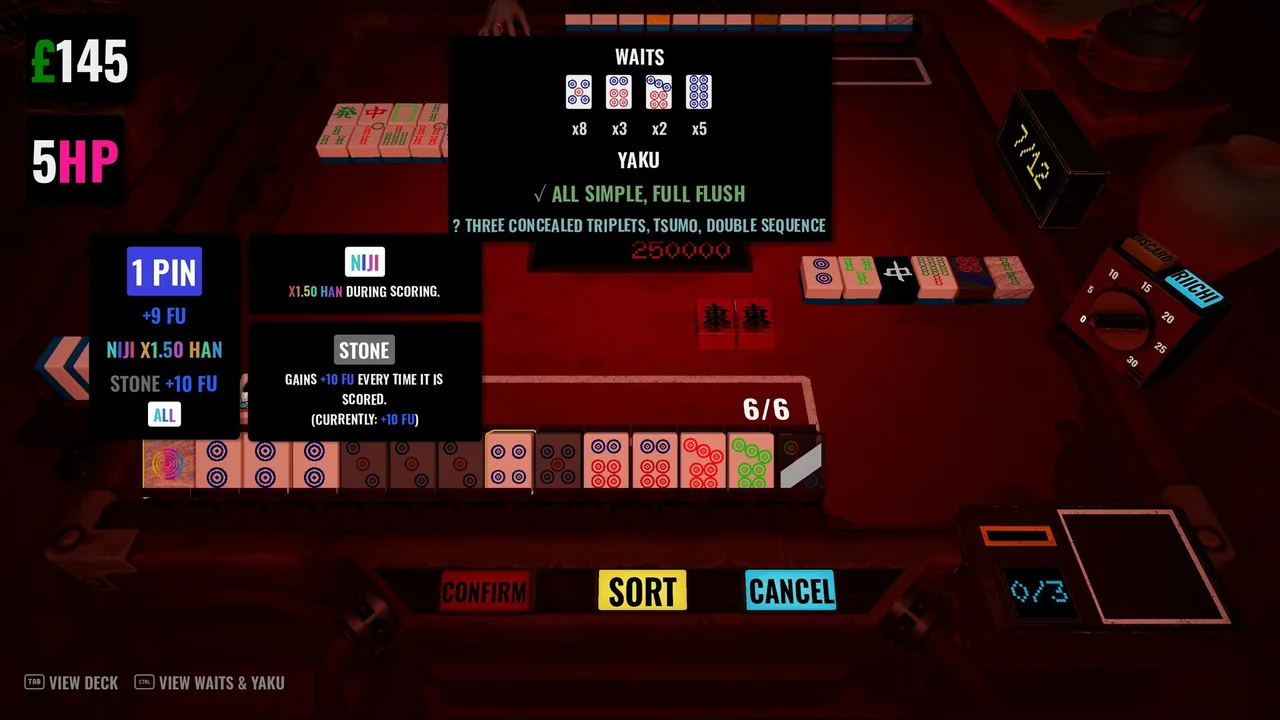
    A Hell Wait hand of pin tiles with a panel listing four waiting tiles and the yaku All Simple and Full Flush, next to tooltips for the Niji and Stone jokers
    The waits and yaku panel shows what your hand can win on.

    The big change is the format. It’s just you and one opponent, and the tile sets are much smaller than the 136 tiles in a standard mahjong set. Rounds move much faster than a full four-player game, and that pace is perfect for a roguelike where you play match after match.

    Newcomers get help too. There’s a full tutorial, rules like furiten are optional difficulty modifiers, and your opponent even tells you which tile he’s waiting on. He might be lying, though.

    Fu Times Han, the Balatro Way

    Balatro fans will understand the scoring right away. In Balatro, your score is Chips times Mult. Hell Wait swaps those for mahjong’s own scoring units, Fu times Han. Real riichi already scores hands with fu and han, so the idea fits naturally, but here the numbers explode. One of the official screenshots shows 1,163 Fu times 5,322 Han for 6.18 million points.
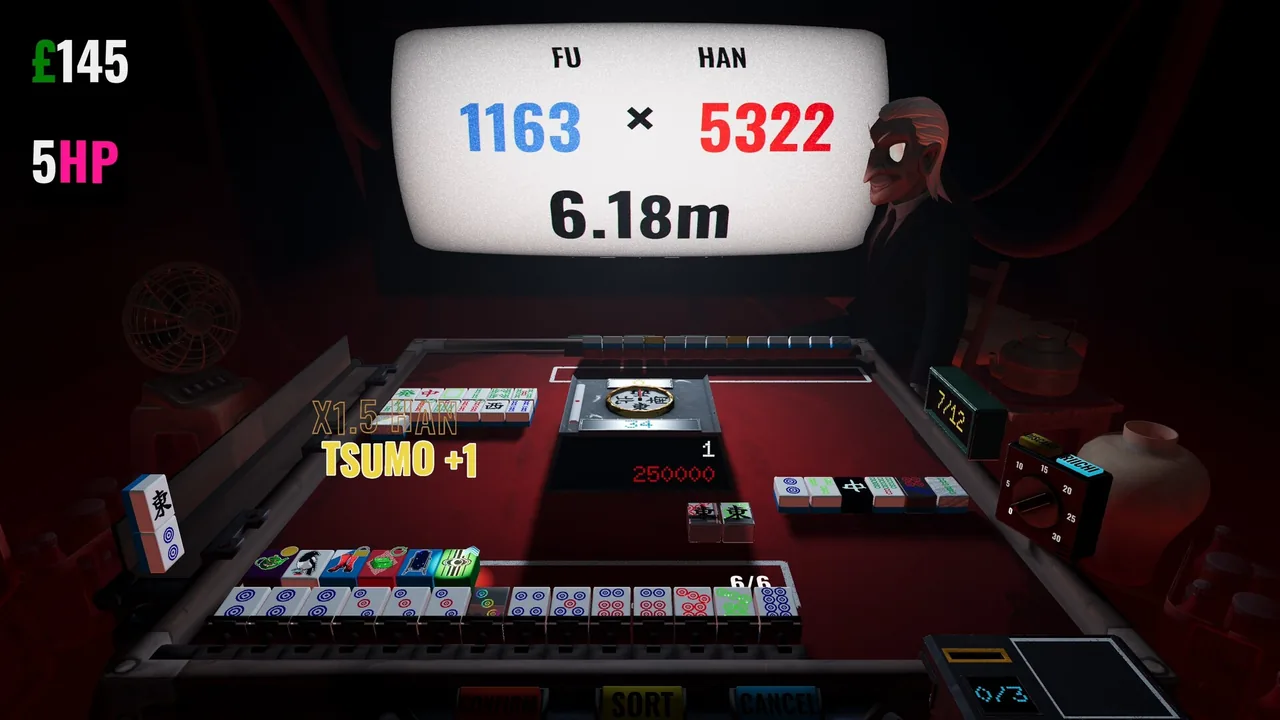
    A Hell Wait scoreboard showing 1163 Fu times 5322 Han for a score of 6.18 million, with the old man opponent standing beside it and joker tiles lined up above the player's hand

    Joker Tiles

    The jokers are tiles, and there are over 150 of them. They change scoring, drawing, and even the rules of the game. Niji multiplies your Han by 1.5 during scoring. Stone gains 10 Fu every time it’s scored. Rabbit’s Foot adds luck each turn, which improves your drawing odds. Stack the right ones and a modest hand turns into a monster.
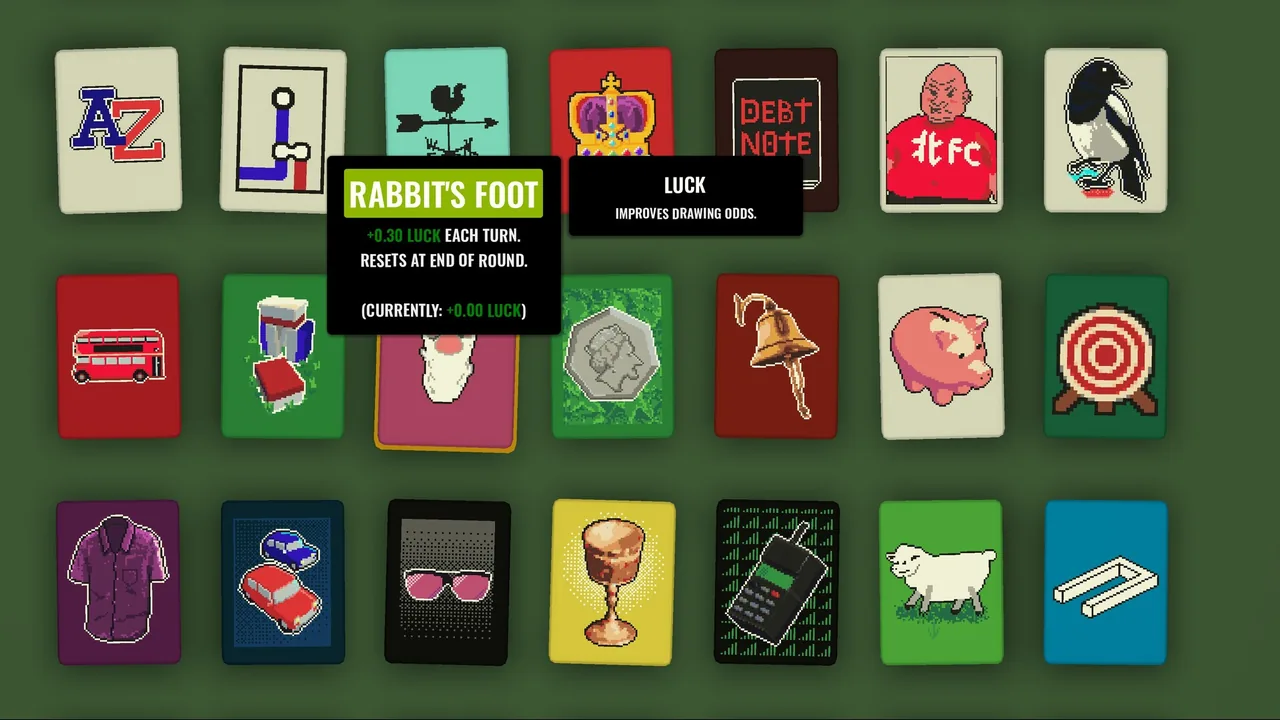
    A grid of Hell Wait joker tiles with pixel-art designs, including a Debt Note, a red double-decker bus, a piggy bank, and the Rabbit's Foot, whose tooltip says it adds 0.30 luck each turn

    Chips, Materials, and Blessings

    Then there are the chips, poker chips stamped with demonic sigils that change your tiles. Barbatos turns up to three tiles into gold, and a gold tile earns you £2 if it’s in the discard pile during scoring. You can also add stickers and dora to your tiles, while Blessings upgrade your yaku so they score bigger.
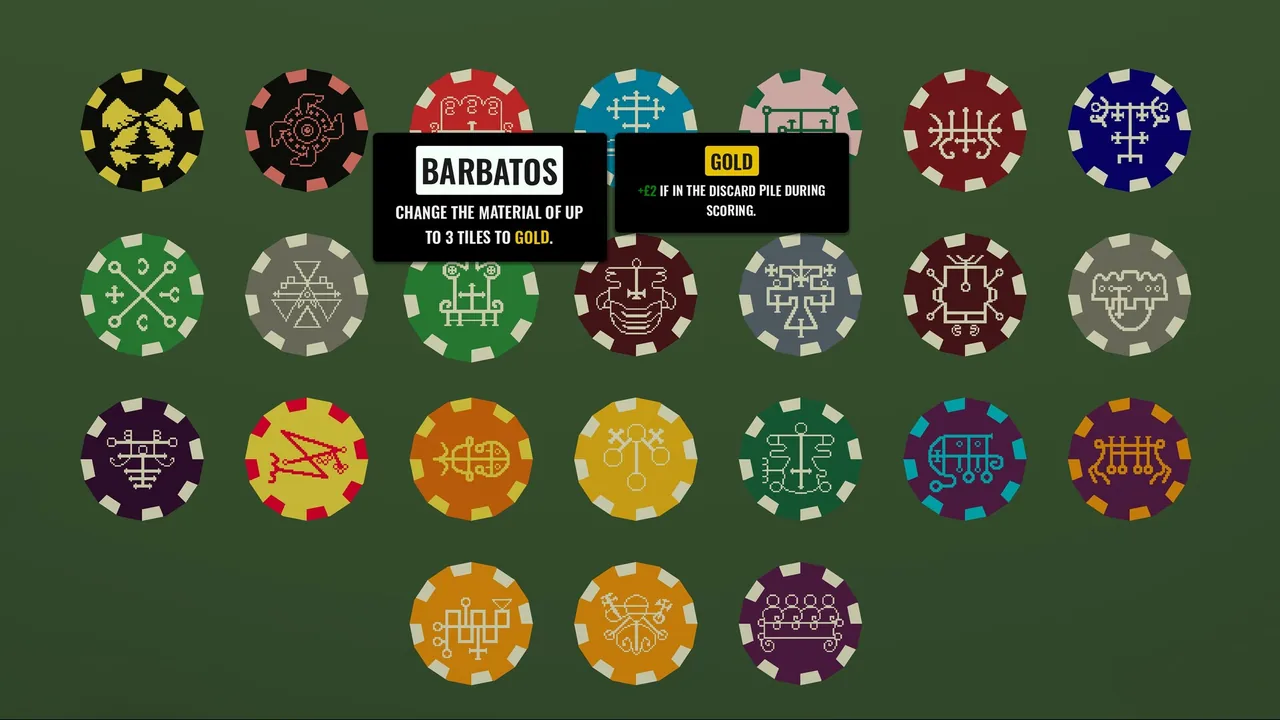
    Rows of Hell Wait poker chips marked with demonic sigils, with the Barbatos chip's tooltip saying it changes the material of up to three tiles to gold

    You buy all of this from a shop built into a slot machine, and you can pay to reroll what’s on offer. Just like in Balatro, every run comes down to what you buy and what you skip.
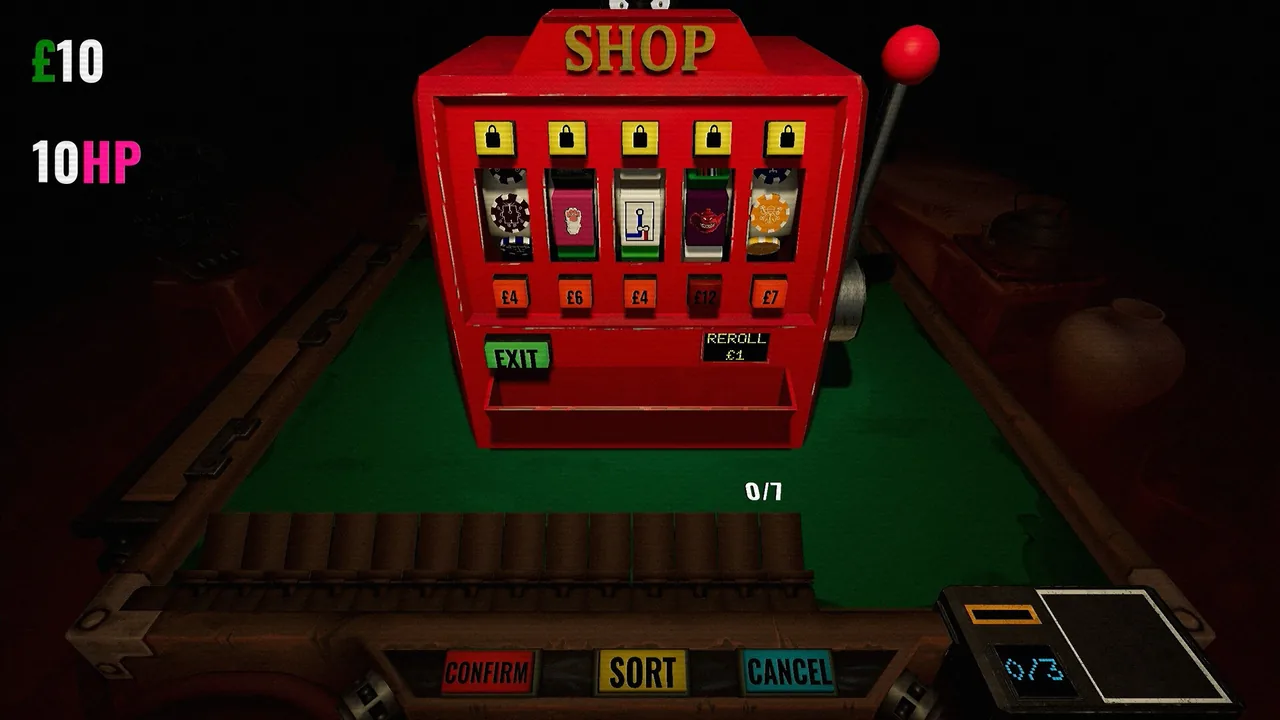
    The Hell Wait shop, a red slot machine with five items for sale behind locked slots, plus Exit and Reroll buttons

    Tile Sets That Push You Toward Big Hands

    The tile sets keep me coming back. You pick one at the start of each run, and each one pushes you toward a different kind of hand.

    My favorite is the second set, Orphaned. It only contains dragons, winds, and terminals, the exact tiles you need for Thirteen Orphans (kokushi musou). It’s a yakuman most players almost never see in a normal game, because you need one of each of the 13 terminal and honor tiles plus a pair. With Orphaned, it’s a hand you can actually plan for, and landing it feels amazing. Even the set’s name is a nod to the hand.
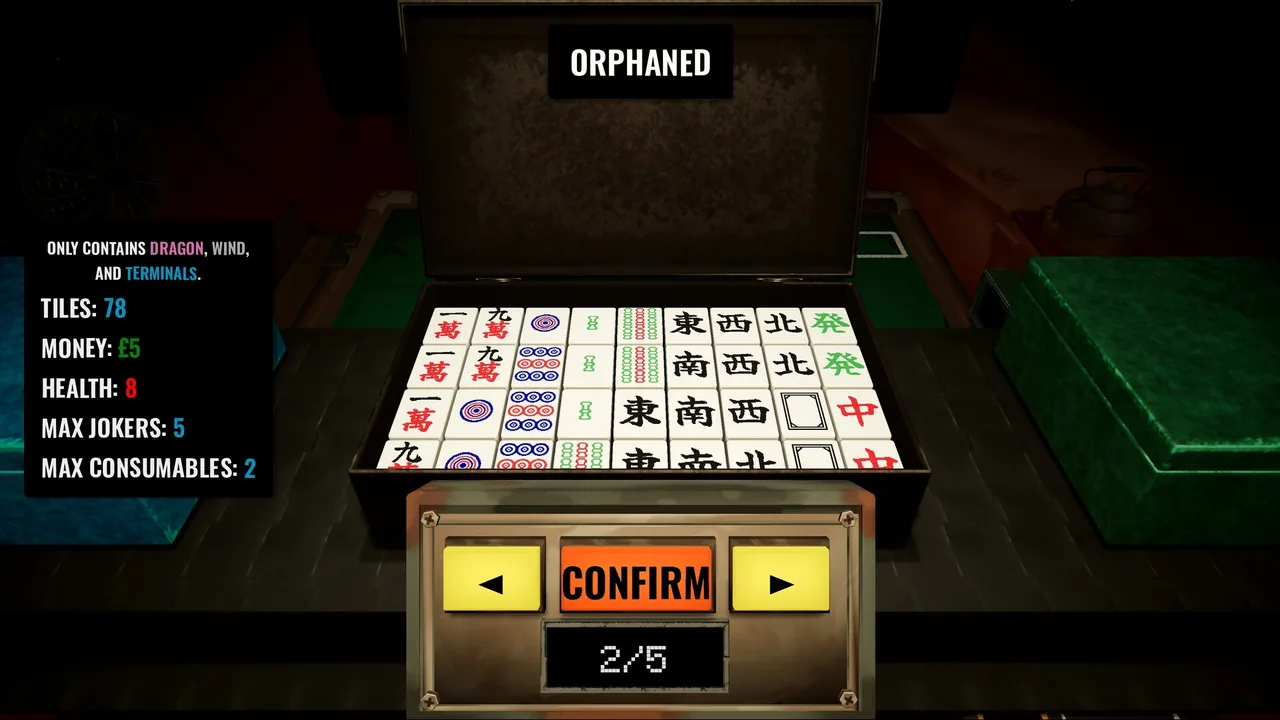
    The Orphaned tile set in Hell Wait, an open case of terminal, wind, and dragon tiles, with stats showing 78 tiles, 5 pounds, 8 health, 5 max jokers, and 2 max consumables
    The Orphaned set is built for Thirteen Orphans.

    Between the tile sets and the 45 Steam achievements, I have plenty of reasons to keep playing. I’m going after every achievement.

    An Old Man Straight Out of Akagi

    Your opponent is an old man with slicked-back gray hair, a dark suit, and a grin you can’t trust. If you’ve watched Akagi, you’ll spot the reference right away. He’s a nod to Washizu Iwao, the rich old man who forces Akagi into a mahjong match where Akagi bets his own blood. Washizu takes blood. Hell Wait’s old man takes fingers.

    The debt premise reminds me of Kaiji too, which comes from the same creator, Nobuyuki Fukumoto. Even the title is a mahjong term. A hell wait (jigoku-machi) is when you’re waiting on the last copy of a tile.
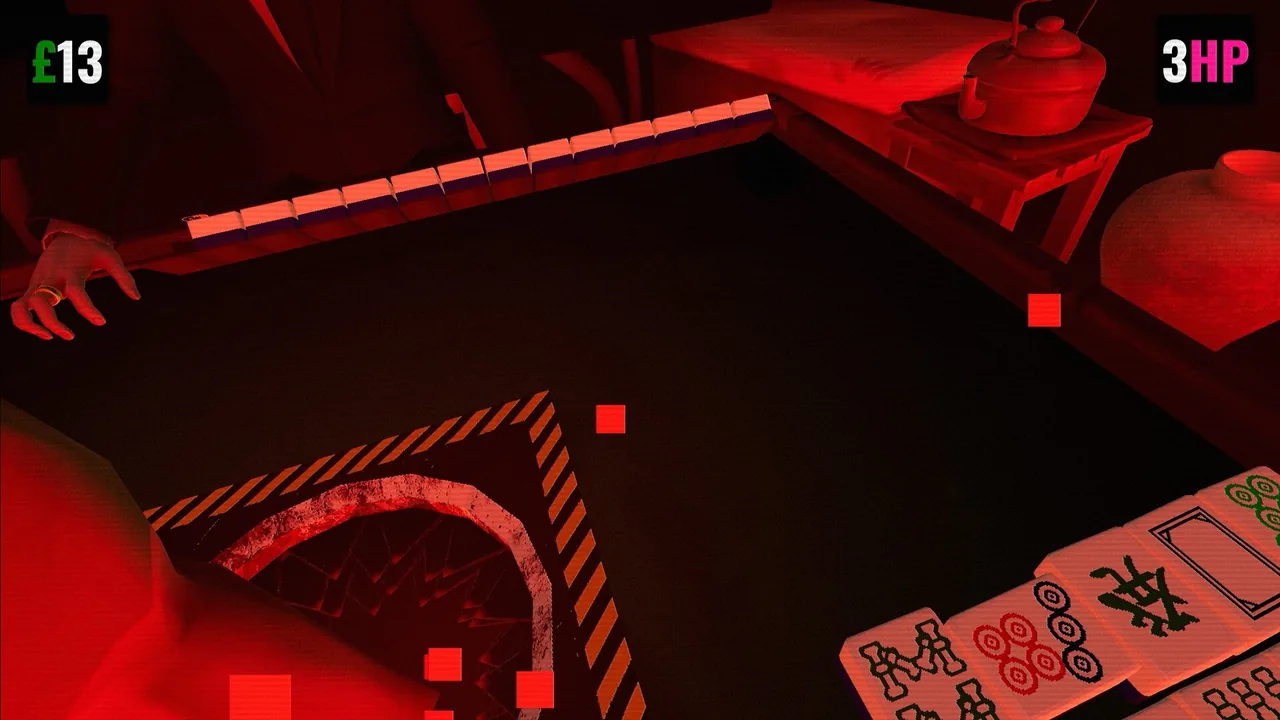
    A first-person view of the Hell Wait table under red light, with the opponent's ringed hand beside his tile wall and a hazard-striped hole cut into the table

    The red-lit room, the old man across the table, and knowing that one bad discard costs a finger make every match feel like a real gamble.

    Final Word

    Hell Wait respects riichi mahjong and adds a Balatro layer that makes every hand exciting. New players will need time to learn the yaku, but the tutorial and optional rules make it easier to get into. If you love Balatro, mahjong, or Akagi, this one is easy to recommend.

    Where Pinoys Can Buy Hell Wait

    • Steam: ₱475 on the Philippine Steam store as of this writing. It’s on PC only, for Windows and Linux.
    • Languages: English, Japanese, Simplified Chinese, Traditional Chinese, Italian, Korean, and Brazilian Portuguese.
    • Controllers: Partial controller support, including the DualSense.

    Prices change during Steam sales, so check the store page before you buy.

    For more game reviews, check out our gaming page!

    Images: Hell Wait © Mondbekker.

  • Anime Isekai: Why “Another World” Stories Took Over

    Anime Isekai: Why “Another World” Stories Took Over

    Most isekai heroes start their new life already holding the winning ticket: a cheat skill, a broken stat sheet, or a blessing from a goddess who feels bad about the truck. I said that in my review of The Exiled Heavy Knight, and it’s why so many fans roll their eyes at the genre. It’s also a big part of why isekai took over anime. Here’s where it came from, why it caught on, and where to start.

    What is an Isekai?

    An isekai, in simple terms, is a story where a character gets pulled into another world, either by being transported there or by being reborn there. Some land in fantasy worlds. Others end up inside video games.

    Where did isekai come from?

    Early Fantasy Gateways

    Isekai is not an exclusive trope in Japan, as “Alice’s Adventures in Wonderland” (1865), “The Wonderful Wizard of Oz” (1900) and “The Chronicles of Narnia” (1950) work similarly to isekai. In each setting, a character enters a world beyond their imagination, often making the characters and audience question whether or not everything that took place was real.

    Even before anime, Japan already had similar stories, such as Urashima Tarō, who saves a turtle and gets to live with the Princess Otohime in the undersea Dragon Palace for a few days, except when he returns, a hundred years pass. The earliest modern Japanese isekai stories include Haruka Takachiho’s novel “Warrior from Another World” (1979), the Christian anime “Superbook (1981), and “Aura Battler Dunbine” (1983), among others.

    A screen shot of an Anime Isekai show.

    The Nintendo game “Super Mario Bros.” (1985) inspired the first example of another popular format of isekai: being trapped in a virtual reality, in the form of the film “Super Mario Bros.: The Great Mission to Rescue Princess Peach!” (1986).

    The Modern Isekai Boom

    A screen shot of an Anime Isekai show.

    The modern isekai boom is often attributed to the light novel series,  “The Familiar of Zero” (2004-2017), where the Japanese male lead, Saito Hiraga, is transported from the modern world to a fantasy setting as a familiar for a female magic user. This light novel series inspired a number of amateur fanfiction writers from the website Shōsetsuka ni Narō (“Let’s Become Novelists”) or Narō for short, including Tappei Nagatsuki, who went on to create the hit isekai light novel series, “Re:Zero: Starting Life In Another World” (2012-present).

    Sword Art Online’s anime in 2012 spawned even more amateur works, and by then “isekai” had become the go-to label for the genre. By the late 2010s, it was hard to find an anime season without at least two of them.

    What makes a story an isekai?

    Transported Or Reincarnated Protagonist

    A screen shot of an Anime Isekai show.

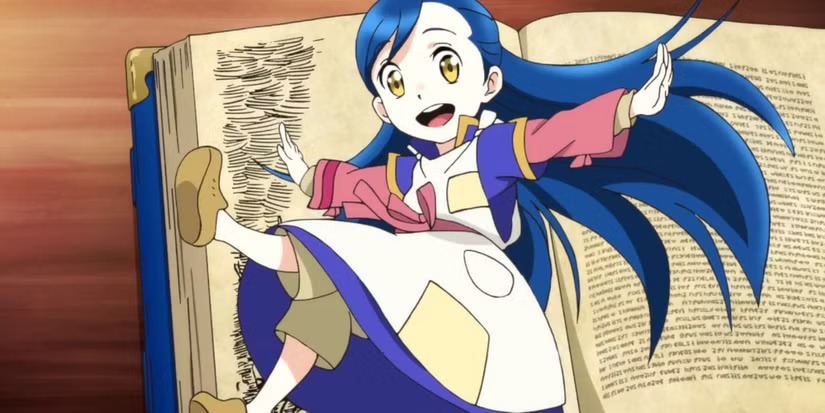
    What every isekai has in common is the desire for escapism and there is no better vehicle (pun intended) to be transported to another world than reincarnation. In reincarnation, a character’s old, usually negative life is erased, either through a vehicular accident or strange portal, as they start over again in the new world. They either start from scratch as a child as in the case of “The Ascendance of a Bookworm” and “Mushoku Tensei” (Jobless Reincarnation) or as an existing part of that world as a hero such as “The Rise of the Shield Hero”.

    Overpowered Abilities And Game Mechanics

    A screen shot of an Anime Isekai show.

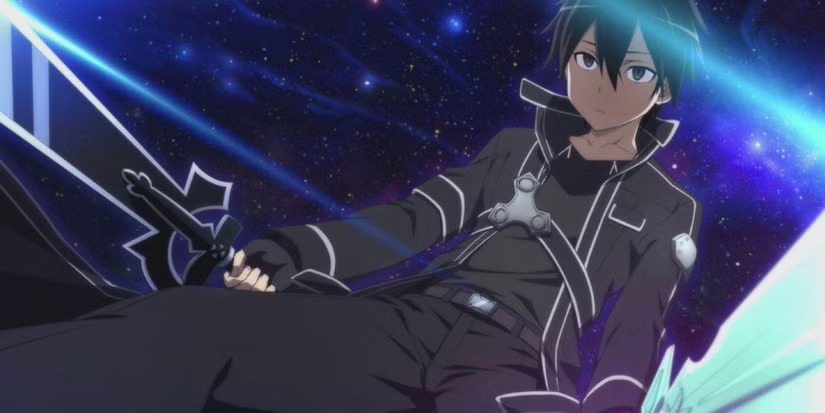
    In isekai fantasy settings, a second chance at life also empowers protagonists in the literal sense as they overcome the system with overpowered magic abilities and follow video game mechanics, including level up systems to quickly upskill and life ups that guarantee zero deaths. Often seen in virtual reality isekai like “Sword Art Online”, where the protagonist Kirito is overpowered because of his lengthy experience in the virtual reality simulation. This serves as a form of wish fulfillment as in real life, people do not get to bend the rules without consequence but in a fantasy isekai, they can without any effort or risk.

    Why did isekai take over anime?

    Escapism And Second Chances

    These isekai stories hook readers because they make people trapped by depression, work stress or their mistakes feel like they can start fresh and make up for their failures in a different life. Reincarnation equals redemption and sometimes, a big flashy sword and the ability to cheat without worry or consequence is fair game compared to a kafkaesque unbalanced real life.

    Easy Entry For New Viewers

    Isekai is also easy to get into. The worldbuilding is simple, the rules often get explained like a game tutorial, and the protagonist is a near-blank slate you can picture yourself in, for better or worse.

    Flexible Story Playground For Creators

    Before isekai became a tiresome fad in the anime community, it was a canvas of a genre that could fill any creative idea possible. From its origins, isekai was made for fanfiction authors to experiment and create inventive worlds, whether from a desire for romantic fulfillment, wish fulfillment or a satirical commentary on real-world politics.

    Why do so many fans roll their eyes at isekai?

    A screen shot of an Anime Isekai show.

    Long Titles, Recycled Plots 

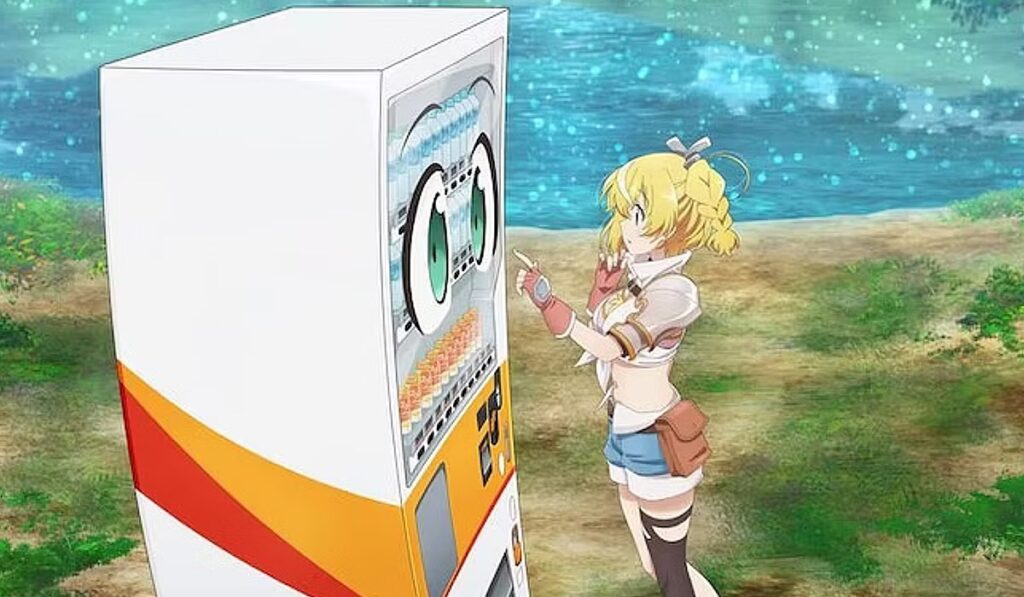
    The most common complaint people have with isekai are the longwinded titles that nowadays resemble ChatGPT prompts. But behind such a seemingly cliche complaint is a reality, that most isekai follow checklists: overpowered hero, new form (vending machine, sword, animal) harems, demon lord, that makes every isekai story look the same.

    Shallow Power Fantasy And Escapism

    By making the protagonist a blank slate self-insert, there is barely any storytelling to begin with. The protagonist gets whatever they want with no challenges and tragedies.

    Oversaturation And Viewer Fatigue

    If there is superhero fatigue from at least two cinematic universes for the past decade, there is also isekai fatigue that can also quickly turn into anime fatigue. Since isekai is an escapist genre of limitless potential, there have been way too many stories set in fantasies or video games that these concepts, which excite the imagination, become plain and boring. This pressure has pushed creators to try new things and more often than not, it means not making an isekai altogether.

    Is isekai still worth watching?

    Self-Worth is the Game

    In spite of its many criticisms, isekai is still a mainstay in anime because of its themes of self-worth, reinvention and pushing back against modern life. There’s something Tolkien-esque about it. Fantasy is a place where reality is in our hands, and it reminds people of the magic of ordinary life: a life without crushing burdens, fake reputations or burnout. Isekai only lost that magic to the whims of capital and complacency.

    Isekai Can Still Subvert the Norm

    A screen shot of an Anime Isekai show.

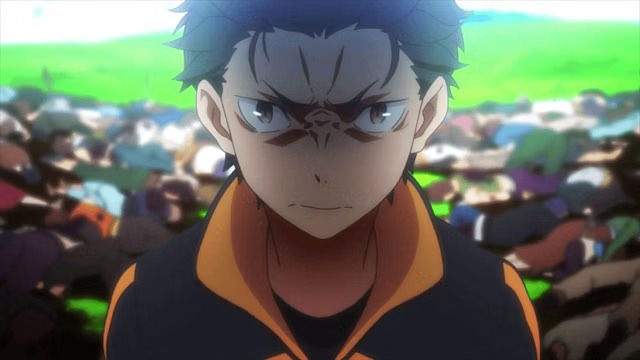
    Long before the isekai fatigue, “Re:Zero” addressed the escapism critiques as the protagonist, Natsuki Subaru, has an overpowered ability, “Return by Death” that prevents him from permanently dying by resetting events. However, this is a curse of love from the witch Satella and paralyzes Subaru with trauma, helping him develop a sense of responsibility over his actions and to make his present life count.

    Newer shows are pushing back too. In The Exiled Heavy Knight Knows How to Game the System, Elymas draws the class everyone calls defective and has to earn every upgrade. That’s why he works for me as a protagonist.

    Where should new viewers start?

    Isekai is more than swapping a boring real world for high fantasy, new romances and epic battles. It can also be campy and fun. Here’s where I’d start:

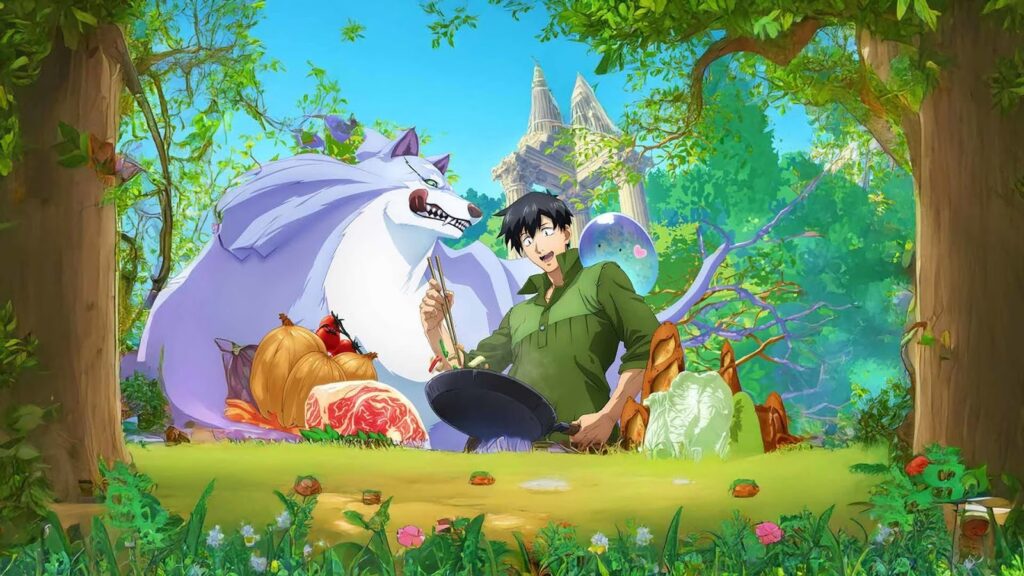
    • Campfire Cooking in Another World with My Absurd Skill: the hero skips the adventuring and just cooks. Proof that not every isekai looks the same.
    • Re:Zero: Starting Life in Another World: for the version where getting sent to another world actually hurts.
    • The Exiled Heavy Knight Knows How to Game the System: for a hero who has to earn every level.

    What was your first isekai? Tell me in the comments, and check out my anime page for more.

  • Fatal Frame II Review: Twin’s Terror

    Fatal Frame II Review: Twin’s Terror

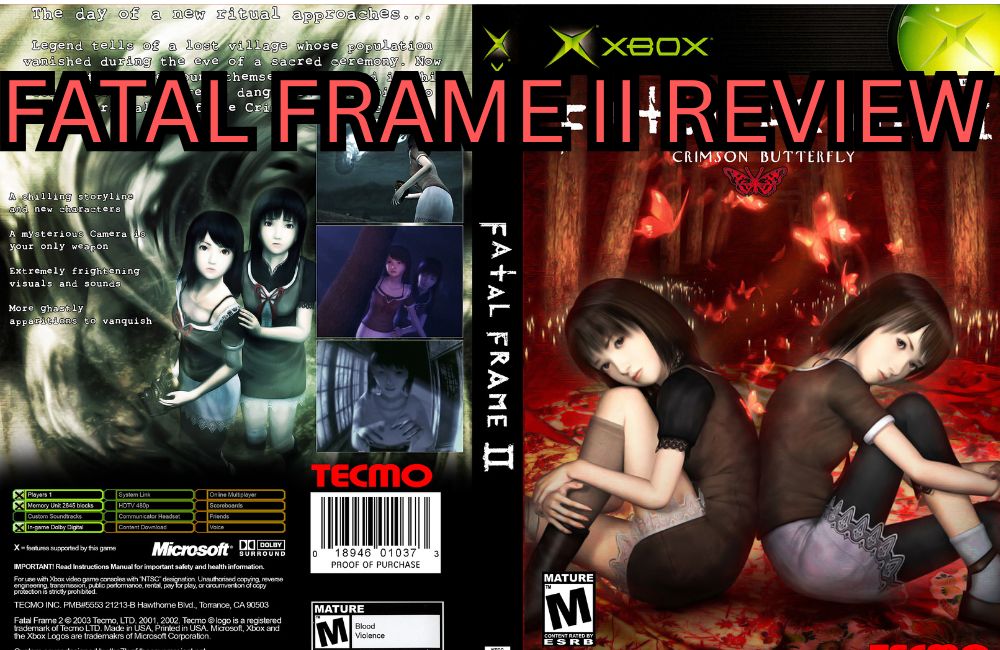
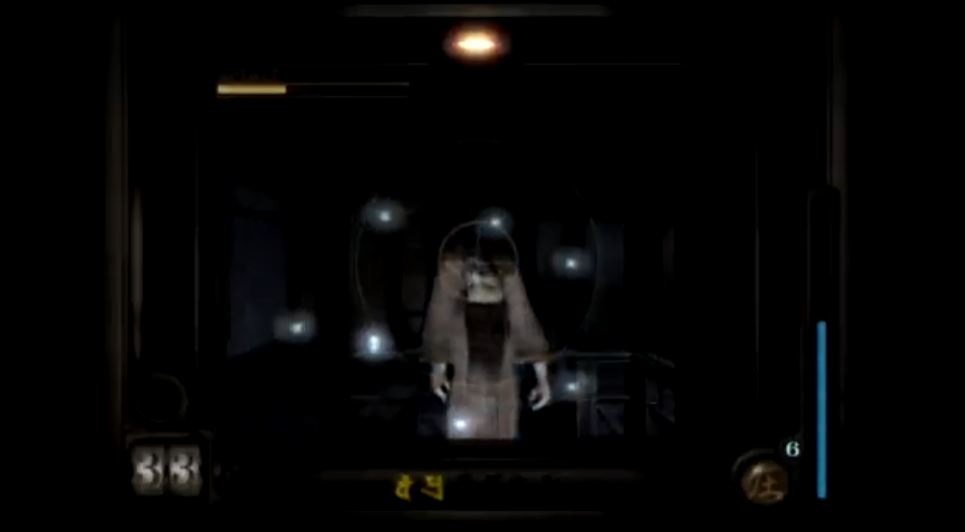
    While Fatal Frame 1 established the series’ Camera Obscura game mechanic, it was Fatal Frame II: Crimson Butterfly that made the series popular. The sequel has two twin sisters attempt to survive a haunted abandoned village with the signature ghost-bane camera. While there are minor improvements to the gameplay, the main attraction of Crimson Butterfly is the protagonist. 

    A screenshot of Fatal Frame 2.

    The Crimson Plot

    Fatal Frame II sees the same plot of siblings attempting to survive and escape ghosts. This time, the characters resonate with the players more than in the first game. 

    The Amakura Siblings

    Mio and Mayu made a mistake of coming back to the valley of their childhood. This led them into the abandoned All Gods Village, where another ritual took place. Players control Mio in the game while Mayu is the sibling you “protect.” 

    Mayu is a more memorable NPC than the older brother in the first game since she accompanies you throughout the earlier periods of the game. As you fend off ghosts with the Camera Obscura, you also see Mayu through your viewfinder. 

    I felt the need to protect Mayu from the dangers of the village. Unlike the bigger brother, the other sibling is more vulnerable than the one with the camera. She will even get attacked by the ghosts and will die if you do not defend her. There is a natural desire to keep “both” siblings safe because of this scenario.  

    At the start of the game, though, there is a sense of distrust we feel for Mayu. There were two fake outs in the intro video where a figure pretended to be the lost sibling. It was also Mayu who had led the two into the Lost Village. Mayu will also murmur nonsensical phrases as she accompanies you, further driving that distrust. 

    Conflicting emotions are a part of the game’s experience since there are multiple endings here. One of which involves leaving Mayu behind. Of course, many players want to see both of the Amakura sisters safe and free, which is what made the ending “memorable” to everyone who played the game. 

    A screenshot of Fatal Frame 2.

    The Lost Village

    Following Resident Evil’s lead, Fatal Frame II expands the game from a haunted mansion to a haunted village. It shows you that the game will be much expansive than its predecessor. After playing Fatal Frame 1, the sequel does seem much bigger thanks to the many outdoor areas. 

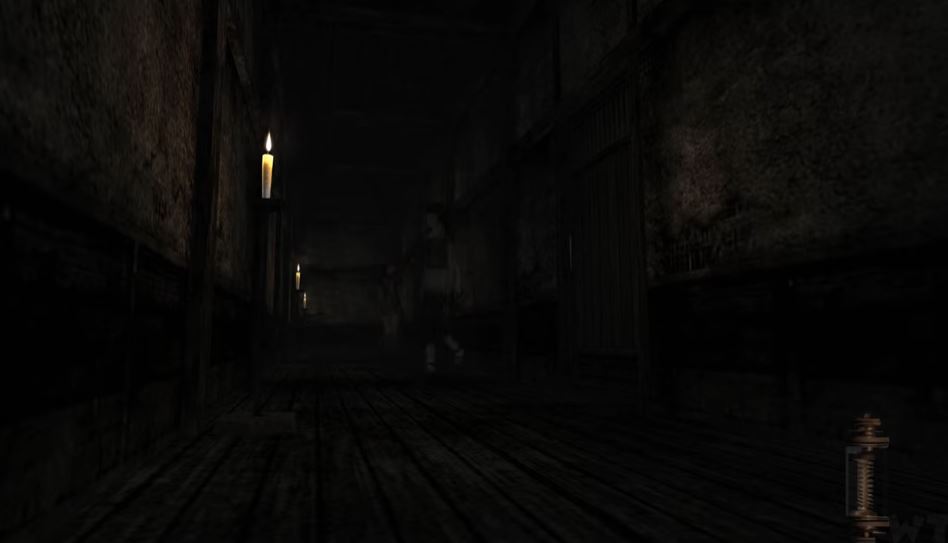
    Tecmo’s Ayako Toyoda gave life to the Minakami Village with haunting ambient tracks. Mixed into the soundtrack are random street sounds and murmurs, making you feel surrounded by murderous ghosts looking to add you to their numbers. “The Lost Path” is my favorite track, which drives that Asian horror atmosphere. 

    With a larger map, Fatal Frame II opens up a more ambient horror atmosphere that you cannot easily escape. However, it was not able to achieve that kind of dread as the first game. 

    A screenshot of Fatal Frame 2.

    The Camera Obscura Mechanic

    Players defend themselves again with the Camera Obscura in the sequel. This is the essential part of Fatal Frame’s gaming experience. While the mechanics are still the same, Fatal Frame II added some new mechanics to make the game challenging. 

    Basics of Fighting Ghosts

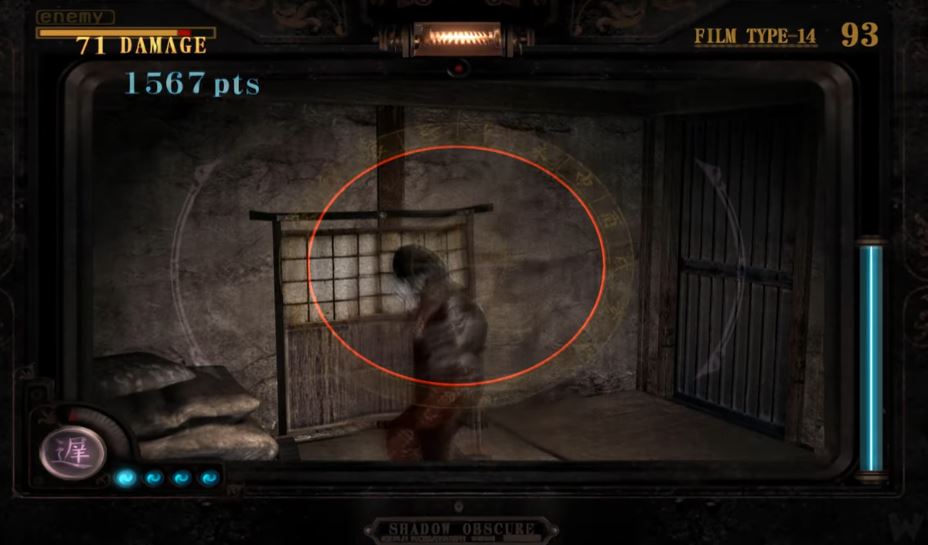
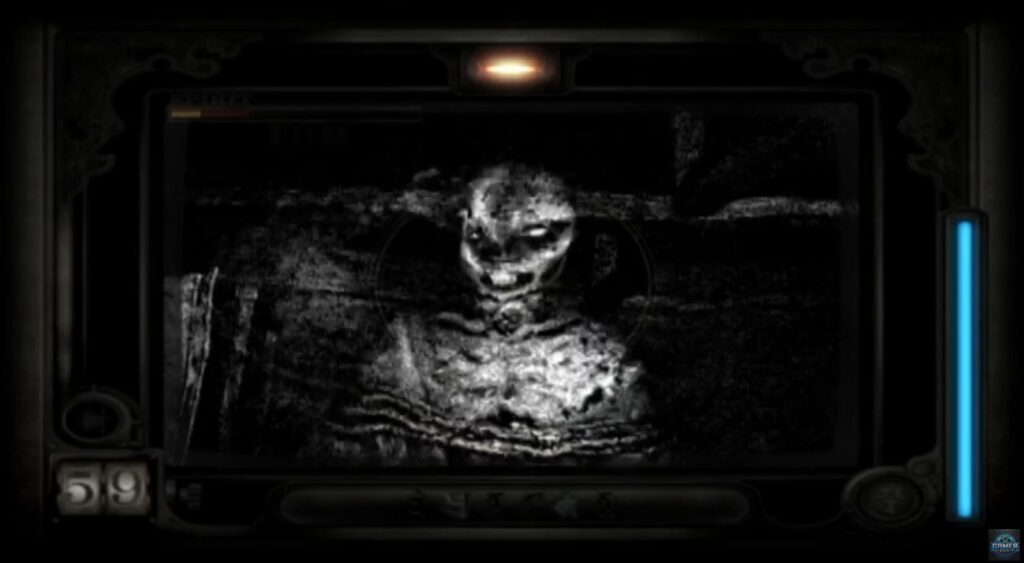
    The gameplay is simple. Aim your camera at a ghost until they show within your capture frame, then take a shot. This lets you damage enemy spirits to inflict enough shots until they run out of HP. 

    There is an incredible amount of depth to this gameplay. When you have the ghost centered in your capture frame, you light up special characters beside it. Lighting them all lets you inflict more damage in each shot. You can also do special shots like the Zero Shot when you are close to the spirit. Another example is the special Fatal Frame Shot that can be taken when you take a shot just before a ghost’s attack reaches you. 

    A screenshot of Fatal Frame 2.

    You want to pull off as many high-damage special shots as possible. These shots let you save film, a scarce ammunition in Fatal Frame, and get higher spirit points accumulation. Spirit points let you upgrade your camera and unlock special functions. 

    Another added depth is the type of films you can obtain throughout the village. Rare flims like the Type 90 and Type Zero can significantly reduce spirit’s HP, making them essential for bosses. Unlike Fatal Frame 1, the normal Type 14 is limited, which is the one that does a medium amount of damage. In exchange, there is an unlimited supply of Type 07 that does less damage, making them suited for taking pictures of roaming ghosts. 

    Obscura Upgrades

    Part of what makes Fatal Frame fun is the progression mechanic, where you increase the Camera Obscura’s functions. In Fatal Frame 2 though, you need to obtain Spirit Orbs that are dropped by ghosts. Spirit Orbs lets you open the upgrade option for these functions with the spirit points used to unlock that upgrade. 

    Fatal Frame 2 New Features

    Being a sequel, there are new features that further makes battles memorable in Crimson Butterfly. 

    The latest special shot you can achieve is the Combo Shot. After picturing a ghost, the camera’s viewfinder zooms in and flashes a blinking red light to indicate a follow-up picture. This opens up a third Combo Shot opportunity if you manage to do a 2 Hit Combo Shot. Combo Shots lets you further do damage with all special characters lit and obtain more spirit points. 

    Lenses:

    Finally, there are the lenses. These lenses let you do special attacks or abilities at the cost of Spirit Power Orbs. These orbs are filled by the damage inflicted to your enemies. While some of these features are used in Fatal Frame 1, there are newer abilities in Crimson Butterfly. Here are the abilities you can obtain: 

    • Blast: Boosts shot damage and triggers Blast Back even outside shutter chances. Costs 2 Spirit Power and upgrades add a slower Blast Back that makes combos easier. 
    • Crush:  Heavy damage lens that can one-shot most ghosts during a shutter chance. Costs 4 Spirit Power and upgrades raise damage even outside shutter chances.
    • Slow:  Temporarily slows a ghost so shutter chances last longer and timing is easier. Costs 1 Spirit Power and upgrades extend duration. 
    • Stop:  Freezes a ghost’s movement for a short time to create a safe, clean shot. Costs 3 Spirit Power and upgrades increase the stop time.
      Zero:  Higher damage than Blast and also causes Blast Back. Costs 3 Spirit Power and upgrades further increase damage.
    • See:  Makes hidden or vanished ghosts easier to locate. Adds a directional marker in the viewfinder when upgraded and costs 1 Spirit Power. 
    • Stun:  Intermittently stops a ghost’s movement so you can line up shutter chances. Costs 2 Spirit Power and upgrades extend duration. 
    • Track:  Auto-follows the target so the viewfinder keeps the ghost centered. Costs 2 Spirit Power and upgrades extend duration. 
    A screenshot of Fatal Frame 2.

    Functions

    In addition, you also obtain special functions to your camera. These makes you pull off special shots or avoid ghosts easily.:

    • Alarm:  Plays a tone at the exact Fatal Frame moment so you can fire for max damage. The viewfinder top also flashes red. 
    • Evade:  Lets you avoid damage when grabbed by pressing the shutter at the right moment to flash-stun the ghost.
    • Measure:  Shows the nearest ghost’s remaining HP in the viewfinder while it’s in the capture circle.
    • Sense:  Indicates a ghost’s direction and distance with a signal at the top of the viewfinder. Helps track vanishing targets.
    • Switch:  Lets you toggle equipped functions on the fly without digging into menus. Great for swapping utility and damage setups mid-fight.
    • Zoom:  Adds zoom-in and zoom-out controls to frame weak points and fill the capture circle. Works via L2/R2 in FF2.
    • Instant:  Flashes a red indicator when a Fatal Frame window opens. Helps chain combo shots during Blast Back.
    • Save:  Increases Spirit Power earned on hits and speeds up charge gain so you can fire specials more often.

    Why is Fatal Frame II popular? 

    If you ask people who grew up with the PS2 or Xbox what their favorite Fatal Frame was, they will likely pick Crimson Butterfly. One reason is the number of PS2 and Xbox owners at the time Fatal Frame 1 and Fatal Frame 2 were released. With more people owning the consoles, Fatal Frame 2 was likely the first installment of the series that they played. 

    Another reason is the Amakura Siblings. You are more connected with Mayu than with Mafuyu since the twin sister accompanied you in the game instead of being a ghostly reflection.  

    For players like me who finished the first game, the upgrades and new mechanics were noticeable in Fatal Frame II. The Blast function was my most used lens that I wished was available in the first game. 

    What can also be the reason why people loved Fatal Frame II than the first game was Amano Tsukiko’s Chou music. This was the first game with a vocal track. It has the same impact as Akira Yamaoka’s track to Silent Hill. I cannot emphasize how often I played this song on my walkman and MP3 player back then. 

    Final Words: Fatal Frame II Overall Thoughts

    I enjoyed Fatal Frame II, which improves much of Fatal Frame 1’s story and gameplay mechanics. However, I did not find it as scary as the first game. Crimson Butterfly still has many amazing haunts and jump scares that have taken me by surprise. But it did not have the same impact as Fatal Frame 1. 

    Going back to the Lost Village and the soundtrack. I do not feel as isolated and trapped as I was when exploring the mansion when I was going around the Lost Village. Compare the first part of the Himuro mansion and the Encounter to Himuro Mansion. There is a feeling of ghosts peeking at me through the paper doors or windows. The scarier moments of Fatal Frame 1 were then the soundtrack cuts, and there is nothing but DEAD silence. 

    Although not as terrifying as the first game, it still manages to achieve the right amount of scare and horror ambiance. It also improves upon many of Fatal Frame 1’s gameplay. 

    If you reached the end, thank you for reading my review. Check out my review of Fatal Frame 1 next!

  • Fatal Frame 2001: Horror Through a Camera

    Fatal Frame 2001: Horror Through a Camera

    Horror games have been gaining traction since the Playstation 1 era with the likes of Resident Evil, Silent Hill, and Clock Tower. Makoto Shibata was looking to break through the genre with Fatal Frame. A game he aimed to be the scariest title anyone has played. That goal has been accomplished with the title’s clever mechanic of using a camera s your weapon. 

    A screenshot from the Fatal Frame 1 PS2 game.

    The Fatal Frame Camera Obscura

    The only weapon throughout the franchise has an incredibly deep gameplay mechanic. This camera led to the scariest and most fun moments of Fatal Frame. 

    Fighting Ghosts

    You fight by aiming at the ghost so it is within the capture frame. Hold the ghost inside the frame as a meter builds or the characters at the bottom lights up. Step closer or allow the ghost to get near to raise the damage. If a ghost is too near, you can take an early shot to stop it. Later spirits can fade, reappear, and feint for added difficulty. You track them with the reticle and with sound emitted by the Camera Obscura. 

    My favorite mechanic is the titular Fatal Frame Shot. You can pull this off when the frame is orange and the characters at the bottom turn red on your viewfinder. A Fatal Frame Shot usually occurs when the ghost is near and about to attack you. If you manage to do this tricky shot, the ghost suffers heavy damage. 

    A screenshot from the Fatal Frame 1 PS2 game.

    The mechanic provides a high-risk, high-reward opportunity for you. Since films are scarce, you want to inflict as much damage to the ghost with few shots as possible. At the same time, you are face-to-face with the ghost who is about to grab or attack you. That added pressure makes it difficult to take the shot, but pulling it off lets you save on film and healing items. 

    Getting Better at Fighting Ghosts

    The Camera Obscura earns experience points or spirit points each time you take down ghosts or take shots of ones roaming the manor. You can upgrade the following parameters of your camera: 

    • Range: Increases the size of your capture frame. This makes it easy to capture tricky Fatal Frame shots
    • Speed: Decreases the time for the characters at the bottom to light up, letting you inflict max damage in less time. 
    • Max Value: Increases the number of characters that lights up at the bottom, allowing for shots that takes more hit points from the ghost. 

    As you progress in the story, you also earn Spirit Stones that unlock special functions for your camera. This includes paralyzing the ghost so you can fully charge your Camera Obscura. After completing the game, you meet other requisites like completing the ghost list, and you also get more special functions. This includes the Zero function, where all the characters at the bottom are always charged. 

    A screenshot from the Fatal Frame 1 PS2 game.

    Fatal Frame’s fun moments come from the Camera Obscura alone. You are not just firing bullets or swinging your sword at your enemies, you are taking kodak moments of their attack. You can also get rewarded for the riskier and scarier Fatal Frame shots, making nearly every ghost fight memorable. 

    Exploring the Manor

    There is nothing more terrifying than exploring a haunted manor. With Fatal Frame, Shibata emphasizes the HAUNTED part. He made the dead manor feel unnaturally alive in this game. 

    The Atmosphere

    You know you are in for a terrifying night the moment you enter that front entrance. “Encounter to Himoro Mansion” plays as Mafuyu (and later Miku) explores the Himuro Mansion. The background song has ghostly voices singing a distant tune that goes away and returns. It casts that cold dread of being in the vicinity of unknown dangers just lurking across a few walls. Wall that will not stop them. 

    Ayako Toyoda and Shigekiyo Okuda’s team was able to create that haunting track with the use of stereophonic sound. There is that three-dimensional wailing where you feel ghosts are roaming around your character. 

    The Himura mansion design should also be credited. It kept to the traditional Japanese architecture and culture. Though, there are details that made anyone unfamiliar with the architectural design disturbed. These details include the ropes hanging from a hallway and the bloodied kimono hanging around the room. 

    A screenshot from the Fatal Frame 1 PS2 game.

    Grave Encounters

    It wouldn’t be a ghost game without encountering one. The Himura Mansion is teeming with non-combative spirits. They are part of the game’s scare factor since they could lead to another fight. If you are fast enough or have played the game and memorized their appearances, you can take a shot of them with your camera. This adds to the ghost list that unlocks end-game bonuses. 

    There are also “seal keepers” who seals doors. Removing the seal involves hunting for a ghost base on the picture that popped out of your camera. While not as terror-inducing as the vanishing spirits, these are great puzzles that take advantage of the Camera Obscura mechanic. 

    Everything about Fatal Frame screams Japanese horror. The soundtrack and mansion design keeps you alert for any ghost encounters during your exploration. 

    A screenshot from the Fatal Frame 1 PS2 game.

    What Haunts the Himura Mansion

    Fatal Frame’s story provided a good reason for spirits to roam around the Himuro Mansion. 

    The Ruined Ritual 

    There was a ritual that involved the Rope Shrine Maiden  Kirie Himuro. It involves sealing the Hell Gate with her body. Due to conflict with herself and the Himuro family, the ritual failed. Spirits escaped from the Hell Gate while Kirie’s spirit, full of malice, roams the mansion. Any trespassers were inflicted with the “Rope Curse” that kills the victim. 

    The Hinasaki Siblings

    The first protagonist is Mafuyu Hinasaki for the prologue chapter. He was searching for his tutor, Junsei Takamine, who had gone missing after exploring the mansion. When Mafuyu never returned, Miku went in to find her siblings. As you explore the mansion, you get notes and recordings on clues as to what happened to Takamine and his assistants. All of them were afflicted with the “Rope Curse” and became one of the many spirits you face. 

    Final Thoughts: Fatal Frame 2001’s Grave Photography

    Shibata achieved his goal of creating a scary game that will be remembered for a long time with Fatal Frame. Capturing ghosts as they slowly make their way towards you is a fascinating gameplay mechanic that no other devs have done. It was further bolstered by the music and design team who created a haunting atmosphere that keeps you on your toes. Fatal Frame is one of the best horror games to make an impact during the PS2 era.

  • Anime Girls Unpacked: Every Archetype From Tsundere to Yandere

    Anime Girls Unpacked: Every Archetype From Tsundere to Yandere

    If someone’s ever called a character “such a tsundere” and you nodded along without knowing what it meant, this one’s for you.

    Anime girls get written off as eye candy: big eyes, perfect hair, a fantasy no real person can live up to. Some of them are exactly that. But the best ones use the archetype as a starting point, and the labels fans give them say as much about the audience as about the characters.

    Anime girl standing in a field of sunflowers

    Where did the anime girl look come from?

    Japanese animation goes back to 1917, but the face we picture today mostly traces back to Osamu Tezuka. He grew up on Betty Boop and Disney’s Bambi and borrowed their big, expressive eyes. He also took a trick from the Takarazuka Revue, the all-female theatre troupe from his hometown, whose performers made their eyes sparkle all the way to the back row.

    For decades the ideal was the bishoujo, the “beautiful girl”: elegant, grown-up, a little untouchable. Then in the early ’90s, fans on Japanese bulletin boards started using the word moe for a different feeling, the urge to protect a character because she’s cute. Designs got rounder and younger to match.

    Moe and bishoujo sit at opposite ends of a scale, and most characters land somewhere in between. The fun is in the gap. “Gap moe” is when a character who seems cold or tough has a sudden, unexpectedly cute moment. It works because it breaks the label.

    What are the dere types?

    Most anime girl archetypes end in “dere,” from deredere, which means lovestruck. Nearly all of them describe how a character acts around the person she likes, though fans now use the labels for male characters too.

    Illustration of an anime girl
    • Deredere: sweet, cheerful and openly in love. Marin Kitagawa from My Dress Up Darling is the best recent example. She falls for Gojo early and barely hides it, which is rare for a love interest.
    • Tsundere: harsh on the outside, soft underneath, and in denial about both. Asuka Langley Soryu from Neon Genesis Evangelion is the template everyone gets compared to.
    • Yandere: love that turns obsessive and violent. Yuno Gasai from Future Diary will hurt anyone who gets between her and Yuki, and Yuki isn’t safe either. Perfect for a thriller. Terrifying anywhere else.
    • Kuudere: calm, quiet and hard to read. Mikasa Ackerman from Attack on Titan proves the type works far from a high school classroom.
    • Dandere: shy with everyone except the one she likes. Hinata Hyuga from Naruto is the classic case, though she grows out of it as an adult.
    • Himedere: the princess who expects to be pampered. Beatrice from Re:Zero pulls it off with a child’s face and a very grown-up attitude.
    • Bakadere: lovable and a little dim. It overlaps with moe, because the cluelessness reads as innocence.

    Which anime girls aren’t defined by romance?

    Plenty of types have nothing to do with a love interest. The moekko is the young, cute character the rest of the cast feels they have to protect. The meganekko is simply the girl with glasses. The tomboy is the loosest category of all: sporty, short-haired, or into hobbies usually coded as boys’, in any mix.

    Anime girl figurine

    The most interesting anime girls are defined by what they do. Winry Rockbell in Fullmetal Alchemist is a mechanic first, and her best scenes are about automail, not Ed. Sailor Moon made the magical girl a hero in her own right, and a generation of girls grew up imagining themselves as the one who saves the day.

    Asuka is the best proof that a label is only a starting point. She’s called one of the first tsunderes, but her story isn’t really about Shinji. It’s about a lonely kid desperate to prove she matters, like every other Eva pilot thrown into a robot to save the world.

    How far does the anime girl reach outside the screen?

    In Japan, a cast of anime girls can change a whole town. After Lucky Star featured Washinomiya Shrine in Saitama, fans started making the trip. In 2009, police estimated about 420,000 people visited during the first three days of the New Year. Fans hang ema prayer plaques drawn with the characters, and some still help carry a Lucky Star mikoshi in the local festival every year. They even have a name for it: seichi junrei, “holy site pilgrimage.”

    Outside Japan, the anime girl has become a face people choose for themselves. Many of the biggest VTubers stream as anime girl avatars, and cosplayers at any con in Metro Manila spend weeks on wigs and costumes to become their favourite character for a day.

    Anime girl in a samurai outfit

    It isn’t all good. Critics have a fair point about body image, and about how young many of these characters are drawn. Some of the pushback is coming from inside anime itself. Marin from My Dress Up Darling has a craft and ambitions of her own. Frieren’s lead is a thousand-year-old elf whose story has nothing to do with romance.

    Where should you start?

    Pick an archetype and watch the show that defines it:

    • Deredere: My Dress Up Darling
    • Tsundere: Neon Genesis Evangelion. Asuka arrives in episode 8.
    • Kuudere: Attack on Titan
    • Beyond romance: Fullmetal Alchemist: Brotherhood for Winry, or Frieren: Beyond Journey’s End
    • Yandere: Future Diary, but only if you like your romance with a body count

    Which archetype was your first? Tell me in the comments. For more, check out my anime page, or read why anime cat girls never went away.

New Report

Close