Tag: Catgirls

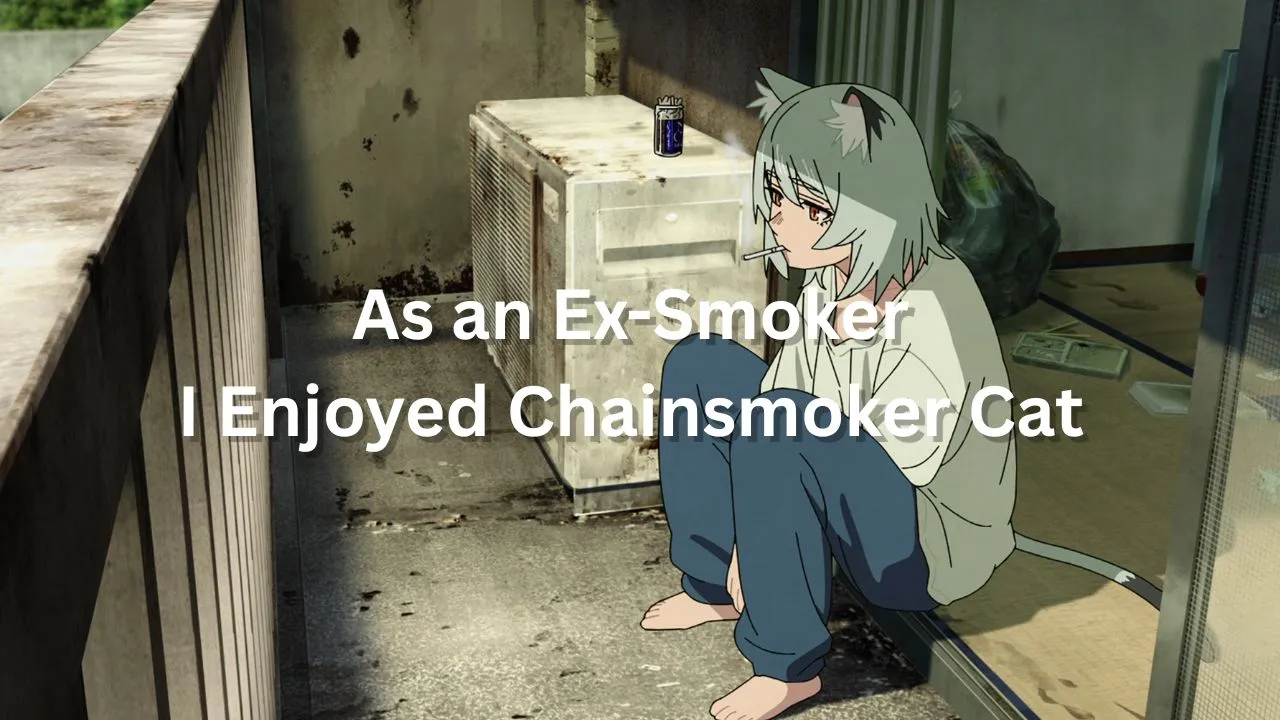
  • As an Ex-Smoker, I Enjoyed Chainsmoker Cat

    As an Ex-Smoker, I Enjoyed Chainsmoker Cat

    Chainsmoker Cat had me laughing at its filthy, blunt humor. The anime makes smoking addiction look almost charming by wrapping it in cute catgirls, even as they live in squalor, neglect their hygiene, and show little drive to earn enough to improve their lives. I started smoking in 2005 and was close to a pack a day.

    Watching Yani, I could laugh at the mess while recognizing how easily cigarettes can take over someone’s priorities.

    Chainsmoker Cat’s Plot and First Two Episodes

    Set in a world where humans and beastfolk live together, Chainsmoker Cat follows Yani, a heavy-smoking catgirl who puts cigarettes ahead of work, rent, and basic hygiene. Its opening episodes turn that habit into a string of everyday disasters.

    Cigarettes Before Rent

    Yani’s routine is already falling apart when the series opens. She picks up discarded cigarettes, gets cravings while working, and spends scarce cash on tobacco instead of paying rent. Her landlord is close to snapping, but a message from her responsible younger sister, Imoko, creates a more immediate crisis: Imoko asks for a photo of Yani’s room. The setup quickly links her smoking habit with the filthy, chaotic life around it.

    A Cigarette From Yakuneko

    After running out of cigarettes, Yani goes to her younger neighbor Yakuneko to ask for one. Their exchange introduces a relationship built on odd behavior and casual dependence. When Yakuneko suggests Yani find a job, Yani starts defending her carefree life as a form of freedom. The excuse is funny because she still needs someone else to supply her next smoke.
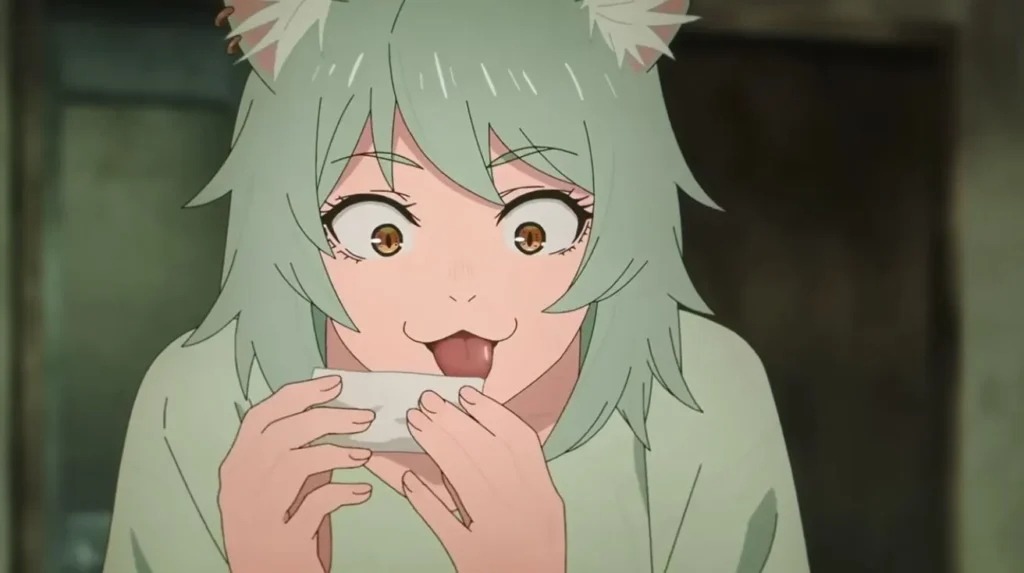
    A screenshot of Yani Neko licking a cigarette.

    The Allure of Smoking

    For several years, I worked in the BPO industry, where stress and sleepiness made cigarettes an easy source of comfort. A smoke break became something familiar to reach for during a draining shift. I carried that habit with me when I moved into a different industry. I just wanted sto stop, but I still looked for a stick when I get stressed. 

    The habit shaped my spending, too. Cigarette money became a priority alongside electricity and fare. I could know I wanted to quit and still set aside cash for the next pack. Smoking had worked its way into both my routine and my budget, which helps explain why wanting to stop did not always mean I could ignore the urge.

    The Controversial Humor of Poverty and Addiction

    Chainsmoker Cat makes dependence and poverty part of its comedy. Its cute catgirls live with messy rooms, shaky finances, and self-destructive habits. That contrast can expose how addiction takes over daily life, while also making the characters’ hardship part of the spectacle.

    My own smoking history makes Yani’s routines easy to recognize. The series shows her scavenging cigarette butts, getting cravings at work, and spending scarce money on tobacco while rent goes unpaid. I understand the pull of reaching for a cigarette when life feels stressful. The show stretches that impulse into grotesque comedy, though, so Yani’s struggle can become another reason to laugh at her squalor and bad decisions.

    Yakuko pushes the humor into more uncomfortable territory. The anime signals drug use through her strange smoke and behavior, but leaves much of her past unclear. Her voice actor describes her as serious and weighed down by past experiences, giving her odd behavior a more human dimension. A BPO youth committee record also notes a viewer complaint about repeated smoking and scenes resembling illegal-drug use. The record documents audience concern; it does not report a formal finding against the anime.

    Aruko’s drinking gets a similar mix of absurdity and concern. The official character profile describes her as living steeped in alcohol, with hands that often tremble. One episode turns her disappearance during a drinking party and discovery in Enoshima into a comic misadventure. Her voice actor describes Aruko as cheerful and not especially troublesome to others, which shows how the cute framing can soften the danger. The joke may reveal how the characters are trapped in their habits, but it can also leave viewers laughing at people who are already in trouble.
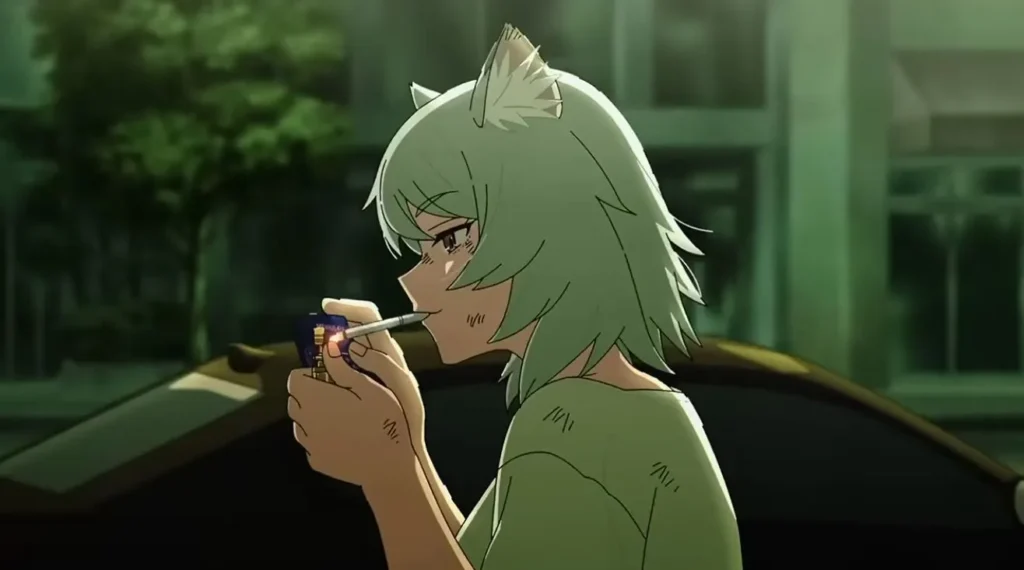
    A screenshot of Yani Neko lighting a cigarette.

    The Anime’s Censorship Goes Beyond Its Smoking

    News coverage focuses on the anime adaptation, rather than reporting edits to the manga. Selected episodes have an “On-Air” cut and a “Jaryu Kaihou” version that preserves more of the intended presentation. The edits include gross-out scenes: in episode 1, the broadcast version mosaics both Yani and the toilet mess, while the alternate shows more of her body; episode 5 also removes a mosaic from Hameko’s urination gag.

    The series also faced regional distribution restrictions. Anime Corner reported that Hong Kong streamer Anime Crazy removed it after saying local health authorities found it violated smoking regulations. Ani-One Asia later pulled it from YouTube, citing local regulations without naming the specific rule. The broadcast edits target explicit visuals, while these removals were linked to tobacco regulations.

    Yani Humor is Great for Anyone Who Gets Dark Comedy

    Chainsmoker Cat made me laugh with its filthy, absurd humor, while Yani’s cigarette rituals struck a familiar note after my years as a smoker. Its cute catgirls give the addiction gags an odd appeal, but their money problems, poor hygiene, and physical strain keep the damage in view. Yakuko and Aruko push the jokes into darker territory, and the anime’s edited versions and regional removals show how its crude content challenged distributors. I enjoyed the mix of laughter and discomfort, which left me thinking about how easily a habit can take over daily life. 
  • Anime Cat Girls: Why They’re Everywhere, and Why Felicia Is Still My Favorite

    Anime Cat Girls: Why They’re Everywhere, and Why Felicia Is Still My Favorite

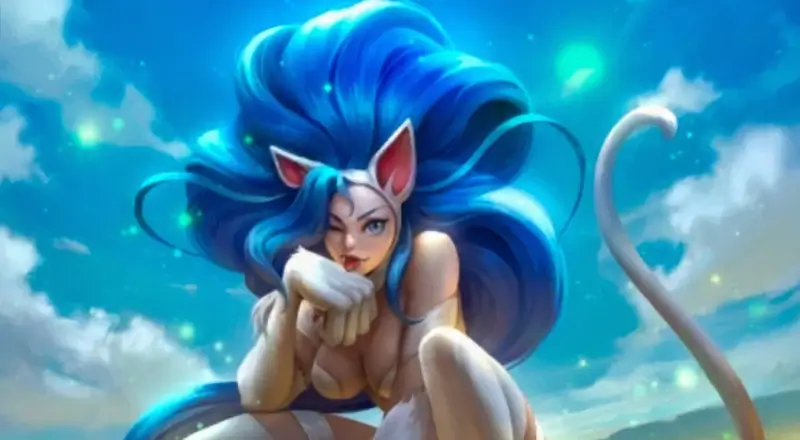
    My first anime cat girl wasn’t from an anime. She was from a Darkstalkers cabinet in Mega Mall.

    Felicia fought with claws, curled into a ball and rolled across the screen at you, and kicked sand in your face when you got too close. I didn’t know the word “nekomimi” back then. I just knew I picked her every time I dropped a token in.

    Thirty years later, anime cat girls are everywhere: in seasonal anime, on VTuber models, on the headbands at every con. So why did a pair of cat ears outlast so many other trends? Here’s my take, and the cat girls I think are worth knowing.

    Illustration of an anime cat girl with cat ears

    What counts as an anime cat girl?

    A cat girl, or nekomimi (literally “cat ears”), is a human character with cat traits. Ears for sure, usually a tail, sometimes fangs or slit pupils. She belongs to a bigger family called kemonomimi, “animal ears,” which also covers fox girls, wolf girls and bunny girls.

    The fuzzy part is how much cat. Merle from The Vision of Escaflowne is a girl with ears and a tail. Felicia has fur from her elbows and knees down and paws for hands. Bagi is basically a big cat standing upright. Remember that range. It matters when we get to the furry question.

    Illustration of an anime cat girl

    Why do cat ears work so well on screen?

    Because the ears act. Up means curious. Flat means scared or angry. A puffed tail means someone’s about to get scratched. Animators get a second face to work with, and a manga artist can show embarrassment without spending a word balloon on it.

    Monogatari uses this better than anyone. When Tsubasa Hanekawa’s stress finally breaks through, the ears show up and she becomes Black Hanekawa. You know which personality you’re talking to before she opens her mouth.

    The other half of the appeal is cats themselves. They’re cute, but never fully tame. A dog girl is loyal. A cat girl might help you, or she might steal your lunch and nap on your homework. That bit of unpredictability is what writers keep coming back for.

    The three cat girls you’ll meet in almost every series

    • The hyper sidekick. Merle in Escaflowne bounces around Van, gets jealous, and keeps every scene moving.
    • The cool one who’s always a step ahead. Yoruichi in Bleach spends her first arc as a black cat with a deep man’s voice. Then she turns out to be the fastest fighter in the room.
    • The troublemaker. Shampoo in Ranma ½ isn’t technically a cat girl, since cold water turns her into an actual cat. But she schemes like one, and Ranma being terrified of cats makes it ten times funnier.

    Felicia is the rare one who’s a bit of all three: cheerful, fast, and happy to make a mess of you.

    Where did cat girls come from?

    Bakeneko and nekomata, cat yokai from Japanese folklore

    Long before anime, Japan had the bakeneko and the nekomata. These were cats that lived long enough to turn into yōkai. The nekomata is known for its split tail, and in some stories these cats could talk or take human form. That old mix of cute and slightly creepy never really left the design.

    Illustration of an anime cat girl

    The look we know today took shape in manga. Yumiko Ōshima’s Wata no Kunihoshi (The Star of Cottonland, 1978) drew a kitten as a little girl with cat ears, and it’s often credited with popularizing the style. The ’80s got stranger, with Osamu Tezuka’s Bagi (1984) and Masamune Shirow’s Puma Sisters in Dominion Tank Police (1988).

    Then the ’90s hit, and cat girls were suddenly everywhere: Darkstalkers in the arcades (1994), Merle in Escaflowne (1996), the Night Warriors OVA (1997), Aisha Clanclan in Outlaw Star (1998). That’s the decade I grew up in, and you’ll see it in my list.

    These days the biggest home for nekomimi might be VTubing. Ears that twitch on a live model do the same job they did in a 1978 manga panel: they show you what the character feels, instantly.

    The cat girls worth knowing

    Felicia: Darkstalkers (1994) and the Night Warriors OVA (1997)

    Felicia, the cat girl fighter from Capcom’s Darkstalkers

    Felicia was raised by a nun and wants to be a musical star. That’s sweet, but it’s not why she stuck with me. It’s that her whole moveset is cat behavior. She rolls at you like a ball of fur, pounces from across the screen, and kicks sand at you like a cat burying something in a litter box.

    I didn’t have a strategy when I played her at Mega Mall. No game plan, no combos. I just had her roll and throw strong kicks, over and over. That was enough to get me to the third character on one token.

    That says a lot about the design. The cat parts aren’t decoration. They are the character, and they worked even for a kid mashing buttons. That’s why I think she’s still the best cat girl out there.

    Neferpitou: Hunter × Hunter

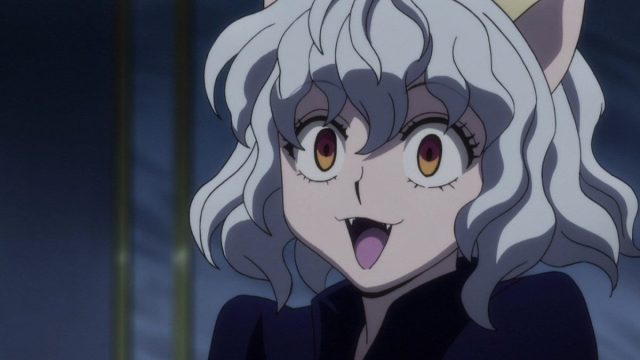
    Neferpitou from Hunter x Hunter looking shocked

    Pitou takes everything cute about a cat girl and turns it into a threat. Playful ears, curious head tilts, and one of the most frightening auras in the series. Pitou’s gender is never confirmed, which fans still argue about. The Nen ability Doctor Blythe (a creepy puppet-doll surgeon) shows the same contrast: it heals, and it’s still unsettling to look at.

    Bagi: Bagi, the Monster of Mighty Nature (1984)

    Bagi from Osamu Tezuka’s Bagi, the Monster of Mighty Nature

    Tezuka’s Bagi is a genetically engineered big cat woman, and her story is about what people do to animals in labs. Of everyone on this list she’s the most animal, and she’s the one I’d point to first if someone asked where cat girls stop and furries start.

    The Puma Sisters: Dominion Tank Police (1988)

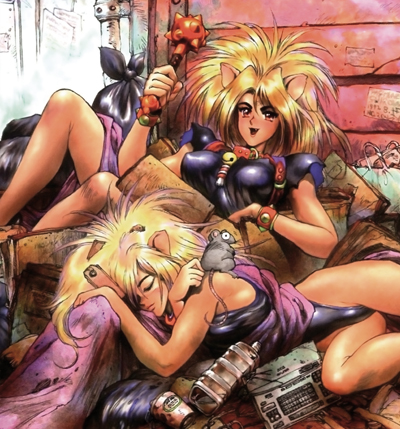
    The Puma Sisters, Annapuma and Unipuma, from Dominion Tank Police

    Annapuma and Unipuma are Shirow’s cat-eared criminal duo, all catsuits and attitude. They’re pure ’80s OVA, and a big part of why the sleek sci-fi version of the cat girl exists.

    Yoruichi Shihōin: Bleach

    Yoruichi Shihoin from Bleach

    The talking-cat reveal is one of Bleach’s best early twists. Once she’s in human form, the cat traits come across as speed and confidence rather than cuteness. She’s the “Flash Goddess” for a reason.

    Shampoo: Ranma ½

    Technically a girl who turns into a cat, not a cat girl. I’m including her anyway, because no ’90s anime fan would let me leave her off.

    Black Hanekawa: Monogatari Series

    Black Hanekawa from the Monogatari series

    The best example of ears used as storytelling. Hanekawa is a model student who keeps everything bottled up. Black Hanekawa is what comes out when she can’t anymore.

    So, are cat girls furries?

    My answer: most aren’t. Furry fandom is about anthropomorphic animals, meaning animal characters with human traits. A cat girl is the other way around: a human with a few cat traits. Ears and a tail don’t make you a furry.

    It gets blurry at the far end. Bagi? I’d call her furry. Felicia, with her fur and paws, sits right on the line, and I won’t fight anyone over which side she’s on.

    Where do you draw it? Tell me in the comments.

    Where to start with anime cat girls

    If you want to see why this design has lasted, here’s where I’d start:

    1. Play Felicia. Capcom Fighting Collection (2022) bundles the Darkstalkers games, so you don’t need to find an old cabinet in a mall arcade.
    2. Watch the Night Warriors OVA. Four episodes, easy to finish in one weekend.
    3. Then go modern with Black Hanekawa in the Monogatari series, to see how far the idea has come.

    Who was your first cat girl? If it was Felicia too, tell me which arcade you played her in. And if you want the bigger picture, read my piece on anime girl archetypes and their impact.

New Report

Close