

I didn’t learn riichi mahjong for fun. I learned it because Yakuza Kiwami’s platinum trophy required it, so I sat at the mahjong tables in Kamurocho until the yaku finally made sense. Then I watched Akagi, and mahjong went from a trophy chore to a game I love.
So when I found Hell Wait, a riichi mahjong roguelike deckbuilder inspired by Balatro, it felt like it was made for me. Solo UK developer Mondbekker says the idea came after five minutes with the Balatro demo. After playing it myself, I can say it’s two of my favorite games in one.
What Hell Wait Is About
Hell Wait launched on Steam on November 9, 2026. You play a debtor lured into a series of mahjong matches with the promise that your debts will be cleared. Survive 15 matches and you walk away free. Your health is your fingers. Deal in or fall behind, and you lose one.
Each match has a score target that keeps climbing. Between matches, you spend your winnings on Jokers, Pacts, and Blessings. Jokers mostly boost your scoring, Pacts rig your deck by enhancing tiles or changing their suit, and Blessings power up your yaku.
Riichi Mahjong Is Still the Core
Hell Wait doesn’t water down mahjong. You still build hands around yaku, you can still declare riichi, and you still have to read your opponent’s discards so you don’t deal in. Everything I learned in Kamurocho still counts here.
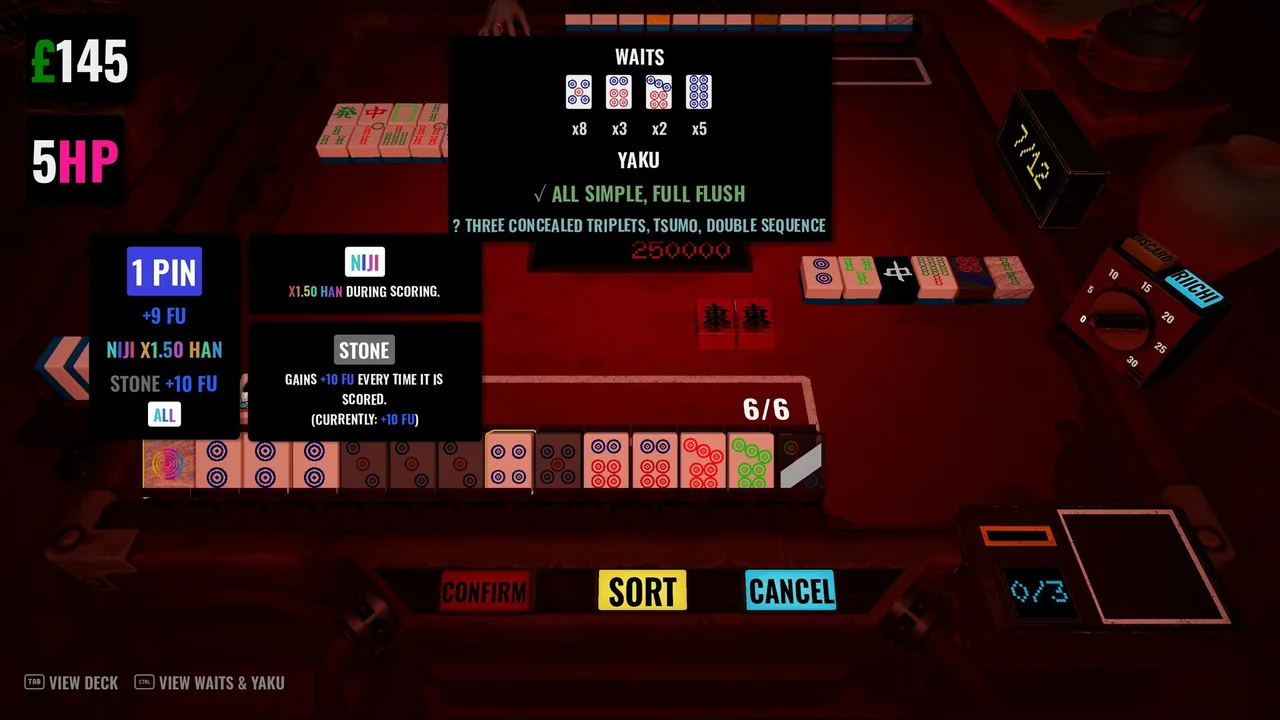
The big change is the format. It’s just you and one opponent, and the tile sets are much smaller than the 136 tiles in a standard mahjong set. Rounds move much faster than a full four-player game, and that pace is perfect for a roguelike where you play match after match.
Newcomers get help too. There’s a full tutorial, rules like furiten are optional difficulty modifiers, and your opponent even tells you which tile he’s waiting on. He might be lying, though.
Fu Times Han, the Balatro Way
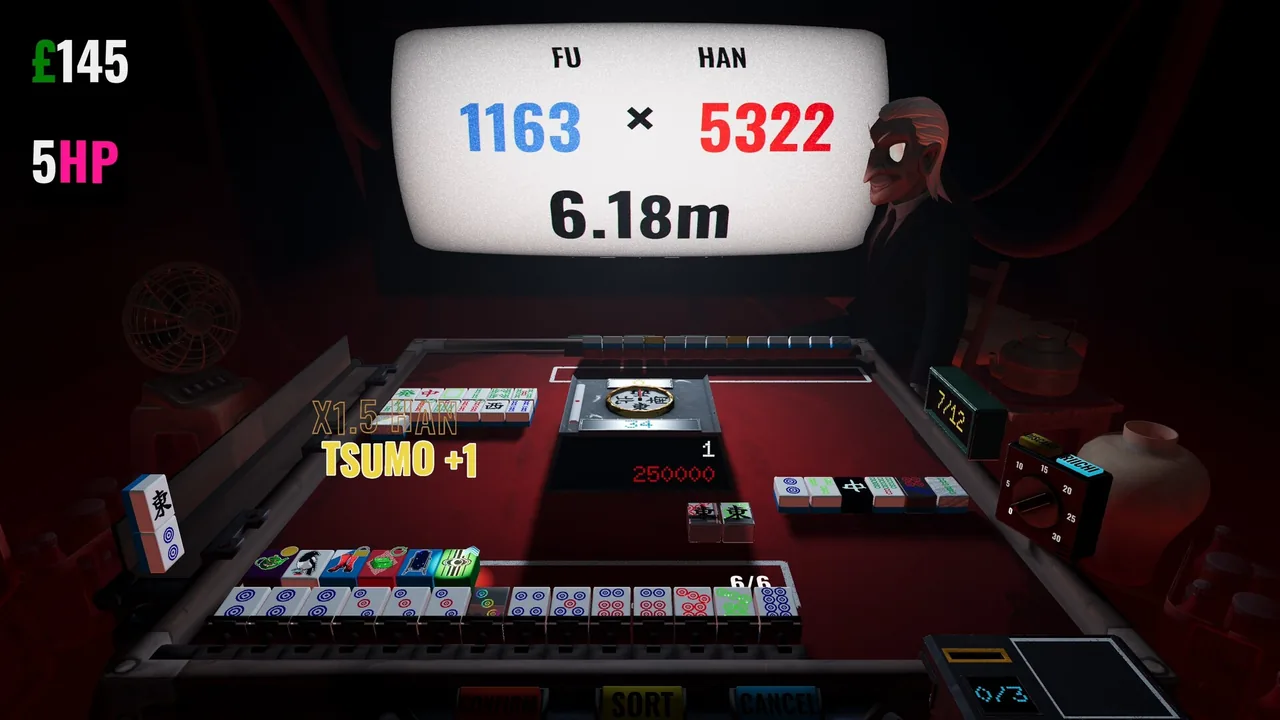
Balatro fans will understand the scoring right away. In Balatro, your score is Chips times Mult. Hell Wait swaps those for mahjong’s own scoring units, Fu times Han. Real riichi already scores hands with fu and han, so the idea fits naturally, but here the numbers explode. One of the official screenshots shows 1,163 Fu times 5,322 Han for 6.18 million points.
Joker Tiles
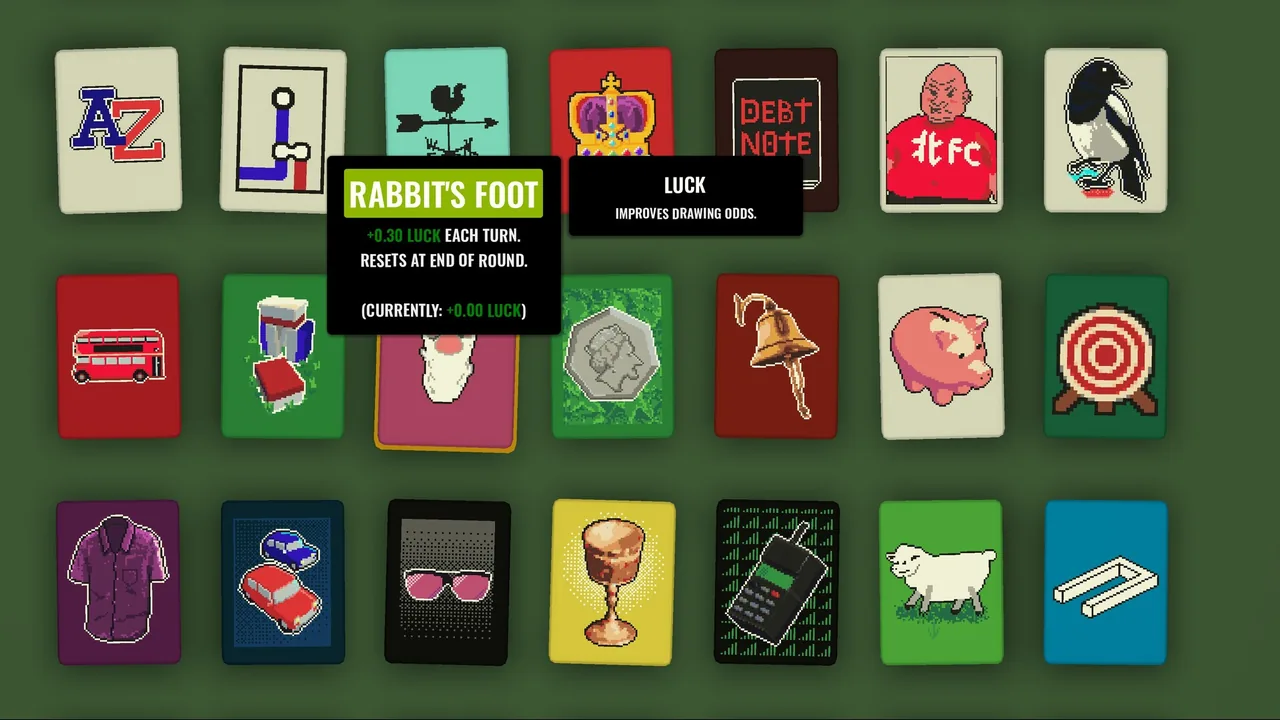
The jokers are tiles, and there are over 150 of them. They change scoring, drawing, and even the rules of the game. Niji multiplies your Han by 1.5 during scoring. Stone gains 10 Fu every time it’s scored. Rabbit’s Foot adds luck each turn, which improves your drawing odds. Stack the right ones and a modest hand turns into a monster.
Chips, Materials, and Blessings
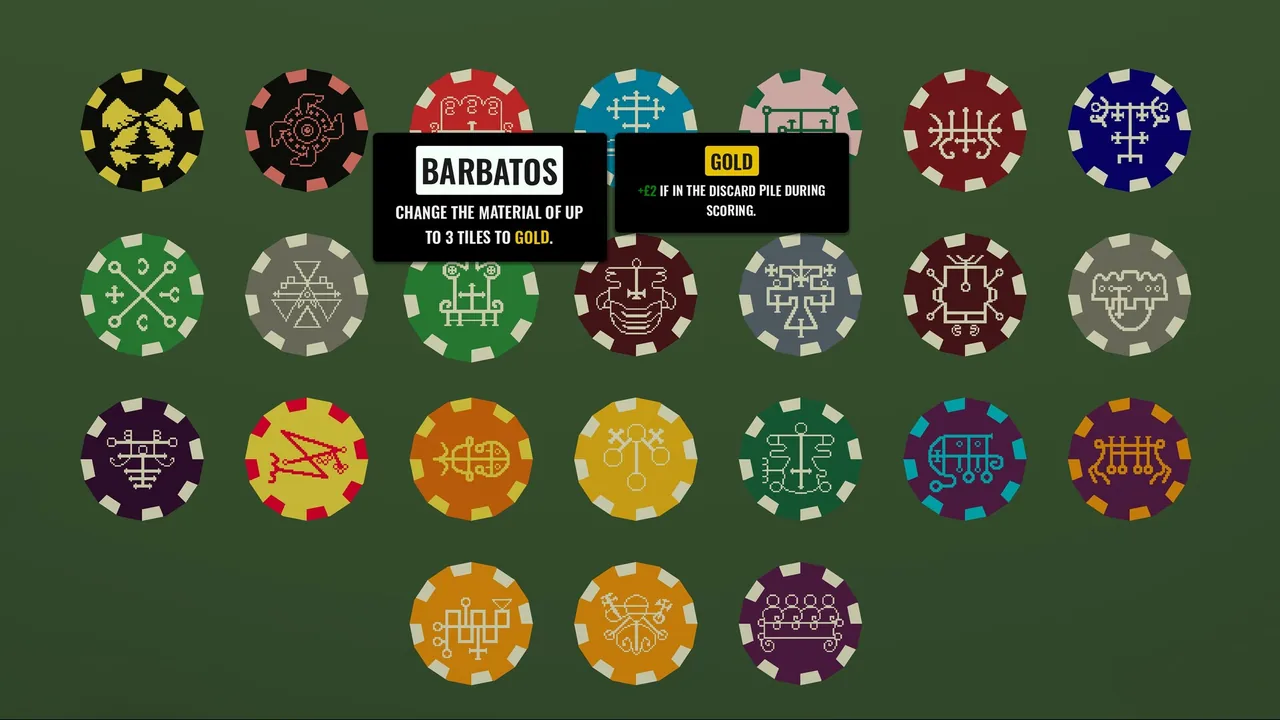
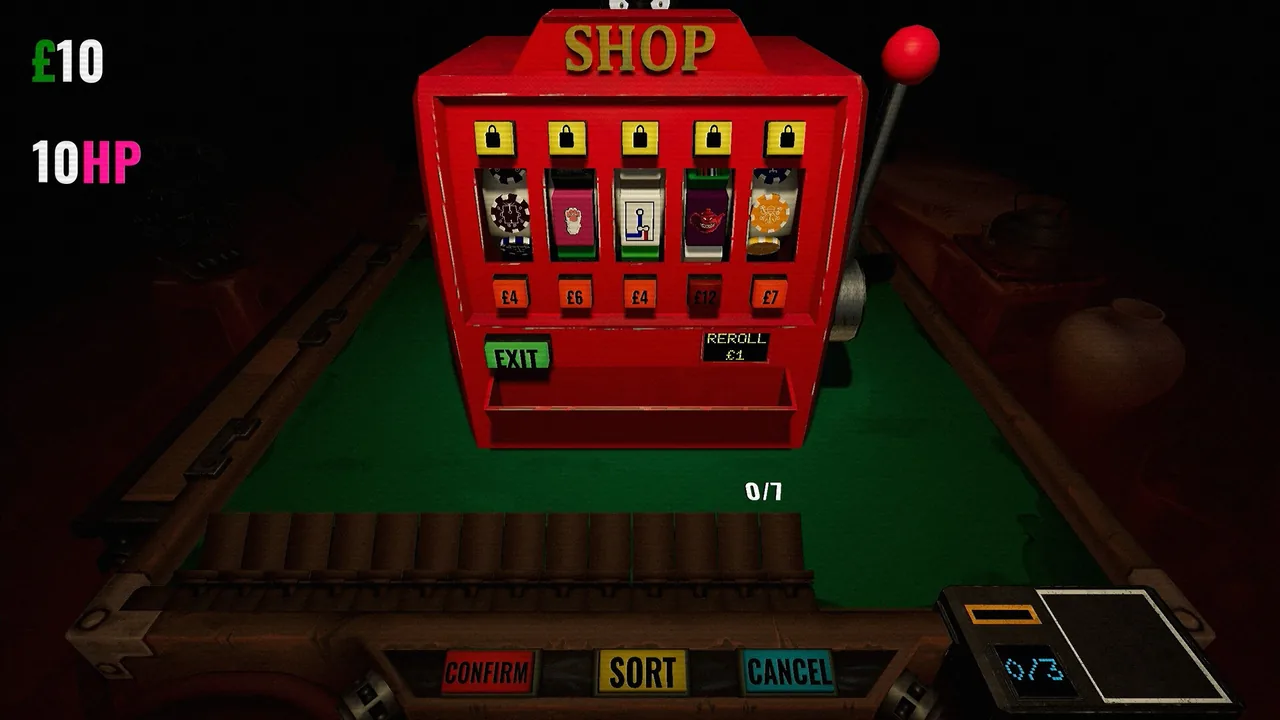
Then there are the chips, poker chips stamped with demonic sigils that change your tiles. Barbatos turns up to three tiles into gold, and a gold tile earns you £2 if it’s in the discard pile during scoring. You can also add stickers and dora to your tiles, while Blessings upgrade your yaku so they score bigger.
You buy all of this from a shop built into a slot machine, and you can pay to reroll what’s on offer. Just like in Balatro, every run comes down to what you buy and what you skip.
Tile Sets That Push You Toward Big Hands
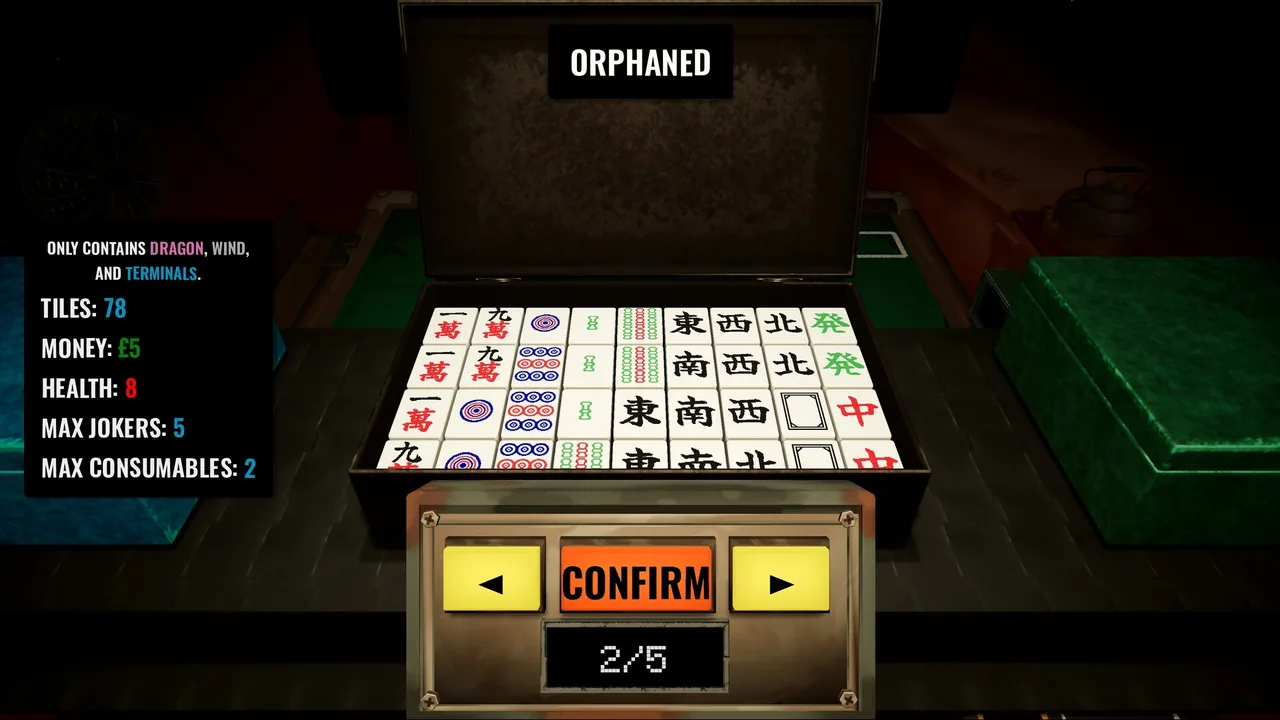
The tile sets keep me coming back. You pick one at the start of each run, and each one pushes you toward a different kind of hand.
My favorite is the second set, Orphaned. It only contains dragons, winds, and terminals, the exact tiles you need for Thirteen Orphans (kokushi musou). It’s a yakuman most players almost never see in a normal game, because you need one of each of the 13 terminal and honor tiles plus a pair. With Orphaned, it’s a hand you can actually plan for, and landing it feels amazing. Even the set’s name is a nod to the hand.
Between the tile sets and the 45 Steam achievements, I have plenty of reasons to keep playing. I’m going after every achievement.
An Old Man Straight Out of Akagi
Your opponent is an old man with slicked-back gray hair, a dark suit, and a grin you can’t trust. If you’ve watched Akagi, you’ll spot the reference right away. He’s a nod to Washizu Iwao, the rich old man who forces Akagi into a mahjong match where Akagi bets his own blood. Washizu takes blood. Hell Wait’s old man takes fingers.
The debt premise reminds me of Kaiji too, which comes from the same creator, Nobuyuki Fukumoto. Even the title is a mahjong term. A hell wait (jigoku-machi) is when you’re waiting on the last copy of a tile.
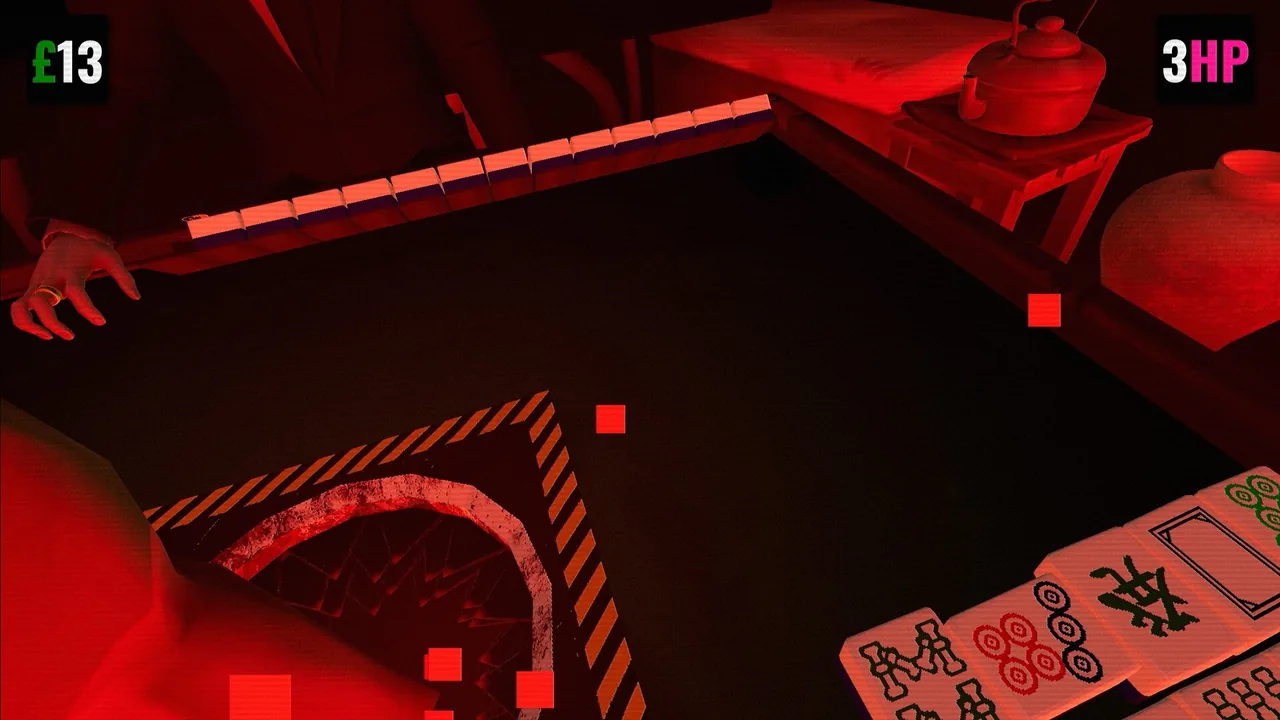
The red-lit room, the old man across the table, and knowing that one bad discard costs a finger make every match feel like a real gamble.
Final Word
Hell Wait respects riichi mahjong and adds a Balatro layer that makes every hand exciting. New players will need time to learn the yaku, but the tutorial and optional rules make it easier to get into. If you love Balatro, mahjong, or Akagi, this one is easy to recommend.
Where Pinoys Can Buy Hell Wait
- Steam: ₱475 on the Philippine Steam store as of this writing. It’s on PC only, for Windows and Linux.
- Languages: English, Japanese, Simplified Chinese, Traditional Chinese, Italian, Korean, and Brazilian Portuguese.
- Controllers: Partial controller support, including the DualSense.
Prices change during Steam sales, so check the store page before you buy.
For more game reviews, check out our gaming page!
Images: Hell Wait © Mondbekker.