Tag: Anime Review

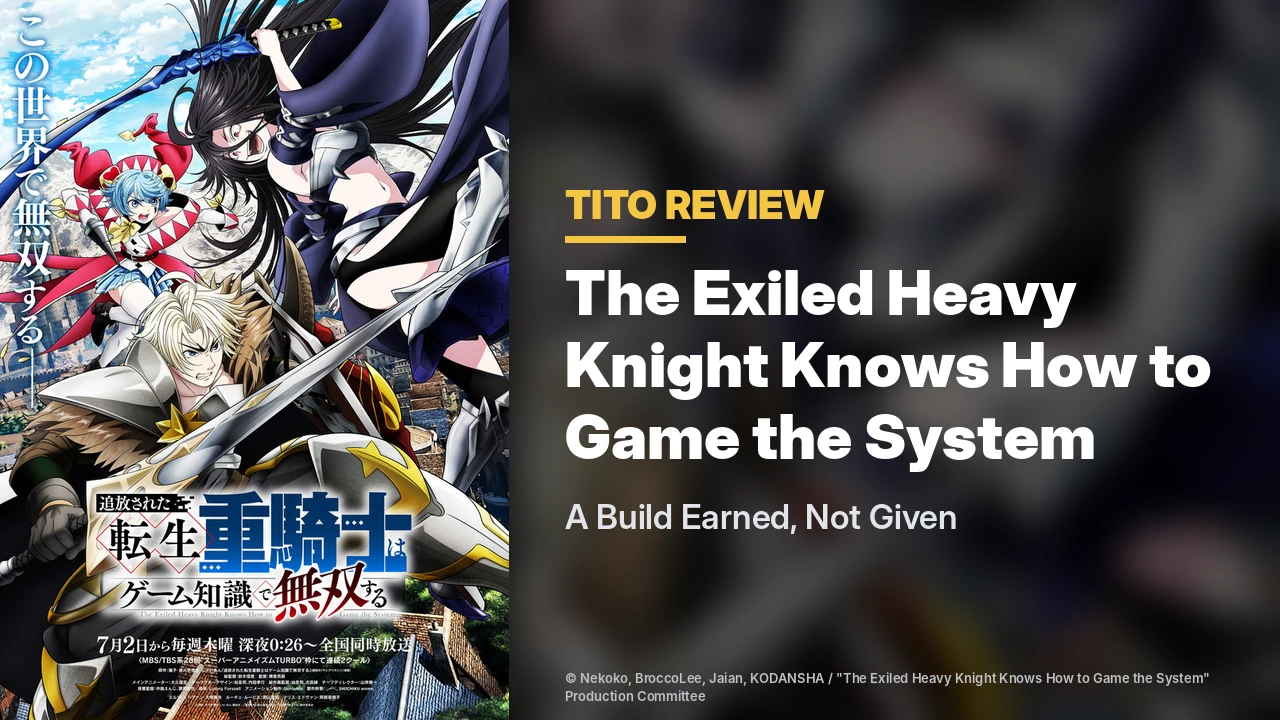
  • The Exiled Heavy Knight Knows How to Game the System Review | A Build Earned, Not Given

    The Exiled Heavy Knight Knows How to Game the System Review | A Build Earned, Not Given

    Most isekai heroes start their new life already holding the winning ticket: a cheat skill, a broken stat sheet, or a blessing from a goddess who feels bad about the truck. The Exiled Heavy Knight Knows How to Game the System hands Elymas Edvaughn the opposite. He draws the class everyone in his world calls defective, loses his inheritance on the spot, and has to climb back up with skill points, farming routes, and good timing.

    That is why he works for me as a protagonist. Elymas is not strong because the story says so. He is strong because he did the homework, and the anime shows every step of it.

    This review covers Part 1 (episodes 1 to 13) of the anime’s two-cour run, so expect spoilers for those episodes.
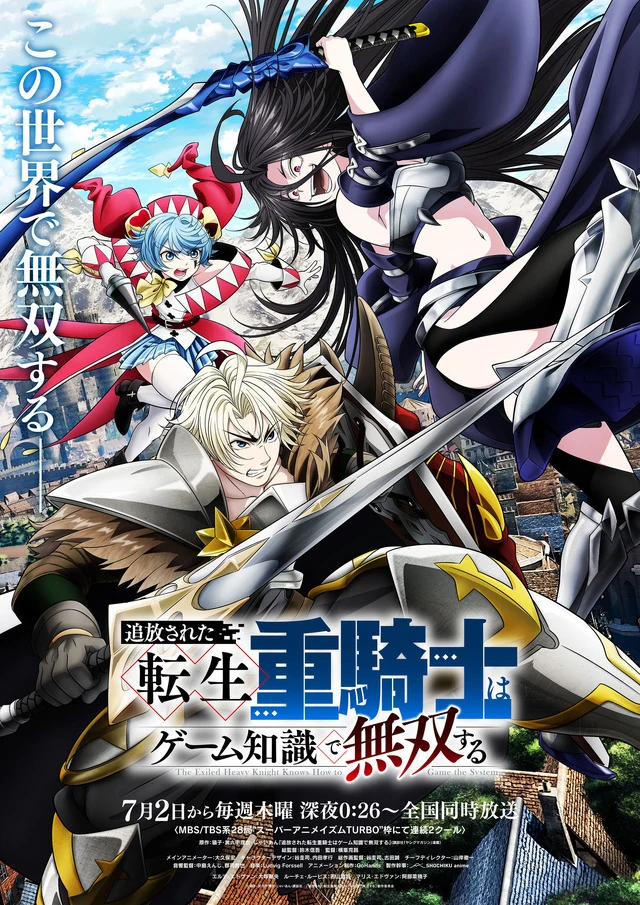
    The main visual of The Exiled Heavy Knight Knows How to Game the System, showing Elymas with his lance and shield facing Malice as Ruche leaps behind him
    The main visual for Part 1.

    What The Exiled Heavy Knight Is About

    The anime adapts Nekoko’s light novel, illustrated by Jaian, and Lee Brocco’s manga from Kodansha’s Young Magazine. GoHands handles the animation under director Katsumasa Yokomine and general director Shingo Suzuki, and Ludvig Forssell, the composer behind Death Stranding, does the music. It premiered on July 2, 2026, on MBS and TBS’s Super Animeism TURBO block and runs for 26 episodes across two back-to-back cours.

    Elymas is the 15-year-old heir of the Edvaughn family, a noble house known for producing Master Swordsmen. At the Ritual of Divine Blessing, which decides a person’s class, he gets Heavy Knight, a defensive class with low damage that his world treats as worthless. The ritual also brings back memories of his past life, where he played a game called Magic World obsessively. This world works just like that game, and Heavy Knight was his favorite class. Spend the skill points right and it becomes the strongest class in the game.

    His father, Aizas, does not care. He disinherits Elymas and adopts Malice, a cruel girl from a branch of the family who drew the Master Swordsman class, as the new heir. That makes her his sister on paper and his rival for the rest of the season. Elymas leaves with a small allowance, drops the Edvaughn name, and starts over as an adventurer.

    The Main Characters

    • Elymas Edvaughn (Takeo Otsuka; Van Barr Jr. in the English dub): A calculating player who thinks in EXP, drop rates, and skill trees, and stays polite when it gets him what he needs.
    • Ruche Luvis (Shion Wakayama; Kiane Chula King): A Pierrot whose old party exploited her, until Elymas recognizes what her build can actually do.
    • Malice (Natsuko Abe; Katie Caruso): The Master Swordsman who replaces Elymas as heir and grows obsessed with surpassing him.
    • Aizas: Elymas’s father, a proud noble who cares more about the family name than about his son.
    • Gowtan, Teal, Cline, and Reiss: The raid overseer who doubts Elymas, the Red Mage who mocks him, and the two adventurers who cheated Ruche.
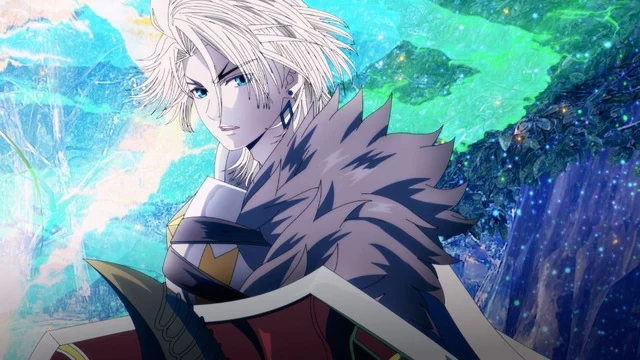
    Elymas Edvaughn in his Heavy Knight armor and fur cloak in The Exiled Heavy Knight Knows How to Game the System

    The Arcs of Part 1

    Exile and the First Hunts (Episodes 1–2)

    Elymas buys basic gear and heads into the wild, where he clears a swarm of Raana Frogs with Rampart Reflection and jumps from Level 2 to 8. A Level 16 Ariandype Spider forces his first real build decision. He spends seven skill points on his Heavy Armour skill to unlock Disarm, weakens the spider enough for Rampart Reflection to work, and wins. The fight pushes Heavy Armour to Level 15, which unlocks Parry. He then registers at the Rondalm Guild as an F-Rank adventurer, and he needs an E-Rank promotion before he can keep leveling Heavy Armour.

    The Raid Quest (Episodes 3–4)

    His promotion test is a raid on a ghoul-infested cemetery led by Gowtan. While Teal and Paul rush the boss and the other examinees panic, Elymas organizes the group and uses Parry, Disarm, and Rampart Reflection to clear the ghouls. The Ghoul Head eats its own minions and evolves into a Level 40 Mad Headder, so Elymas holds it off alone until Gowtan recovers. He earns his promotion, the Daemonsrage Shield, and Gowtan’s public backing when other adventurers accuse him of cheating.

    Ruche and the Angel’s Playbox (Episodes 5–9)

    Elymas sets his sights on the Fang of Smoldering Insanity skillbook, finds it in a black-market shop for 55 million gold, and realizes he needs a party to afford it. He recruits Ruche right after her old party fires her. The two farm the Angel’s Playbox dungeon for Golden Raana until the dungeon’s boss, a Level 50 Dreamlord Embryo, starts roaming the halls. They beat it together and walk out with tens of millions of gold in loot.

    The Duel With Malice (Episodes 10–12)

    Elymas and Ruche trade their haul for the skillbook. Meanwhile, Malice is murdering imprisoned adventurers for EXP. Aizas confronts Elymas at the guild, accusing him of using the family name to blackmail his way into promotions, and Malice challenges him to a duel. Elymas accepts on one condition: if he wins, his father leaves him alone for good. Malice is Level 45, and his new skill is barely leveled, so the fight turns into a test of patience and setup.
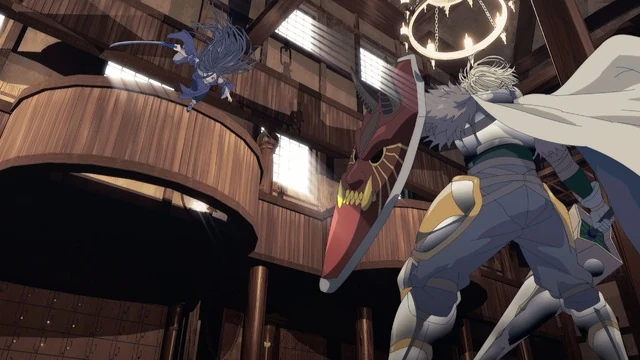
    Elymas raising his shield as Malice leaps at him from a balcony during their duel

    Lacoryna, City of Adventurers (Episode 13)

    Expecting Malice to come back for revenge, the pair leave Rondalm for Lacoryna, a city surrounded by dungeons. Part 1 closes on a farming session in the Centipede’s Gallery, where they pull 41.5 million gold in under an hour, and with a rare monster stirring deeper inside.

    Elymas Isn’t Overpowered. He Games the System.

    Every power spike Elymas gets comes from a decision the anime shows on screen. He turns down Arus’s party invite so he will not have to share EXP. He sinks points into Heavy Armour because Rampart Reflection fails against enemies whose attack beats his defense. Against the Mad Headder, he dumps his saved points into Beginner Swordsmanship just to survive, then admits afterward that he spent them carelessly. Any gamer who has ever wanted a respec knows that feeling.

    The Malice duel is the best example. Elymas takes hit after hit while he waits for three things: her lightning-speed attack, a clear weak point, and his own HP dropping below 40%. Once all three happen, he upgrades Smoldering Insanity to unlock Dragonrage Deathgaze, which doubles his speed and damage below 20% HP. Then he uses Life Shield to push himself down to 18% on purpose. If you have ever run a low-HP build in Dark Souls, you will recognize the plan.

    His game knowledge also has holes. Skillbooks cannot be legally traded, Golden Raana are tougher than he remembers, and the Dreamlord’s Tin Knights learn from his attacks, something they never did in the game. He has to adapt each time, which keeps his knowledge from feeling like a free cheat code.

    Ruche, the Party Member Who Changed the Build

    Ruche is the best addition to Part 1. When we meet her, her party is firing her. Cline and Reiss had pushed her to max out her Lady Luck skill so Cline could loot a rare sword, then used her lack of combat skills as an excuse to hold back her pay. Ruche even assumes Elymas wants her as a lover. Instead, he tells her exactly which skill tree she maxed, something her old party never understood.

    Her kit turns out to be the missing half of his plan. Cat’s Paw raises item drops by 500%. Dice Thrust is a gamble that, on a roll of six, deals 1.95 times damage, ignores 65% of the target’s defense, and lands a guaranteed critical hit. After she unlocks Acrobatic Amble, she can run along ceilings to herd Golden Raana back toward Elymas. Together they turn a farming spot into a money printer.
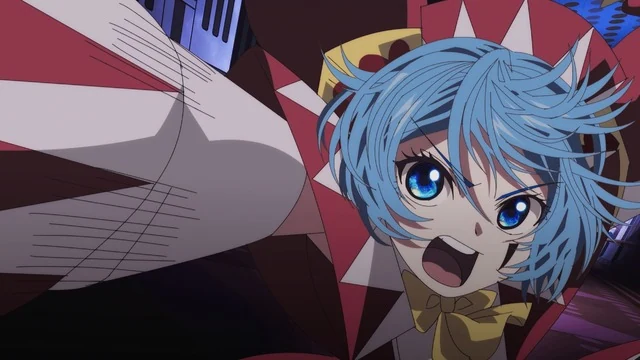
    Ruche Luvis in her Pierrot outfit charging into battle

    What sold me was how much she grows. When the Dreamlord appears, Elymas calls her useless dead weight to make her run. She comes back anyway. Her first Dice Thrust rolls a four and misses, so she runs across the ceiling, gets behind the boss, and rolls a six that kills it. Elymas admits her real strength is her refusal to quit. After that, she ignores Cline when he begs for her back in front of the whole guild. She argues with Elymas for a fair split of the gold instead of taking the bigger share he offers, and she suggests trading all their loot for his skillbook. She even tells Aizas to apologize to his son. By Lacoryna, she is planning her own build around the 100-million-gold Grim Reaper’s Grip skillbook. She starts Part 1 as someone else’s loot tool and ends it as a real partner.

    What Didn’t Work for Me

    The Editing, Starting With Episode 1

    The editing is my biggest gripe. Instead of letting the premiere set up the exile cleanly, the show stuffs Episode 1 with glimpses of arcs from across the season, so it plays more like a trailer than a first chapter. That works against the whole appeal of the series. The fun of The Exiled Heavy Knight is watching Elymas earn every upgrade, and flashing the payoffs before the grind takes some of the punch out of them. GoHands’ camera also never sits still, which adds to the choppy feel. Anime Feminist’s premiere review even warns about photosensitive imagery.

    The Bullied-Then-Vindicated Fantasy

    Storywise, the series leans hard on a familiar wish fulfillment: everyone looks down on the hero, then everyone eats their words. His father throws him out, Malice gloats, Teal mocks him during the raid, and guild adventurers accuse him of cheating. One by one, they get humbled. Gowtan vouches for him, Teal is refused a promotion, Cline grovels, Malice gets knocked out, and Aizas has to admit his son earned his rank. After a few rounds, you can tell who is going to be proven wrong the moment they open their mouth.
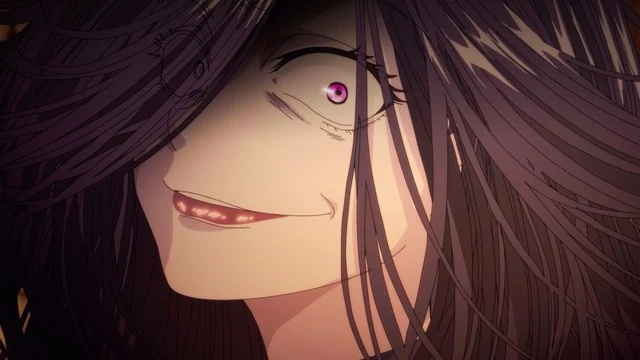
    Malice grinning with one eye showing through her long dark hair

    The show does add some nuance at the end of the duel. Aizas will not apologize, but he asks Ruche to watch over his son. Elymas explains that a noble cannot apologize to a commoner without hurting his standing, so the request is his father’s way of encouraging him. It is a small moment, but it gives Aizas more depth than the usual cruel parent.

    The Grind Is the Redeeming Factor

    A Skillbook at Scalper Prices

    In Magic World, Elymas could just buy the Fang of Smoldering Insanity. In this world, trading skillbooks is illegal, and looted books have to go to the nobles or the church. The copy he needs is probably gathering dust in his father’s mansion. His only option is a black-market shop that sells gear looted from dead adventurers, and once the shopkeeper sees how badly he wants the book, she raises the price from 50 million to 55 million gold. Anyone who bought a console from a reseller at launch knows that markup.
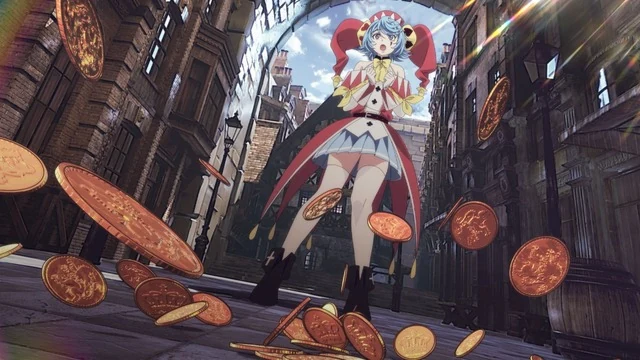
    Ruche standing in a city street as gold coins rain down around her

    Paying for it takes half of Part 1: a dungeon run, hours of Golden Raana farming, a boss fight that nearly kills them both, and a haggling session at the shop. The skillbook feels earned because the show makes you sit through the work.

    Parry Is a Skill Every Gamer Understands

    Parry is where I connected with Elymas the most. Every gamer knows the deal, from Street Fighter III to Sekiro: time it right and you turn the enemy’s attack into your opening, time it wrong and you eat the full hit. Nobody parries on luck. You have to be consistent, fight after fight. Elymas unlocks Parry at Heavy Armour Level 15, and in the ghoul raid he chains it with Disarm and Rampart Reflection to clear the horde. His defense is a skill he has to execute, not a number on a stat sheet.
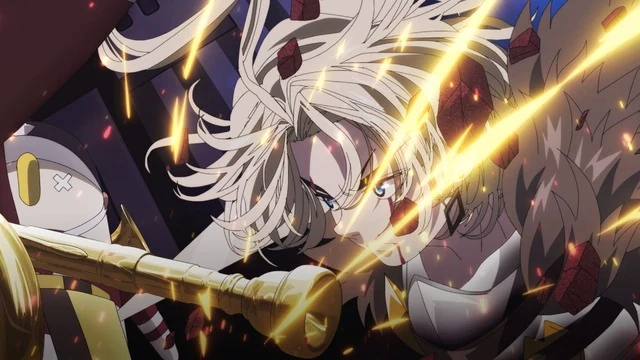
    Elymas blocking a strike in a shower of sparks

    The rest of the grind will feel familiar to any JRPG player. In this world, you only level up by beating monsters stronger than you, so Elymas is always picking fights above his level. He also plans farming routes around drop rates and keeps returning to the same spots for loot, like setting out to farm ten Smileys in one run. Watching him plan every run is the most fun part of the show.

    Final Word

    The Exiled Heavy Knight Knows How to Game the System is held back by messy editing, an overstuffed first episode, and a revenge formula that gets predictable. What carries it is a hero who earns his strength through careful skill-point spending, grinding, and well-timed parries, plus a partner in Ruche whose growth matters as much as his. If you enjoy planning builds and farming routes, Part 1 is worth your time.

    Where Pinoys Can Watch The Exiled Heavy Knight Knows How to Game the System

    • Crunchyroll: Streams the series in Southeast Asia. New episodes drop on Thursdays at 9:00 a.m. Pacific time, which is Friday at 1:00 a.m. in the Philippines.
    • Muse Asia and Muse Philippines on YouTube: Muse Communication holds the license for South and Southeast Asia, and episodes are posted free on its YouTube channels, including Episode 1 on Muse PH. New episodes go up on Thursdays at 11:56 p.m. Philippine time.
    • Netflix Philippines: Part 1 (13 episodes) is listed on Netflix in the Philippines.

    Part 2 is airing now, with the final episode set for December 24, 2026. Streaming lineups change, so check the app before you subscribe.

    For more anime reviews, check out our anime page!

    Images: © Nekoko, BroccoLee, Jaian, KODANSHA/“The Exiled Heavy Knight Knows How to Game the System” Production Committee.
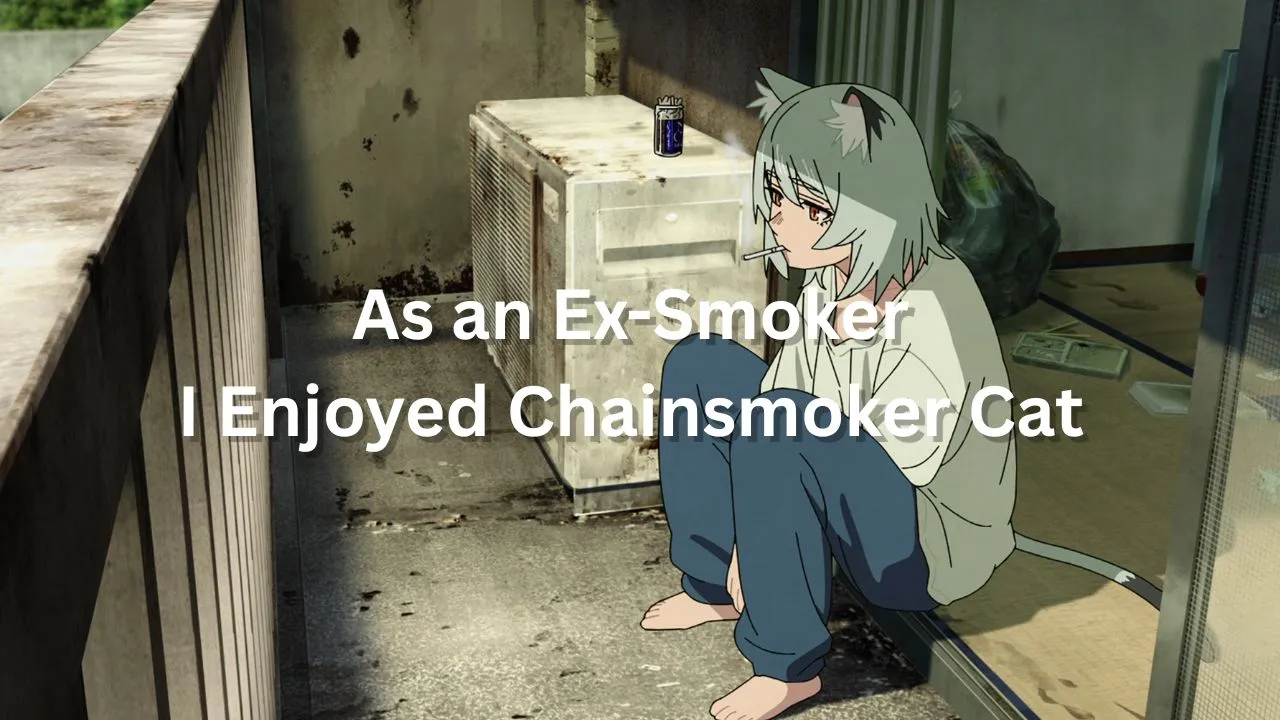
  • As an Ex-Smoker, I Enjoyed Chainsmoker Cat

    As an Ex-Smoker, I Enjoyed Chainsmoker Cat

    Chainsmoker Cat had me laughing at its filthy, blunt humor. The anime makes smoking addiction look almost charming by wrapping it in cute catgirls, even as they live in squalor, neglect their hygiene, and show little drive to earn enough to improve their lives. I started smoking in 2005 and was close to a pack a day.

    Watching Yani, I could laugh at the mess while recognizing how easily cigarettes can take over someone’s priorities.

    Chainsmoker Cat’s Plot and First Two Episodes

    Set in a world where humans and beastfolk live together, Chainsmoker Cat follows Yani, a heavy-smoking catgirl who puts cigarettes ahead of work, rent, and basic hygiene. Its opening episodes turn that habit into a string of everyday disasters.

    Cigarettes Before Rent

    Yani’s routine is already falling apart when the series opens. She picks up discarded cigarettes, gets cravings while working, and spends scarce cash on tobacco instead of paying rent. Her landlord is close to snapping, but a message from her responsible younger sister, Imoko, creates a more immediate crisis: Imoko asks for a photo of Yani’s room. The setup quickly links her smoking habit with the filthy, chaotic life around it.

    A Cigarette From Yakuneko

    After running out of cigarettes, Yani goes to her younger neighbor Yakuneko to ask for one. Their exchange introduces a relationship built on odd behavior and casual dependence. When Yakuneko suggests Yani find a job, Yani starts defending her carefree life as a form of freedom. The excuse is funny because she still needs someone else to supply her next smoke.

    A screenshot of Yani Neko licking a cigarette.

    The Allure of Smoking

    For several years, I worked in the BPO industry, where stress and sleepiness made cigarettes an easy source of comfort. A smoke break became something familiar to reach for during a draining shift. I carried that habit with me when I moved into a different industry. I just wanted sto stop, but I still looked for a stick when I get stressed. 

    The habit shaped my spending, too. Cigarette money became a priority alongside electricity and fare. I could know I wanted to quit and still set aside cash for the next pack. Smoking had worked its way into both my routine and my budget, which helps explain why wanting to stop did not always mean I could ignore the urge.

    The Controversial Humor of Poverty and Addiction

    Chainsmoker Cat makes dependence and poverty part of its comedy. Its cute catgirls live with messy rooms, shaky finances, and self-destructive habits. That contrast can expose how addiction takes over daily life, while also making the characters’ hardship part of the spectacle.

    My own smoking history makes Yani’s routines easy to recognize. The series shows her scavenging cigarette butts, getting cravings at work, and spending scarce money on tobacco while rent goes unpaid. I understand the pull of reaching for a cigarette when life feels stressful. The show stretches that impulse into grotesque comedy, though, so Yani’s struggle can become another reason to laugh at her squalor and bad decisions.

    Yakuko pushes the humor into more uncomfortable territory. The anime signals drug use through her strange smoke and behavior, but leaves much of her past unclear. Her voice actor describes her as serious and weighed down by past experiences, giving her odd behavior a more human dimension. A BPO youth committee record also notes a viewer complaint about repeated smoking and scenes resembling illegal-drug use. The record documents audience concern; it does not report a formal finding against the anime.

    Aruko’s drinking gets a similar mix of absurdity and concern. The official character profile describes her as living steeped in alcohol, with hands that often tremble. One episode turns her disappearance during a drinking party and discovery in Enoshima into a comic misadventure. Her voice actor describes Aruko as cheerful and not especially troublesome to others, which shows how the cute framing can soften the danger. The joke may reveal how the characters are trapped in their habits, but it can also leave viewers laughing at people who are already in trouble.

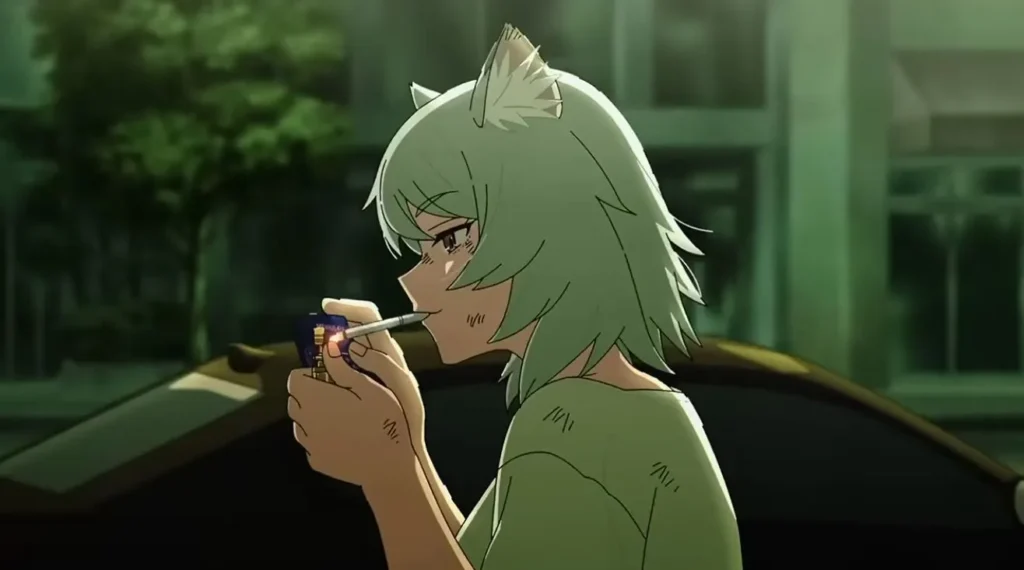
    A screenshot of Yani Neko lighting a cigarette.

    The Anime’s Censorship Goes Beyond Its Smoking

    News coverage focuses on the anime adaptation, rather than reporting edits to the manga. Selected episodes have an “On-Air” cut and a “Jaryu Kaihou” version that preserves more of the intended presentation. The edits include gross-out scenes: in episode 1, the broadcast version mosaics both Yani and the toilet mess, while the alternate shows more of her body; episode 5 also removes a mosaic from Hameko’s urination gag.

    The series also faced regional distribution restrictions. Anime Corner reported that Hong Kong streamer Anime Crazy removed it after saying local health authorities found it violated smoking regulations. Ani-One Asia later pulled it from YouTube, citing local regulations without naming the specific rule. The broadcast edits target explicit visuals, while these removals were linked to tobacco regulations.

    Yani Humor is Great for Anyone Who Gets Dark Comedy

    Chainsmoker Cat made me laugh with its filthy, absurd humor, while Yani’s cigarette rituals struck a familiar note after my years as a smoker. Its cute catgirls give the addiction gags an odd appeal, but their money problems, poor hygiene, and physical strain keep the damage in view. Yakuko and Aruko push the jokes into darker territory, and the anime’s edited versions and regional removals show how its crude content challenged distributors. I enjoyed the mix of laughter and discomfort, which left me thinking about how easily a habit can take over daily life. 

  • Gachiakuta: Tito Review

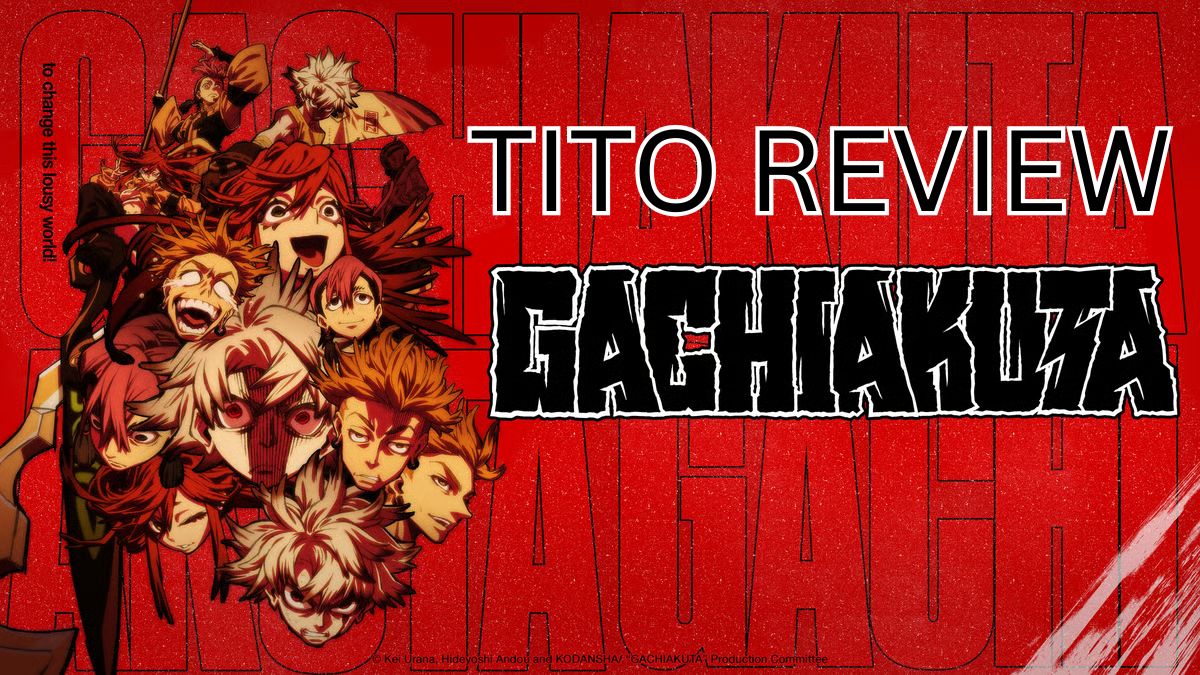
    Gachiakuta: Tito Review

    “Souls dwell in things that are cherished”. This sums up what Gachiakuta is all about.

    The story of Gachiakuta is set in a world where “normal people” easily discard their garbage, including other people, who are sent down to an abyss called the Pit. Those who live peacefully live within the walls but outside are the descendants of criminals called the Tribesfolk.

    The protagonist, Rudo, was falsely accused of murdering his own foster father Regto and managed to do the impossible and survive falling down the Pit, which is actually the Ground, the surface world abandoned by those living above what is called “the Sphere”.

    A screen shot of Gachiakuta .

    Protagonist

    Rudo Surebrec is the protagonist and although he starts off fairly unpleasant socially, that plays into the themes well since he cares a lot about junk while everyone else willfully discards objects. Since he himself has been discarded by society, he treats objects and people with the dignity they deserve, even if he sucks at socializing with his creepy unhinged smiling. 

    Cast

    We also meet a colorful cast: the cool mentor Enjin, the easily flustered lancer-type character and rival Zanka, and the unhinged girl, Riyo. Other characters include the cool yet slightly perverted receptionist Semiu, the boss and the antagonists we see so far, the Raiders, a group of bandits with a desire to invade the Sphere.

    A screen shot of Gachiakuta .

    Power System

    The Vital Instruments power system is quite unique, being similar in nature to Bleach’s Zanpakuto blades except the weapons are not an alternate persona but a product of the user’s care. This care is tied to the core theme of the manga, so we see diverse powers, from a . Rudo’s Gloves are unique as he can create temporary Vital Instruments with different purposes, making him versatile and somewhat breaks the rules of the systems. While most protagonists have a singular trick that helps the audience explore the system, Rudo’s one trick with his gloves gives him many random options that make Gachiakuta’s fights more visually creative.

    Manga Artstyle

    Kei Urana, the mangaka, has a gritty, “dirty” punk rock aesthetic that fits the steampunk genre of the manga and its alt-culture characters. This makes sense since the mangaka also works with a graffiti artist, Ando Hideyosh, to add flavor to the world’s decor and character designs. 

    Urana also happens to be the assistant of Soul Eater’s author, Atsushi Ohkubo, which explains the similarity in art style. However, Urana describes her style as being similar to Japanese “mixture rock” music genre as it combines her raw emotions with variety, allowing anyone to enjoy Gachiakuta and insert themselves into the work.

    A screen shot of Gachiakuta .

    Animation Quality

    The adaptation is handled by Bones, who have worked on Soul Eater, both adaptations of Fullmetal Alchemist and are currently wrapping up 8 seasons of My Hero Academia. While the artstyle is faithful to the manga, it does come from rough edges, such as decent to horrendous CGI for the Trash Beasts. 

    However, this flaw is overshadowed by the fast-paced animation and stunning visual presentation, particularly its flexibility in mixing media types, from directly copying the manga to implementing a blend of 2D and 3D animation. One of the best parts about the anime is its fidelity to the manga. 

    A recent example was from Episode 6, which only featured the incredibly animated fight between Rudo and the Raider Jabber Wonger but also a scene of Rudo flashing back to the traumatic loss of Regto, which copies the manga one-to-one with its rough, emotional sketch quality. 

    Final Word

    Overall, Gachiakuta’s first six episodes are already exceeding fan expectations and it helps that the manga started out strong with some light yet efficient worldbuilding and expressive fight scenes.

    For more anime review, check out our anime page!

  • SSSS.Gridman: Tito Review

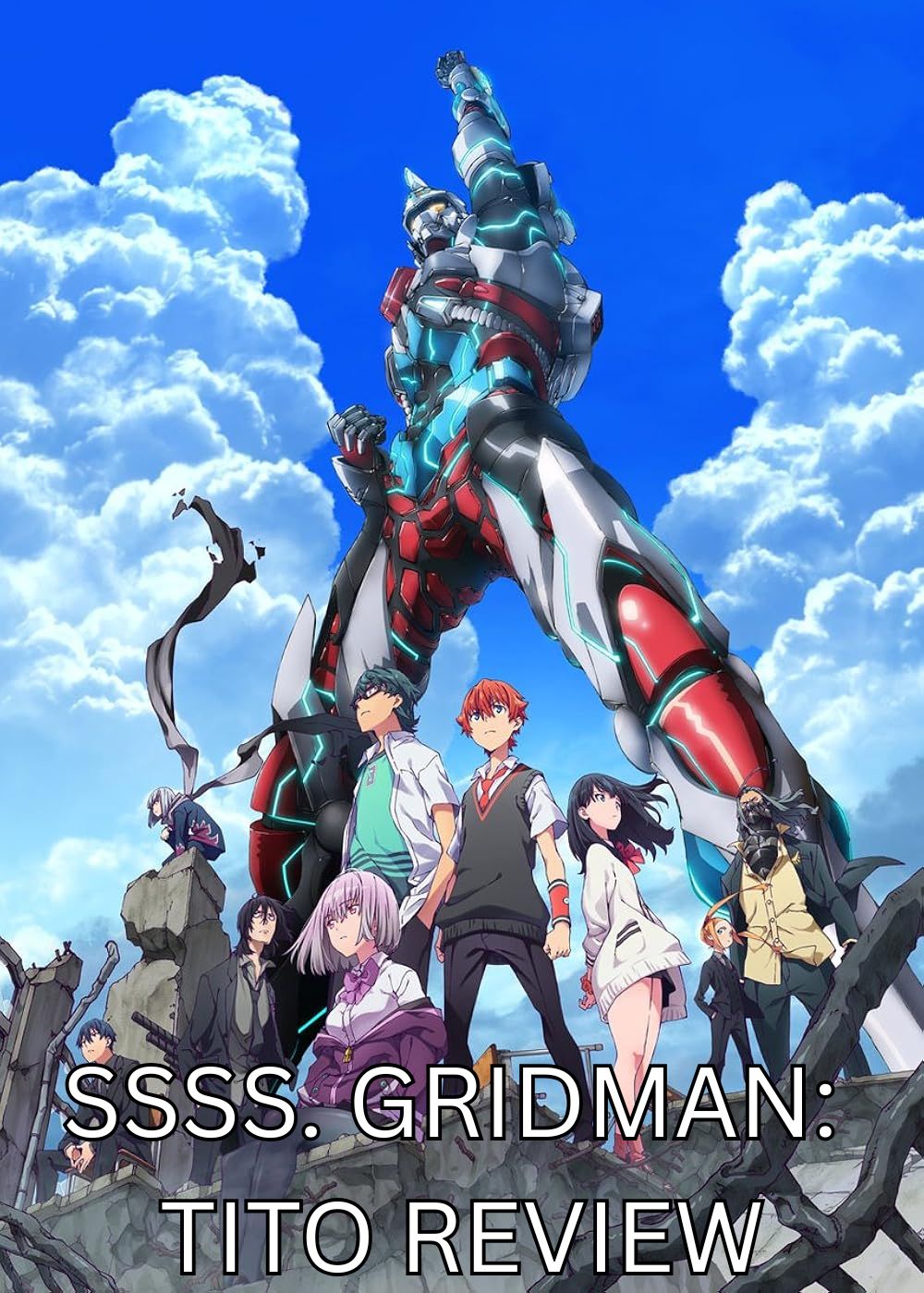
    SSSS.Gridman: Tito Review

    SSSS. Gridman is a sequel to the 1993 Denkou Choujin Gridman Tokusatsu series. Studio Trigger reimagines the series with their own style of mecha and character animation battles. It also has a blend of drama and mystery with its world-building. This review goes through the reasons you should catch SSSS. Gridman in Crunchyroll or a streaming service. 

    Gridman, the silver, cyan and purple giant hero, against a dark night sky in SSSS.Gridman

    Overview of SSSS.Gridman

    Rather than simply retelling the original, SSSS.Gridman builds its own identity. Its sharp animation, imaginative kaiju designs, and gradually unfolding plot give it a strong appeal for both newcomers and longtime fans. Produced by Tsuburaya Productions alongside Studio Trigger, the series is directed by Akira Amemiya, whose flair for dynamic action is easy to spot. 

    Character designs by Masaru Sakamoto and a soundtrack by Shiro Sagisu give it extra punch, with music that heightens the action and adds weight to emotional scenes. While it pays homage to the 1993 series with visual and thematic nods, its fresh setting, new cast, and updated storytelling make it stand firmly on its own. 

    First airing in late 2018, the anime earned praise for its visuals, pacing, and ability to bridge nostalgia with a more modern, thoughtful approach to the genre.

    Gridman combined into Max Gridman with giant red-fisted arm armor in SSSS.Gridman

    What Makes SSSS. Gridman great

    SSSS.Gridman combines tokusatsu-inspired action with Studio Trigger’s quirky animation style. It also achieves an interesting plot that fits its source material. 

    Plot Execution

    We start the episode with three mysteries. Who is Hibiki Yūta, the alternate personality of Gridman? Where did the kaijus come from? How can Akane control the kaijus?

    The core mystery unfolds in deliberate layers, with revelations that reframe earlier events. While the final act delivers satisfying answers, some twists arrive abruptly compared to the measured buildup. Character motivations, particularly Akane’s, add depth to the conflict, though not every lead experiences significant growth. The blend of personal stakes with city-shaking battles gives the plot emotional weight beyond the kaiju spectacle.

    What makes the writing great here is in making the audience emphasis Akane’s plight. She is the central character of the world. Even more than Yuta and Gridman themselves. The show hinges on you understanding what Akane is going through to justify her actions, including an integral point near the last episode that makes many audience turn on her. 

    Gridman fighting a purple kaiju amid smoke and flying debris in SSSS.Gridman

    When the episode where the SSSS of SSSS. Gridman was explained, and I was incredibly excited for the final battle, truly empathizing with Akane. This made the writing for the anime brilliant for me.  

    Animation

    Studio Trigger’s style is on full display in SSSS. Gridman. It gives the series a distinct personality. The colors are bold, the designs are sharp, and the kaiju are as creative as they are imposing. 

    Battles have weight in them. Every blow feels impactful, backed by dynamic camera work and transformation sequences that pay tribute to classic tokusatsu while still feeling fresh. The over-emphasis and scaling of the mecha make you feel the power of Grid Calibur End and Max Grid Beam. 

    Even the quieter scenes have intention behind them, with lighting and framing used to build atmosphere and draw you deeper into the moment. If you’ve enjoyed the energy of shows like Gurren Lagann or Kill la Kill, there’s a good chance SSSS.Gridman will click with you.

    The storytelling goes beyond a simple monster-of-the-week formula. The kaiju fights carry emotional stakes, shaped by personal conflicts, hidden motives, and moments of real vulnerability. 

    Akane’s journey stands out the most, giving the series a thoughtful layer about isolation, control, and the need for connection. The real magic happens when the spectacle and character arcs merge. The big, explosive battles also push the story forward. It’s this blend of style and substance that makes SSSS.Gridman lingers in your memory long after the final episode.

    OxT Union and Yume no Hero: Spoiler Alert 

    You know the writing is excellent when you are tearing up in the last fight with Union playing OxT did an incredible job with the show’s intro. It packs that fiery bridge and chorus, fitting the show’s action sequence. At the same time, the lyrics resonate with Akane’s arc and Gridman’s real mission. 

    Gridman powering up with a Full Power Charge as lightning strikes in SSSS.Gridman

    The reason I added the spoiler is the Union music video, which is the epilogue to the anime. It shows the real Akane waking up to her own world and joining up with her classmates. This scene is an incredible closure to see Akane conquer her social anxiety. 

     Another part I want to bring up is OxT’s take on Yume no Hero, the original intro to the Tokusatsu show. This was played when Gridman turned into the original 1993 Gridman, which is his ultimate form. Anyone who watched the original series would have gun nuts at this scene, including me, who watched the Super Human Samurai Syber Squad. 

    Studio Triggers Tokusatsu Masterpiece

    SSSS. Gridman is a solid part of Studio Trigger’s accomplishment. The animation alone is worth the price of entry, while the mystery plot and its music keep you wanting to watch the next episode. This remains one of Tito Gamer’s must watch anime series. For more anime reviews and news, visit my anime page.

New Report

Close